Volume 24 article 1337 pages: 346-357
Received: Dec 06, 2025 Accepted: Apr 13, 2026 Available Online: Apr 27, 2026 Published: May 31, 2026
DOI: 10.5937/jaes0-63277
CRITICAL FAILURE MODE ANALYSIS OF PROTON EXCHANGE MEMBRANE FUEL CELL USING FUZZY RISK PRIORITY CALCULATION AND PARETO RANKING
Abstract
Fuel cell systems experience continuous performance degradation due to harsh operating conditions, which limits their durability and reliability. This paper therefore aims to examine the main causes and mechanisms of degradation affecting fuel cells, and in particular Proton Exchange Membrane Fuel Cells (PEMFCs), by conducting a detailed Failure Mode, Effects, and Criticality Analysis (FMECA). Each failure mode is assessed through the Fuzzy Risk Priority Number (FRPN), enabling the identification of the most critical degradation pathways. A Pareto-based classification is then applied to rank failure causes according to their contribution to system performance loss. The combined FMECA and Pareto approach makes it possible to highlight the dominant defects related to auxiliary components, flow regulation, sensor inaccuracies and the aging of the membrane and electrodes. Based on the critical causes identified, specific recommendations are proposed to improve reliability, including improved energy management and operating strategies, optimized control of pressure and humidity, and improved monitoring of auxiliary subsystems. The results provide a structured methodology for prioritizing degradation sources and guiding preventive maintenance and design improvements in fuel cell systems.
Highlights
- A fuzzy FMECA–FRPN framework is developed for risk assessment in PEMFC fuel cells.
- Critical degradation mechanisms in auxiliary systems and fuel cell stack are systematically analysed.
- Pareto analysis is employed to prioritize the most critical failure modes.
- Effective and targeted mitigation strategies are developed to improve system reliability and durability.
Keywords
Content
1 Introduction
Fuel cells are a key technology in the transition to clean energy, offering efficient and environmentally friendly electricity production for several applications: transport, power systems, electric vehicles, stationary power generation systems [1, 2]. Despite their strong potential, their large-scale deployment of fuel cell systems remains significantly constrained by persistent reliability and durability challenges [3, 4]. Understanding the mechanisms behind performance degradation and identifying the critical causes of failures are therefore essential to enhance safety, optimize maintenance, and extend the operational lifetime of these systems. Many research studies have investigated the influence of operating conditions on the performance and reliability of fuel cells [5-9]. Within this framework, several studies have focused on developing diagnostic strategies to assess the state of health of fuel cell systems. The primary objective of these studies is to establish and apply analytical methodologies capable of identifying, characterizing, and interpreting the different failure mechanisms that affect fuel cell durability. These approaches commonly rely on semi-empirical modeling that accounts for variations in physicochemical properties [5], machine learning method [6], electrochemical impedance spectroscopy [7, 8], new design-of-experiments techniques to better understand the degradation pathways and their impact on system behavior [9] and the improvement of energy management of fuel-cell [10, 11]. Despite the increasing research efforts devoted to understanding fuel cell degradation, these systems still exhibit limited lifetimes and performance losses over time. This article presents a structured methodology to analyze and prioritize failure modes in fuel cell systems, focusing particularly on Proton Exchange Membrane Fuel Cells (PEMFCs). The study integrates reliability analysis, risk evaluation, and statistical prioritization through a combination of Failure Modes, Effects, and Criticality Analysis (FMECA) and Pareto-based ranking. This approach not only highlights the most critical degradation pathways but also supports targeted preventive strategies to improve system performance and longevity. The article is organized as follows:
In section II the authors develop a comprehensive overview of auxiliary subsystems: Provides a detailed description of the key auxiliary components supporting PEM fuel cell operation, including the reformer, compressor, humidifiers, and cooling systems. Section III presents a study of failure mechanisms and an assessment of the criticality of fuel cell systems. This study is based on the development of a FMECA (Failure Mode and Effects Analysis) and the quantification of failure modes using the calculation of the fuzzy Risk Priority Number (FRPN) via a fuzzy logic approach. Section IV is based on an analysis of critical failure causes using the Pareto method. This approach allows for the classification and prioritization of the most significant failure modes, highlighting the major factors contributing to system aging. The study is complemented by recommendations aimed at reducing the FRPN. The proposed actions include targeted preventive and corrective measures designed to decrease the frequency and impact of critical failures, while significantly improving the reliability of the fuel cell system.
2 Materials and methods
2.1 Comprehensive overview of auxiliary subsystems supporting PEM fuel cell operation
A fuel cell system requires the addition of several auxiliary devices for its operation, which ensure the supply of reactants (hydrogen and air), their conditioning (pressure, flow rate), and the management of reaction products (water, heat, electricity). Figure 1 shows an example of a diagram relating to a fuel cell system [12].
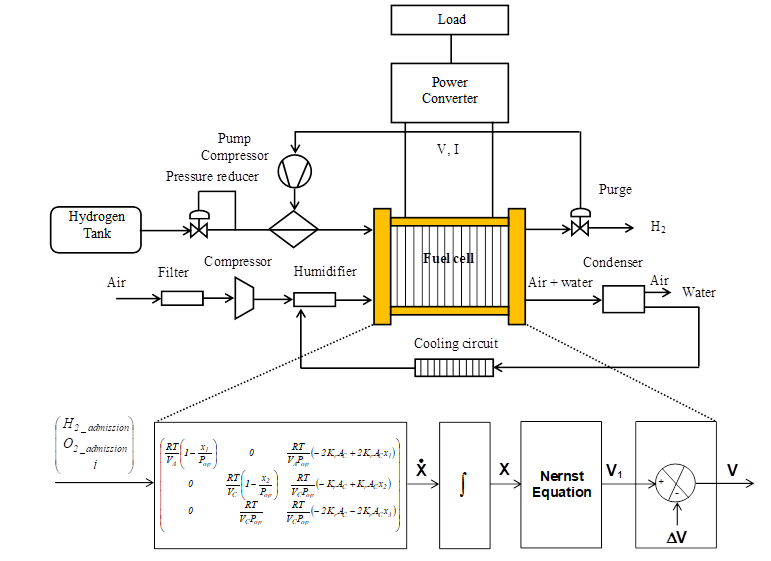
Fig.1. Description of fuel cell system
The auxiliary components of a proton exchange membrane fuel cell are the various devices that surround the system. These include:
- A compressor or turbine that supplies air to the cathode circuit,
- A hydrogen supply system that, depending on whether the hydrogen is produced on-site or not, includes a reforming system in the first case and, in the second case, pressure tanks and one or more pressure regulators to adjust the hydrogen pressure to the operating pressure of the fuel cell,
- One or two humidifiers, depending on whether one or two of the feed gases are humidified, to ensure proper membrane operation,
- Various accessories for gas distribution (solenoid valves, piping, etc.),
- A cooling circuit that regulates the operating temperature of the fuel cell (cooling and heating circuits for starting, thermal sensors, etc.),
- A static converter that manages the energy delivered by the fuel cell,
- A control element that manages gas flows based on the current required and ensures system safety.
2.2 Fuzzy FMECA methodology
The aging of the fuel cell system is a complex and progressive phenomenon resulting from the interaction of multiple degradation mechanisms affecting both auxiliary components and the essential electrochemical elements. The degradation can be classified into two main categories such as the auxiliary system degradation and the fuel cell stack degradation. The proper operation of a fuel cell system strongly depends on the reliability of its auxiliary subsystems, particularly those related to hydrogen supply, oxygen supply, and thermal management. Degradation of the hydrogen supply system may occur due to reformer malfunctions, leading to hydrogen unavailability, which directly affects the electrochemical reaction. Additional failures such as voltage sensor malfunction, current sensor errors, and temperature measurement issues can further compromise system control and stability. Similarly, hydrogen humidifier malfunctions, including pump failures or insufficient purging, can result in improper humidification levels, causing membrane dehydration or flooding. On the oxygen supply side, compressor failures may lead to insufficient air delivery, often caused by filter blockage or sensor malfunctions. Oxygen humidifier issues, particularly inadequate purging, can also disrupt optimal operating conditions. The cooling system plays a critical role in maintaining thermal stability. Failures in the cooling circuit, such as radiator malfunction or heat exchanger inefficiency, may result in overheating, accelerating the degradation of internal components and reducing overall system lifetime [13-15]. In addition to auxiliary components, the fuel cell stack itself is subject to intrinsic degradation mechanisms that significantly affect performance and durability [16-18]. The membrane is one of the most critical components of the fuel cell. Its degradation is primarily associated with conductivity reduction and membrane thinning. Conductivity loss can be caused by high operating temperatures, ripple currents, contamination by metal ions, excessive humidity, or exposure to corrosive substances. Membrane thinning, on the other hand, is often linked to mechanical and chemical stresses such as operational cycling and radical formation, which progressively deteriorate the membrane structure. Electrode degradation also plays a key role in system aging. The reduction of the active surface area is mainly due to binder degradation and catalyst agglomeration, often accelerated by thermal stress and current fluctuations. Additionally, anode catalyst poisoning, typically caused by the presence of carbon monoxide, significantly reduces catalytic activity and limits the efficiency of electrochemical reactions. To evaluate these different degradations, a (FMECA) is applied. It ranks failure modes using the Risk Priority Number (RPN), obtained from the severity (S), occurrence (O), and detection (D) indices. These indices describe the impact of a failure, its likelihood, and the probability of identifying it before it affects the system [19]. This method classifies each failure mode and quantifies its importance through the Risk Priority Number (RPN), calculated as the product of three indices:
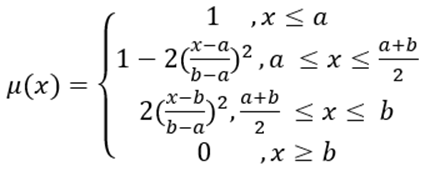
Although widely used, the classical RPN does not fully capture uncertainty or the subjective nature of expert assessments. For this reason, a fuzzy extension of the RPN (FRPN) is adopted [20-24]. The fuzzy approach converts S, O, and D values into linguistic variables and applies inference rules that better represent real operating conditions. Figure 2 presents the membership functions adopted in the fuzzy risk evaluation process, namely Gaussian, Z-shaped, and S-shaped functions. The Gaussian function models intermediate linguistic terms, while the Z-shaped and S-shaped functions represent lower and upper boundary conditions, respectively. Their mathematical expressions are provided in equations 2, 3 and 4.
The Gaussian function (Figure 2.a) has the following membership function:
Z-Shaped fuzzy membership (Figure 2.b) has the following membership function:
S-Shaped fuzzy membership (Figure 2.c) has the following membership function:
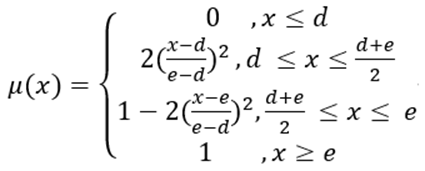
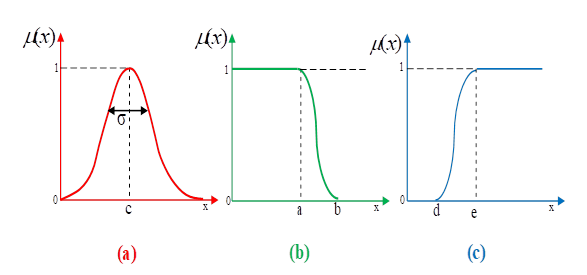
Fig. 2. Membership functions of: (a) Gaussian, (b) Z-Shaped, (c) S-Shaped
The linguistic rating scales used for S, O, and D, are consolidated into a unified structure to ensure consistent interpretation and to facilitate their transformation into fuzzy membership functions. The synthesized classification is presented below in Table 1.
Table 1. Severity (S), Occurrence (O) and Detection (D) Rating Scale
|
|
Rating |
Linguistic Term description |
Description of effect on system |
Membership functions |
|
Severity |
1 |
Low |
Negligible impact: system operates normally. |
(a, b) = (2, 3) |
|
4 |
Moderate |
Noticeable performance reduction; system still functional. |
(σ, c) = (1, 4) |
|
|
7 |
High |
Significant loss of function; system performance severely affected. |
(σ, c) = (1, 7) |
|
|
10 |
Very high |
Complete failure; major safety risk or irreversible damage. |
(d, e) = (8, 9) |
|
|
Occurrence |
1 |
Low |
Failure is highly unlikely to occur. |
(a, b) = (2, 3) |
|
4 |
Moderate |
Failure occurs sporadically. |
(σ, c) = (1, 4) |
|
|
7 |
High |
Failure occurs often. |
(σ, c) = (1, 7) |
|
|
10 |
Very high |
Failure occurs almost always. |
(d, e) = (8, 9) |
|
|
Detection |
1 |
Very high No detection ® Low |
Failure is easily detected by current controls. |
(a, b) = (1.25, 1.75) |
|
2 |
High No Detection ® Moderate |
Failure can be detected with some effort. |
(σ, c) = (0.25, 2) |
|
|
3 |
Moderate No Detection ® High |
Failure is unlikely to be detected before causing impact. |
(σ, c) = (0.25, 3) |
|
|
4 |
Low No Detection ®Very high |
Failure is virtually impossible to detect before affecting the system. |
(d, e) = (3.25, 3.75) |
As shown in Table 1, the linguistic variables are defined using consistent membership function types to ensure coherence in the fuzzy modeling. For example, the terms “Moderate” and “high” of S and O factors are both represented using Gaussian membership functions with the same spread ($σ$=1), while their centers are shifted to reflect their relative positions on the scale (c=4 for “Moderate” and c=7 for “High”). This choice ensures smooth and symmetric transitions between adjacent levels. Furthermore, different parameter values are assigned to O, S, and D to reflect their respective scales and relative importance. While O and S are defined over a wide range (1,4,7,10), D is defined over a reduced scale (1-4) to limit its influence. Consequently, narrower Gaussian functions are used for D, ensuring better sensitivity within its range while preserving the overall consistency of the fuzzy inference system. Based on the S, O and D inputs, the fuzzy FMECA rule base is constructed by combining their linguistic levels, resulting in 64 rules derived from the four linguistic terms per input as shown in figure 3. The fuzzy inference rules are defined based on expert knowledge and the logical relationships between the input variables. To ensure full transparency and reproducibility of the fuzzy inference process, the aggregation procedure is explicitly defined. A Mamdani fuzzy inference system is adopted in this study, where each fuzzy rule is evaluated using the minimum operator to model the logical AND between input variables (S, O and D). The outputs of all activated rules are then aggregated using the maximum operator (max-min composition), combining their contributions into a single fuzzy output set. Finally, defuzzification is performed using the centroid (center of gravity) method to obtain a crisp FRPN value. This approach ensures a consistent and interpretable mapping from linguistic assessments to quantitative risk values.
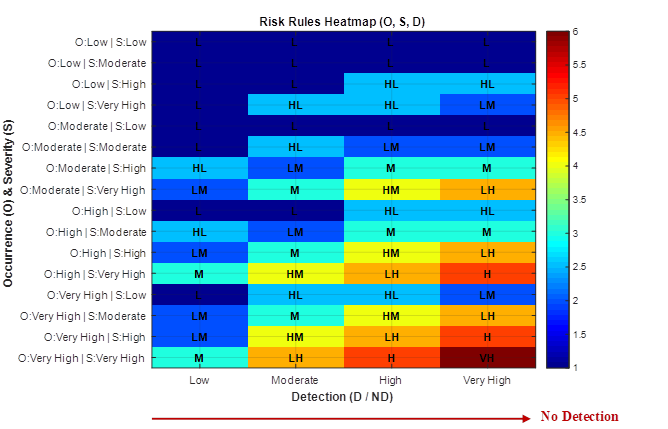
Fig. 3. Fuzzy FMECA Risk Rules based on O, S and D
3 Results and discussion
3.1 Fuzzy FRPN assessment
The overall fuzzy FRPN evaluation procedure, as implemented in MATLAB, is illustrated in figure 4, which outlines the main steps of the process, including fuzzification of inputs, rule evaluation, aggregation of output, and defuzzification to produce the final risk index. This approach provides a consistent, interpretable, and reproducible mapping from linguistic assessments to quantitative risk values.
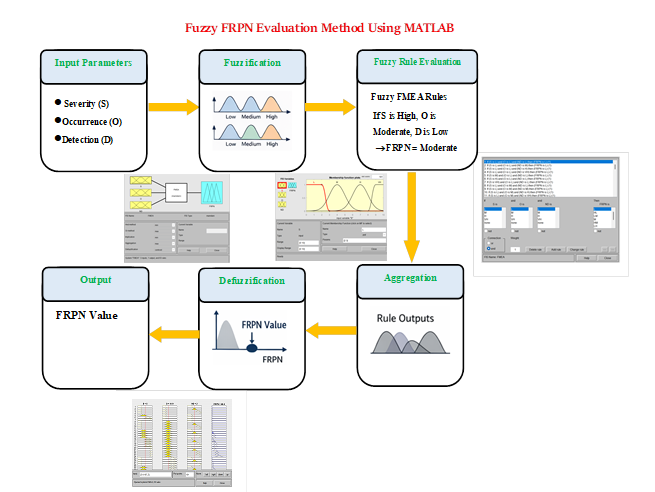
Fig. 4. Fuzzy FRPN Evaluation procedure using MATLAB
The FRPN approach enhances the discrimination of critical failure modes, providing a more accurate assessment than classical RPN. Failures affecting auxiliary subsystems or degradation mechanisms in the membrane and electrodes are identified as appearing more critical when evaluated with the fuzzy method. However, the traditional FMECA approach remains limited when the evaluation of severity, occurrence, and detection relies heavily on subjective expert judgments or when operational data are sparse [25]. To address these limitations, the methodology is extended using fuzzy logic, which enables the representation of linguistic assessments through continuous membership functions rather than fixed numerical scales. This integration reduces ambiguity, enhances the consistency of risk evaluation, and provides a more flexible framework for capturing the inherent uncertainties associated with degradation mechanisms and operational variability. The resulting Fuzzy FMECA provides a structured, quantitative framework for evaluating fuel cell reliability. Table 2 summarizes the identified failure modes, their functional effects, their root causes, and their associated RPN and FRPN values.
This consolidated analysis highlights the most critical degradation pathways, pinpoints vulnerable components, and supports the definition of targeted preventive maintenance and reliability-oriented design improvements.
Table 2. Critical Failure Mode analysis of Proton Exchanged Membrane Fuel Cell using RPN and FRPN
|
Failure Modes |
Effects |
Possible Causes |
S |
O |
D |
RPN |
FRPN |
|
Auxiliary system degradation |
Malfunction of the hydrogen supply system |
X1: Reformer malfunction |
7 |
4 |
1 |
28 |
31.9 |
|
X2: Hydrogen humidifier malfunction |
7 |
7 |
1 |
49 |
60.1 |
||
|
Degradation of the oxygen supply system |
X3: Compressor malfunction |
7 |
4 |
1 |
28 |
31.9 |
|
|
X4: Oxygen humidifier malfunction |
7 |
7 |
1 |
49 |
60.1 |
||
|
Cooling circuit degradation |
X5: Cooling circuit degradation |
7 |
7 |
2 |
98 |
99.4 |
|
|
Fuel cell degradation |
Membrane deterioration |
X6: Conductivity reduction |
10 |
4 |
4 |
160 |
201 |
|
X7: Membrane thinning |
10 |
4 |
4 |
160 |
201 |
||
|
Electrode degradation |
X8: Active surface reduction |
7 |
4 |
3 |
84 |
100 |
|
|
|
X9: Anode catalyst poisoning |
7 |
4 |
3 |
84 |
100 |
The results obtained from conventional RPN and fuzzy RPN (FRPN) calculations provide important information on the relative criticality of different failure modes affecting fuel cell system aging. In general, FRPN values offer a more precise ranking of failure modes because they incorporate and amplify the effect of uncertainty and expert judgment, thus providing a more nuanced analysis than classical RPN. Failures of auxiliary components, particularly malfunctions of the hydrogen and oxygen humidifiers (X2, X4), exhibit higher FRPN values (≈ 60.1) than their classical RPN scores (49). This increase demonstrates that, under uncertain operating conditions, these components represent greater risk. Their high occurrence and low detectability play a central role in this increased criticality, confirming the sensitivity of humidification processes, sensor faults, and improper purging. Similarly, the cooling circuit degradation (X5) shows a marked increase in criticality, with an RPN of 98 and an FRPN of approximately 99.4. While both indicators classify this failure as high risk, the FRPN more consistently highlights its systemic impact. Inefficient heat dissipation accelerates membrane deterioration, degrades catalytic layers, and reduces fuel cell lifetime. In this context, membrane-related failure modes (X6 and X7) appear to be the most critical, with classical RPN values of 160 and FRPN values reaching 201. This significant difference underscores the importance of fuzzy logic for understanding the severity of long-term degradation phenomena, such as thermal stress, contamination, and mechanical thinning. These modes directly threaten the electrochemical performance and durability of the fuel cell. The identical FRPN values obtained for X6 and X7 are due to the use of identical input ratings (S, O, D), which result in the activation of the same fuzzy rules and consequently the same defuzzified output. This does not reflect a limitation of the model but rather indicates that both failure modes are considered equally critical under the current evaluation criteria. A more refined differentiation could be achieved by incorporating additional risk factors or by further tuning the fuzzy inference system. Electrode degradation (X8, X9) also shows higher FRPN values (≈ 100) compared to classical RPN scores (84). The fuzzy evaluation reflects the cumulative effect of catalyst poisoning, binder breakdown, and surface area loss, which are often difficult to detect early but have substantial consequences for cell efficiency. Overall, the transition from RPN to FRPN leads to a more discriminative and realistic hierarchy of failure modes. The FRPN ranking better highlights failure modes associated with complex interactions, progressive degradation, and low detectability. These findings justify the use of the fuzzy method as a complementary tool for reliability analysis, supporting more accurate prioritization. Although the failure modes X1, X2 and X5 share the same severity level (S=7), they differ in their O and D values, which leads to distinct FRPN results. In the proposed fuzzy inference system, the FRPN is not a simple linear combination of inputs but is obtained through the interaction of membership functions and rule-based reasoning. Variations in O and D modify the degree of activation of multiple fuzzy rules, resulting in different aggregated outputs after defuzzification. Consequently, the combinations (O=4, D=1), (O=7, D=1), and (O=7, D=2) produce significantly different FRPN values of 31.9, 60.1 and 99.4 respectively highlighting the sensitivity and nonlinear behavior of the proposed fuzzy FMECA approach. In particular, the difference between failure modes X2 (S = 7, O = 7, D = 1) and X5 (S = 7, O = 7, D = 2), highlights the high sensitivity of the fuzzy inference system to detectability where lower detection leads to significant increase in FRPN due to the activation of higher-risk fuzzy rules. These examples illustrate that FRPN values are not linearly proportional to the input parameters S, O, and D. Even when S remains constant, variations in O and D lead to different fuzzy rule activations and membership degrees. In this context, similar input combinations may produce significantly different FRPN values. Overall, the quantitative differences observed between classical RPN and FRPN confirm that the fuzzy approach enhances discrimination between failure modes, especially when classical RPN values are similar or insufficiently discriminative.
3.2 Research on critical failure causes and recommendations for reducing FRPN
Following a comprehensive (FMECA) of the fuel cell system, it is crucial to prioritize the identified failure modes to address the most significant contributors to system risk. Not all failures contribute equally to performance degradation or system downtime; some represent a disproportionate share of the overall risk. To address this, a Pareto-based approach is conducted, evaluating the cumulative contribution of each failure mode to the total FRPN [26]. By applying the Pareto principle, also known as the 80/20 rule, the analysis highlights the critical failure modes responsible for most of the system vulnerability. This approach enables a clear raking of failure modes according to their relative impact and helps target maintenance and design improvement more effectively. The dominant failure modes identified through this methodology are illustrated in figure 5.
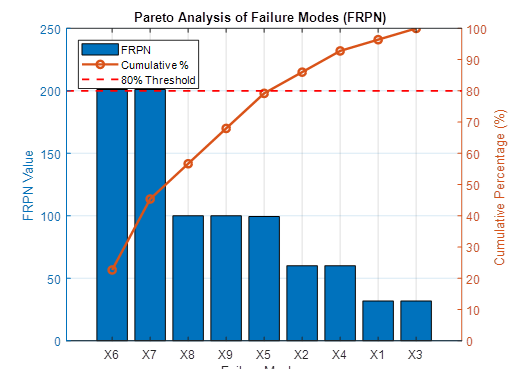
Fig. 5. Pareto chart of failure modes based on FRPN
The Pareto chart provides a visual and quantitative ranking of failure causes based on their contribution to overall risk. The membrane-related failure modes, X6 (reduced membrane conductivity) and X7 (membrane thinning), appear as the main contributors, together accounting for over 40% of the cumulative impact. These modes have the highest probability values due to their strong influence on electrochemical performance and their sensitivity to operating conditions such as temperature, humidity, and the presence of contaminants. Their criticality underscores the central role of the membrane in the long-term durability of PEM fuel cells.
The next group of significant contributors includes X8 (reduced electrode active area) and X9 (anodic catalyst poisoning), which together bring the cumulative contribution above the 80% threshold. This confirms that electrochemical degradation mechanisms within the membrane-electrode assembly (MEA) are the primary drivers of performance degradation and reliability loss. Failures in auxiliary subsystems, and more specifically inefficient cooling (X5), represent an intermediate contribution to reduced system stability. Efforts to improve system reliability should therefore focus primarily on these mechanisms. This prioritization provides a solid foundation for the proposed recommendations.
Following the identification and prioritization of critical failure modes, it is essential to implement targeted measures to reduce the failure rate of high-impact failures (FRPN). This reduction also improves the reliability, safety, and overall performance of the fuel cell system. This section primarily presents specific recommendations for addressing the most critical degradation mechanisms identified in the preceding analyses. These measures focus on improving sensor accuracy, optimizing flow and pressure control, enhancing thermal management, and implementing advanced monitoring and diagnostic strategies. Table 3 summarizes the critical degradation mechanisms identified by the Pareto approach in the fuel cell system, and the recommended corrective actions.
Table 3. Summary of major degradation mechanisms and recommended actions
|
Main cause |
Sub-causes |
Recommendations |
|
X5: Cooling circuit degradation |
- Radiator failure - Heat exchanger inefficiency |
- Improve the cooling system's capacity. - Install more efficient radiators. - Clean the heat exchangers regularly. - Implement real-time temperature monitoring. |
|
X6: Conductivity reduction |
- Membrane damage (high temperature, ripple current) - Membrane contamination (excessive humidity, metal ions) - Membrane pollution (corrosive substances) |
- Reduce ripple current by using a multiphase converter. - Filter moisture and control humidity. - Prevent metal ions by using corrosion-resistant materials. - Direct monitoring of the membrane by measuring membrane resistivity. |
|
X7: Membrane thinning |
- Operational cycling - Radical formation (hydrogen peroxide, metal ions) |
- Reduce aggressive cycles. - Use reinforced membranes. - Control gas purity. - Integrated humidity and temperature sensors. |
|
X8: Active surface |
- Binder degradation - Agglomeration (cycling, high temperature, ripple current) |
- Optimize thermal conditions. - Limit excessive cycling. - Use strong binders. - Reduce ripple current. - Monitoring the voltage of individual cells. |
|
X9: Anode catalyst poisoning |
Presence of carbon monoxide (CO) |
- Use high-purity hydrogen. - Incorporate a CO-tolerant catalyst. - Add a gas purification system. - Maintain the appropriate temperature. - Direct monitoring of gas quality using carbon monoxide (CO) or trace gas sensors. |
To assess the effectiveness of the corrective actions proposed for the fuel cell system, the authors propose that the severity S remains unchanged (the physical consequences do not change), and that the actions primarily reduce occurrence and improve detectability. Indeed, the reduction in occurrence is directly linked to the effectiveness of the actions (monitoring, purification, electrical conditioning, maintenance), while detection is linked to monitoring and good inspections.
X5: The implementation of a cooling system reinforced by high-performance radiators, systematic cleaning of heat exchangers and real-time temperature monitoring reduces the frequency of overheating and allows for near-instantaneous detection of failures which leads to (O: 7 → 4 and D: 2 → 1).
X6: The use of a multiphase converter to reduce ripple current, combined with humidity control, using corrosion-resistant materials and directly monitoring the membrane resistivity significantly reduces membrane degradation events and improves the detection (O: 4 → 1 and D: 4 → 3).
X7: By reducing aggressive cycles, using reinforced membranes, and ensuring strict control of gas purity, the occurrence of the failure mode is significantly reduced and detection is improved (O: 4 → 1 and D: 4 → 3).
X8: Optimizing thermal conditions, limiting excessive cycling, using stronger binders, reducing ripple current, and monitoring the voltage of individual cells results in (O: 4 → 1 and D: 3 → 2).
X9: The purification of hydrogen, the introduction of a CO-tolerant catalyst and the implementation of a gas quality monitoring system maintaining the appropriate operating temperature and directly monitoring gas quality with CO or trace gas sensors, it generates (O: 4 → 1 and D: 3 → 1).
To provide a clear and structured overview of the impact of the proposed corrective actions on the risk parameters, Table 4 summarizes the variations in Occurrence (O) and Detection (D) before and after implementation. It should be noted that the reductions in occurrence (O) and detection (D) are estimated based on expert judgment and literature-supported evidence regarding the effectiveness of the proposed corrective actions. These estimates are expressed through linguistic levels and mapped onto the predefined rating scales. While this approach is commonly adopted in FMECA and fuzzy risk assessment studies, it introduces a degree of subjectivity. Therefore, the reported improvements represent expected trends under optimal implementation conditions rather than exact measured values.
Table 4. Impact of corrective actions on risk parameters (O, D)
|
Failure Mode |
Corrective Actions |
O (Before) |
O (After) |
D (Before) |
D (After) |
Expected Effect |
|
X5 |
Enhanced cooling, heat exchanger cleaning, real-time monitoring |
7 |
4 |
2 |
1 |
Reduced overheating and improved detection |
|
X6 |
Multiphase converter, humidity control, membrane monitoring |
4 |
1 |
4 |
3 |
Reduced membrane degradation |
|
X7 |
Reduced cycles, reinforced membranes, gas purity control |
4 |
1 |
4 |
3 |
Improved durability |
|
X8 |
Thermal optimization, reduced cycling, voltage monitoring |
4 |
1 |
3 |
2 |
Improved electrode stability |
|
X9 |
Hydrogen purification, CO-tolerant catalyst, gas monitoring |
4 |
1 |
3 |
1 |
Reduced poisoning and better detection |
Table 5 provides a comparative analysis of FRPN values before and after the implementation of the recommended actions, highlighting a significant reduction in the overall risk level for the identified critical failure modes.
Table 5. Comparison of FRPN Values before and after the implementation of recommendations
|
Possible Causes |
S |
O |
D |
RPN |
FRPN-before recommendations |
FRPN-after recommendations |
|
X5 |
7 |
4 |
1 |
28 |
99.4 |
31.9 |
|
X6 |
10 |
1 |
3 |
30 |
201 |
102 |
|
X7 |
10 |
1 |
2 |
20 |
201 |
83.1 |
|
X8 |
7 |
1 |
2 |
14 |
100 |
15.2 |
|
X9 |
7 |
1 |
1 |
7 |
100 |
12.7 |
|
$\sum_{i=5}^{9} FRPN_{X_i}$ |
701,4 |
244,9 |
||||
To offer a clear visual interpretation of these variations in FRPN values, figure 6 presents both a bar chart and a radar chart. These visual representations further emphasize the effectiveness of the recommended actions in reducing the overall risk.
The results of the new FMEA show a significant reduction in FRPN for all causes X5 to X9, directly reflecting the effectiveness of the corrective actions implemented. This reduction can be interpreted according to three key points:
- Decreased failure occurrence (O): The implemented technical actions reduce the probability of failures occurring. Thermal monitoring, hydrogen purification, and ripple current reduction significantly contribute to limiting aging mechanisms.
- Improved detectability (D): The introduced measures enable faster and more reliable detection of anomalies, particularly through sensors, real-time monitoring, and gas purity tracking.
- Overall FRPN reduction: real improvement in reliability: The combination of reduced occurrence and improved detectability leads to a significant reduction in FRPN.
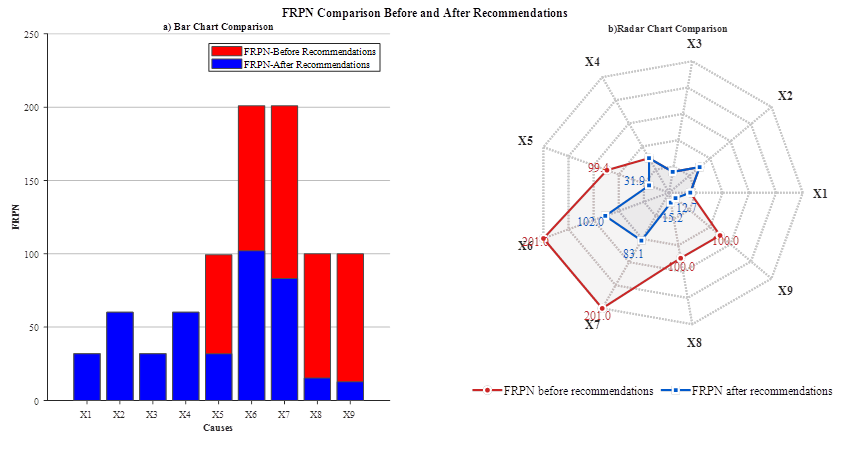
Fig. 6. Comparison of FRPN values before and after recommendations: (a) Bar chart representation and (b) Radar chart representation
The quantitative evaluation of the effectiveness of the proposed actions to improve the performance of the fuel cell system is ensured by risk analysis through a calculation of the relative reduction of the fuzzy RPN value illustrated in equation 5.
The performance indicator in our study is around 65.1% which remarkably demonstrates the proportional decrease in the severity of the risk after the implementation of the recommended corrective measures. Despite its contributions, this study presents some limitations. The definition of fuzzy rules relies on expert judgment, which may introduce subjectivity. In addition, the methodology has not been validated using real-time experimental data. Future work will focus on validating the approach using real operational datasets and integrating data-driven techniques to enhance model robustness.
4 Conclusions
This work offers a structured and comprehensive analysis of the causes of aging in PEM fuel cells. This study examines the main degradation pathways and performs a detailed criticality analysis, highlighting the failure mechanisms most critical to their reliability. The integration of fuzzy logic into the FRPN calculation allowed for a more robust evaluation of risk under uncertain operating conditions. Based on these results, the investigation of critical failure causes led to the development of targeted and effective recommendations. The implementation of these corrective actions resulted in a significant reduction of occurrence and improved detectability, demonstrating a clear decrease in overall risk. This reduction is quantitatively reflected by a decrease in the total FRPN from 701.4 to 244.9, corresponding to an overall risk reduction of approximately 65.1%. Ultimately, this work contributes to enhancing the operational safety, reliability, and long-term performance of PEM fuel cell systems. Future research will focus on experimental validation and the integration of machine learning techniques for adaptive and data-driven risk assessment.
Acknowledgements
No external funding was received.
References
- Shujahat, Q., Iram, I., Rabi, S., & Ehtesham, A. (2025). Fuel cells and their role in sustainable energy transition: A review. Future Energy and Environment Letters, 4(1), 1–18. https://doi.org/10.37934/feel.4.1.118
- Nassir, R., Fahad Khan, K., Ullah, I., et al. (2025). Hydrogen fuel cell technology: A sustainable future for mechanical power systems. Spectrum of Engineering Sciences.
- Zhang, Q., Harms, C., Mitzel, J., Gazdzicki, J., & Friedrich, K. A. (2022). The challenges in reliable determination of degradation rates and lifetime in polymer electrolyte membrane fuel cells. Current Opinion in Electrochemistry, 31, 100863. https://doi.org/10.1016/j.coelec.2021.100863
- Wang, J. (2017). System integration, durability and reliability of fuel cells: Challenges and solutions. Applied Energy, 189, 460–479. https://doi.org/10.1016/j.apenergy.2016.12.083
- Ou, M., Zhang, R., Shao, Z., Li, B., Yang, D., Ming, P., & Zhang, C. (2021). A novel approach based on semi-empirical model for degradation prediction of fuel cells. Journal of Power Sources, 488, 229435. https://doi.org/10.1016/j.jpowsour.2020.229435
- Luo, Y., & Yin, C. (2025). Dynamic performance prediction of multi-cell proton exchange membrane fuel cells with a hybrid machine learning method. Energy, 338, 138868. https://doi.org/10.1016/j.energy.2025.138868
- Pivac, I., Bezmalinović, D., & Barbir, F. (2018). Catalyst degradation diagnostics of proton exchange membrane fuel cells using electrochemical impedance spectroscopy. International Journal of Hydrogen Energy, 43(29), 13512–13520. https://doi.org/10.1016/j.ijhydene.2018.05.095
- Agravante, G. J. B., & Gostick, J. T. (2026). Simulating transient pore-scale behaviour of platinum degradation in PEM fuel cells using pore network modeling. Journal of Power Sources, 663, 238878. https://doi.org/10.1016/j.jpowsour.2025.238878
- Wahdame, B., Candusso, D. X., François, F., Harel, J. M., Kauffmann, G., & Coquery, G. (2009). Design of experiment techniques for fuel cell characterisation and development. International Journal of Hydrogen Energy, 34(2), 967–980. https://doi.org/10.1016/j.ijhydene.2008.10.066
- Bendjedia, B., Rizoug, N., Boukhnifer, M., & Bouchafaa, F. (2017). Improved energy management strategy for a hybrid fuel cell/battery system: Simulation and experimental results. COMPEL, 36(4), 1008–1027. https://doi.org/10.1108/COMPEL-08-2016-0336
- Niu, L., & Xiao, L. (2024). Optimization of topology and energy management in fuel cell cruise ship hybrid power systems. Intelligent Marine Technology and Systems, 2(12). https://doi.org/10.1007/s44295-024-00026-3
- Brik, K., Ben Ammar, F., Djerdir, A., & Miraoui, A. (n.d.). Causal and fault trees analysis of proton exchange membrane fuel cell degradation. Journal of Fuel Cell Science and Technology. https://doi.org/10.1115/1.4031584
- Liu, Y., Tu, Z., & Chan, S. H. (2023). Performance evaluation and degradation mechanism for proton exchange membrane fuel cell with dual exhaust gas recirculation. Advanced Energy and Sustainability Research, 4(7). https://doi.org/10.1002/aesr.202200180
- Yao, Z., Xiao, B., Cai, S., & Tu, Z. (2025). Proton exchange membrane fuel cell fueled by impure hydrogen and air: A review. International Journal of Hydrogen Energy, 126. https://doi.org/10.1016/j.ijhydene.2025.03.376
- Wu, J., Yuan, X. Z., Martin, J., Wang, H., Zhang, J., Shen, J., Wu, S., & Merida, W. (2008). A review of PEM fuel cell durability: Degradation mechanisms and mitigation strategies. Journal of Power Sources, 184, 104–119. https://doi.org/10.1016/j.jpowsour.2008.06.006
- Taniguchi, A., Akita, T., Yasuda, K., & Miyazaki, Y. (2008). Analysis of degradation in PEMFC caused by cell reversal during air starvation. International Journal of Hydrogen Energy, 33, 2323–2329. https://doi.org/10.1016/j.ijhydene.2008.02.049
- Rupinder, S., Amandeep, S. O., & Talwinder, S. (2021). Factors influencing the performance of PEM fuel cells: A review on performance parameters, water management, and cooling techniques. International Journal of Energy Research. https://doi.org/10.1002/er.7437
- Wu, J., Yuan, X. Z., Martin, J. J., Wang, H., Zhang, J., Shen, J., Wu, S., & Merida, W. (2008). A review of PEM fuel cell durability: Degradation mechanisms and mitigation strategies. Journal of Power Sources, 184(1), 104–119. https://doi.org/10.1016/j.jpowsour.2008.06.006
- Yahmadi, R., Brik, K., & Ben Ammar, F. (2021). Fuzzy risk priority number assessment for solar gel battery manufacturing defects. Engineering Failure Analysis, 124, 105327. https://doi.org/10.1016/j.engfailanal.2021.105327
- Di Bona, G., Silvestri, A., Forcina, A., & Petrillo, A. (2018). Total efficient risk priority number (TERPN): A new method for risk assessment. Journal of Risk Research, 21, 1384–1408. https://doi.org/10.1080/13669877.2017.1307260
- Mohammadi, M., Sarvi, S., & Jafarzadeh Ghoushchi, S. (2026). Assessing and prioritizing construction contracting risks with an extended FMEA decision-making model in uncertain environments. Spectrum of Decision Making and Applications, 3(1). https://doi.org/10.31181/sdmap31202642
- Wang, Y., Han, X., & Wang, W. (2024). A Fermatean fuzzy ORESTE method for evaluating the resilience of the food supply chain. Journal of Operations Intelligence, 2(1). https://doi.org/10.31181/jopi2120249
- Jafarzadeh Ghoushchi, S., & Sarvi, S. (2023). Prioritizing and evaluating risks of ordering and prescribing in the chemotherapy process using an extended SWARA and MOORA under fuzzy Z-numbers. Journal of Operations Intelligence, 1(1). https://doi.org/10.31181/jopi1120238
- Ghanbari, N., Koohyar Ahmadzadeh, G., & Jafarzadeh Ghoushchi, S. (2023). A new extended approach to reduce admission time in hospital operating rooms based on the FMEA method in an uncertain environment. Journal of Soft Computing and Decision Analytics, 1(1). https://doi.org/10.31181/jscda11202310
- Azzouz, I., Hammami, I., Brik, K., & Ben Ammar, F. (2022). Integration of multi-criteria decision-making for performance evaluation of different solar batteries technologies. Electrical Engineering. https://doi.org/10.1007/s00202-022-01697-z
- Yahmadi, R., Brik, K., & Ben Ammar, F. (2023). Research of critical causes of solar panel aging based on fuzzy fault tree and Pareto chart approach. Journal of Applied Engineering Science, 23(2), 330–344. https://doi.org/10.5937/jaes0-56142
Conflict of Interest Statement
There are no conflicts affecting the research.
Author Contributions
Data Availability Statement
There is no dataset associated with the study or data is not shared.
Supplementary Materials
There are no supplementary materials to include.