Volume 24 article 1375 pages: 840-850
Received: Sep 30, 2026 Accepted: Nov 13, 2026 Available Online: Nov 16, 2026 Published: Nov 17, 2026
DOI: 10.5937/jaes0-71375
DECISION CRITERIA FOR BUILDING ENERGY RETROFITTING: A SYSTEMATIC LITERATURE REVIEW
Abstract
Building energy retrofitting is widely regarded as one of the most effective strategies for reducing the operational energy consumption and greenhouse gas (GHG) emissions of existing building stock, yet selecting an appropriate retrofit strategy remains an inherently multi-dimensional decision problem rather than a single-objective one. This paper synthesises the criteria and sub-criteria that have been used in prior research to structure building energy-retrofit decision-making. A Preferred Reporting Items for Systematic Reviews and Meta-Analyses (PRISMA)-based search of the Web of Science, Scopus, and ScienceDirect databases covering the period 2020–2024 identified an initial pool of 3,854 records (3,817 from database searching plus 25 through snowballing), which was reduced through duplicate removal, year filtering, and eligibility screening to a working corpus of 143 studies concerned with building-retrofit decision-making. Of these, 21 studies that explicitly proposed or applied a retrofit decision-criteria framework were selected for detailed content analysis. This analysis yielded eight principal criteria including economics, environmental and energy, technical, comfort and usability, health and safety, social, cultural, and regulatory and institutional compliance comprising 33 sub-criteria in total. Environmental/energy and economics considerations dominate the reviewed literature reported in 16/21 (76%) and 15/21 (71%) studies, respectively, whereas social, cultural, and health-related dimensions remain comparatively underexplored (1–3/21 studies).
Highlights
- Eight decision criteria and 33 sub-criteria were synthesized from 21 studies (2020–2024) that explicitly state retrofit decision criteria.
- Environmental/energy (16/21) and economic (15/21) criteria dominate; energy saving, investment cost and payback period are the most reported sub-criteria.
- The taxonomy serves as a screening checklist and a starting point for context-specific multi-criteria frameworks, not as a pre-weighted model.
Keywords
Content
1 Introduction
Approximately 40% of the world's energy consumption and more than 30% of its greenhouse gas emissions (GHG) come from the building sector, which is one of the biggest consumers of energy globally [1], [2], [3], [4], [5], [6]. Moreover, most of the energy utilized globally comes from existing building [7], which the operational phase alone accounts for more than 60% of total building energy consumption and GHG emissions, as it sustains the appliances, HVAC, and lighting systems required for daily occupant activity [8], [9]. As a result, energy efficiency and energy saving have become very important issues [10].
Improving the energy performance of both new and existing buildings is important for achieving global sustainability and energy-efficiency goals [4], [11]. Furthermore, since the yearly replacement rate of existing buildings with new ones is still very low roughly 1-3% worldwide, improving the performance of new buildings alone is insufficient. [11], [12]. In line with efforts to improve energy efficiency, existing buildings offer considerable potential for reducing energy consumption, with energy-saving opportunities of up to 38% [13]. However, demolishing existing buildings and replacing them with new energy-efficient buildings may not represent a practical solution due to the associated cost, time, resource consumption, and environmental impacts [13]. Therefore, retrofitting provides an important approach for improving the energy performance of existing buildings while reducing energy consumption and associated GHG emissions [11], [14]. For existing buildings, these objectives can be pursued through appropriate energy-efficiency interventions, particularly building retrofitting, which enables improvements in energy and environmental performance without requiring complete building replacement [9]. Furthermore, as the existing building stock continues to grow, the need for appropriate retrofitting interventions becomes increasingly important for improving energy efficiency and supporting broader sustainability goals [15].
Energy retrofitting is a crucial strategy for enhancing the performance of the stock of existing buildings given their substantial energy use. Retrofitting generally involves modifying, upgrading, or replacing components and systems within an existing building to improve its performance without requiring complete reconstruction [16]. According [17], retrofitting, which incorporates new materials and technology into existing building to improve their performance and comply with Sustainable Development Goals (SDG’s), is a more affordable and sustainable option than complete replacement. Additionally, using building materials and structures that satisfy energy efficiency standards is crucial in modern construction [18]. In the context of energy efficiency, building energy retrofitting specifically aims to reduce energy consumption and associated GHG emissions while maintaining or improving indoor environmental quality and occupant comfort [19], [20]. Moreover, retrofitting can provide broader benefits, including reduced maintenance and operational costs [3], [15].
Despite this need for a multi-dimensional evaluation, existing studies have generally adopted only a limited subset of criteria relevant to their specific case, building type, or decision context, rather than drawing on the broader range of criteria established across the wider retrofit literature. Cost-related and energy/environmental criteria have received the most consistent attention, whereas technical, comfort and usability, health and safety, social, cultural, and regulatory dimensions have each been addressed by only a small number of studies, and typically in isolation from one another [21], [22]. This fragmented treatment means that no single study currently provides a comprehensive, evidence-based overview of the full range of criteria that have actually been used to support retrofit decision-making.
Consequently, when a new retrofit case is undertaken, researchers and practitioners commonly select criteria based on a limited number of references or on the specific technologies under consideration, rather than on a systematic accounting of what has previously been shown to be relevant. This practice risks the omission of criteria that may prove important for a given context particularly one, such as a tropical, developing-country setting, that differs from where the majority of existing studies were conducted [15], [23]. This absence of a synthesized, comprehensive reference constitutes the central research gap addressed by the present study. Rather than proposing a new set of criteria in isolation, this study systematically reviews and compiles the criteria and sub-criteria that have been applied across prior retrofit decision-making research, in order to establish a comprehensive taxonomy of the criteria options available to decision-makers. Such a taxonomy is intended to serve as an evidence-based reference for subsequent retrofit case studies, allowing researchers and practitioners to select and adapt criteria relevant to their own building type, stakeholder context, and climatic setting, rather than relying on an ad hoc or incomplete subset of considerations.
This paper addresses this gap by systematically reviewing and synthesizing the criteria used in prior building-retrofit decision-making research. Specifically, it aims to (i) identify and classify the principal criteria and sub-criteria applied in the retrofit decision-making literature published between 2020 and 2024; (ii) examine the relative frequency with which each criterion has been considered, as an indicator of its treatment in the existing evidence base; and (iii) discuss the implications of this taxonomy for retrofit decision-making
The method utilized for this systematic review involves a comprehensive selection procedure of relevant studies from Web of Science, Scopus and Science Direct. Based on predetermined criteria, twenty-one respectable journals articles were selected. And the keywords used were (“building retrofitting” OR “building retrofit”) AND (“energy efficiency” OR “energy-efficient”), while the studies focused on the adaptation of retrofitting case were limited to the period from 2020 to 2024. The studies' geographical scope was unrestricted, guaranteeing a thorough worldwide viewpoint. Consequently, the selected cases comprised multiple countries from Asia, Africa, Europe, and America continent with a total of 66%, 5%, 19%, and 10%, respectively, reflecting a diverse set of applications and implications for building type across different regions.
Several reviews are close to the present study but differ in what they synthesize. Ho et al. [22] derived key performance indicators for the holistic evaluation of building retrofits through a literature review and a focus group. Peiris et al. [23] compared decision-making criteria for smart retrofitting of office buildings between developing and developed regions. Lakhiar et al. [24] reviewed energy-retrofitting strategies for existing buildings in Malaysia, and Baset and Jradi reviewed data-driven decision-support methods for energy retrofits. These works address indicators, a specific building type or technology, a specific country, or decision-support methods. The present review instead takes the decision criteria themselves as the unit of analysis across building types and regions for 2020–2024. Its contribution is threefold. First, it provides a two-level taxonomy of eight criteria and 33 sub-criteria in which each item is traceable to its source studies, so that researchers can select and adapt criteria for a new retrofit case without relying on a limited set of references. Second, it reports how often each criterion has been used, separating research attention from importance, which shows that social, cultural, health and safety, and regulatory dimensions are rarely operationalized. Third, it shows that the evidence comes mainly from temperate and sub-tropical Asian and European contexts, which indicates the need to adapt criteria and weightings for tropical, developing-country settings.
The remainder of the paper is organized as follows: Section 2 describes the review protocol; Section 3 presents the resulting criteria taxonomy; Section 4 discusses each criterion category in turn and Section 5 concludes the paper and outlines directions for future research.
2 Materials and methods
The process of identifying, reviewing, comparing, synthesizing, and summarizing research literature that is pertinent to a certain research issue or area of interest is known as a systematic literature review [24]. The primary methodological framework for this review was the Preferred Reporting Items for Systematic Reviews and Meta-Analyses (PRISMA) protocol, which follows the four steps of identification, screening, eligibility assessment, and inclusion that are frequently used in building-retrofit systematic reviews [22] [24]. In order to ensure the thorough capture of pertinent studies and reduce bias, PRISMA uses a systematic search process that spans multiple databases and sources. This method greatly improves the breadth and precision of the conclusions drawn from the body of existing literature.
In the identification stage, records were retrieved from three databases including Web of Science, Scopus, and ScienceDirect using the Boolean search string (“building retrofitting” OR “building retrofit”) AND (“energy efficient” OR “energy efficiency”), yielding 348; 615; and 2,854 records, respectively (3,817 in total), supplemented by a further 25 records identified through citation snowballing, for an initial pool of 3,854 records (Figure 1).
Records were then filtered to retain only journal articles published in English between 2020 and 2024, after which duplicates and inaccessible records were removed. The remaining records were screened against the scope of the review namely, studies addressing building energy-retrofit decision-making, prioritization, or evaluation and assessed for eligibility, resulting in a final corpus of 143 studies retained for full analysis. The studies selected for content analysis were those that explicitly stated the criteria used in retrofit decision-making. Of the 143 studies addressing retrofit decision-making, the majority did not report the criteria or sub-criteria considered in the decision process, and these could therefore not contribute to the objective of this review, namely the synthesis of decision criteria. From this corpus, 21 studies were identified as explicitly proposing, applying, or validating a structured set of criteria or sub-criteria for retrofit decision-making, as distinct from studies that reported retrofit outcomes (e.g., simulated energy savings) without an accompanying decision-criteria framework. These 21 studies, published between 2020 and 2024 in accredited, reputable outlets, form the primary evidence base synthesized in this paper.
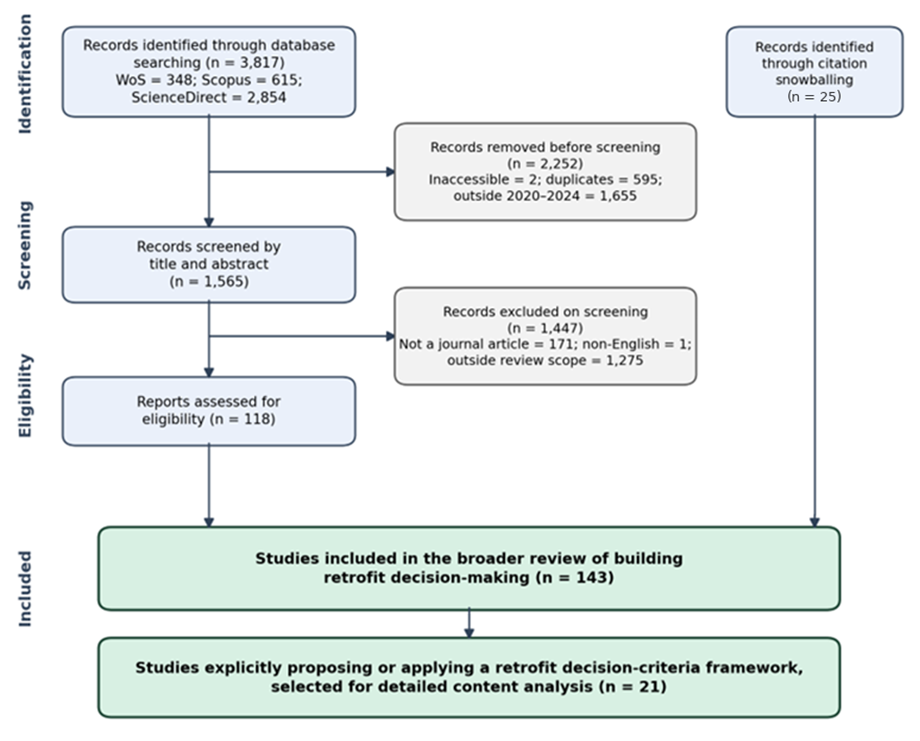
Fig. 1. PRISMA flow diagram of the literature search
Content analysis was applied to the 21 selected studies to extract every criterion and sub-criterion used to structure retrofit decisions. Extracted items were then grouped into criteria categories according to their underlying decision dimension (e.g., cost-related items were grouped under “economic”; emissions and energy related items under “environmental and energy”), following the grouping logic commonly applied in retrofit key-performance-indicator reviews [22]. For each sub-criterion, the frequency of occurrence across the 21 studies was recorded as an indicator of the extent to which that dimension has been considered in the existing evidence base; this frequency is reported as a simple count out of 21 studies and should not, in itself, be interpreted as a measure of a criterion's relative importance, since importance is expected to vary with building typology, climatic context, and stakeholder priorities [23]. The resulting taxonomy, presented in Section 3, is intended as a literature-derived evidence base rather than a final, weighted decision model. To characterize the evidence base itself, the location and building type of each of the 21 studies were also extracted (Table 2).
3 Results and discussion
3.1 Taxonomy of building retrofit criteria
The content analysis of the 21 reviewed studies identified eight principal criteria governing building retrofit decision-making: C-1: Economics, C-2: Environmental and Energy, C-3: Technical, C-4: Comfort and Usability, C-5: Health and Safety, C-6: Social, C-7: Cultural, and C-8: Regulatory and Institutional Compliance. These eight criteria collectively encompass 33 sub-criteria, summarized in Table 1 together with the frequency with which each was reported and representative sources from which it was drawn.
Environmental and energy considerations were the most consistently reported criterion category, appearing in 16 of the 21 studies (76%), followed closely by economics considerations in 15 of 21 studies (71%); comfort and usability, and technical considerations followed in 43% and 29% respectively, while health and safety (14%), social, and regulatory and institutional compliance followed in (10%) respectively, and cultural (5%) considerations were reported comparatively rarely.
Table 1. Building retrofit criteria
|
Criteria |
Sub-Criteria |
Frequency |
Sources |
|
|
ECONOMICS (15 journal papers) |
71% |
|||
|
C.1 |
Economics |
Investment Cost |
10/21 |
[21], [23], [25], [26], [27], [28], [29], [30], [31], [32] |
|
Payback Period |
10/21 |
[25], [27], [28], [29], [30], [31], [32], [33], [34], [35] |
||
|
O&M and Repair Cost |
4/21 |
[21], [23], [28], [35] |
||
|
Asset Value |
4/21 |
[21], [23], [36], [37] |
||
|
Economic Feasibility |
3/21 |
[25], [26], [34] |
||
|
Cost Savings |
3/21 |
[21], [27], [36] |
||
|
Uncertainty & Risk |
1/21 |
[26] |
||
|
ENVIRONMENTAL & ENERGY (16 journal papers) |
76% |
|||
|
C.2 |
Environmental & Energy |
Energy Saving |
13/21 |
[12], [23], [25], [27], [28], [29], [30], [31], [34], [35], [37], [38], [39] |
|
CO₂ Emissions Reduction |
7/21 |
[25], [27], [28], [30], [32], [33], [34] |
||
|
Life-Cycle Environmental Impact |
2/21 |
[15], [32] |
||
|
Retrofit Waste Management |
1/21 |
[33] |
||
|
TECHNICAL (6 journal papers) |
29% |
|||
|
C.3 |
Technical |
Compatibility with Existing Building |
2/21 |
[23], [33] |
|
Implementation Complexity |
2/21 |
[23], [31] |
||
|
Required Technical Skills & Competence |
2/21 |
[23], [33] |
||
|
Reliability |
1/21 |
[23] |
||
|
Service Life |
1/21 |
[28] |
||
|
Inconvenience during Project |
1/21 |
[12] |
||
|
Structural Durability |
1/21 |
[40]
|
||
|
COMFORT & USABILITY (9 journal papers) |
43% |
|||
|
C.4 |
Comfort & Usability |
Occupant Satisfaction |
5/21 |
[21], [23], [34], [36], [39] |
|
User-Friendliness |
3/21 |
[23], [32], [33] |
||
|
Retrofit Need & Demand |
2/21 |
[25], [31] |
||
|
Occupant Awareness & Adaptability |
1/21 |
[33] |
||
|
Energy-Efficient Behaviour |
1/21 |
[33] |
||
|
HEALTH & SAFETY (3 journal papers) |
14% |
|||
|
C.5 |
Health & Safety |
Indoor Environmental Quality |
3/21 |
[23], [28], [29] |
|
Hazard Response Capabilities |
1/21 |
[23] |
||
|
SOCIAL (2 journal papers) |
10% |
|||
|
C.6 |
Social |
Public Trust |
2/21 |
[21], [37] |
|
Image of Organization |
1/21 |
[21] |
||
|
Impact on Occupant Life |
1/21 |
[21] |
||
|
CULTURAL (1 journal papers) |
5% |
|||
|
C.7 |
Cultural |
Aesthetic Value |
1/21 |
[21] |
|
Historic & Cultural Value |
1/21 |
[21] |
||
|
Coordination with Surrounding Environment |
1/21 |
[21] |
||
|
REGULATORY & INSTITUTIONAL COMPLIANCE |
10% |
|||
|
C.8 |
Regulatory & Institutional Compliance |
Compliance with Landscape Plans |
1/21 |
[25] |
|
Data Protection & Access Control |
1/21 |
[23] |
||
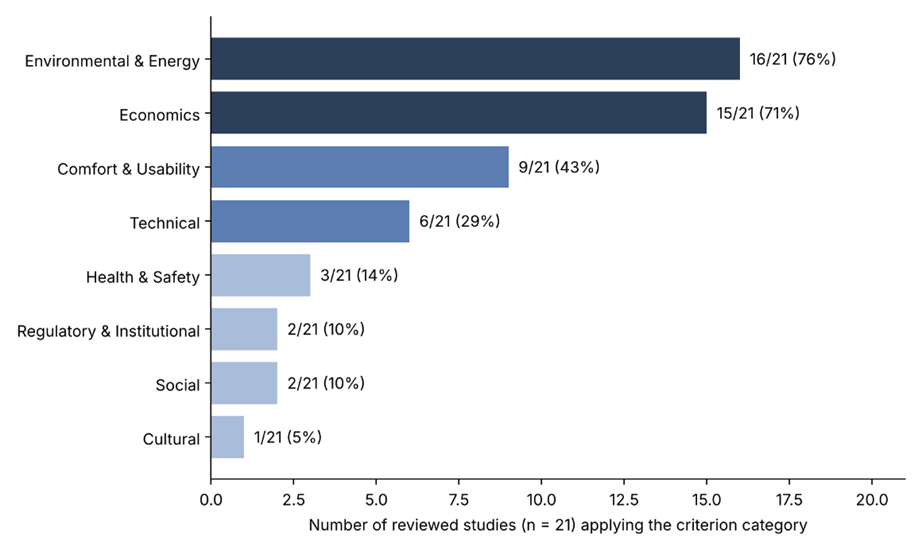
Fig. 2. Frequency of the eight criteria categories across the 21 reviewed studies
As shown in Table 1, retrofit decision-making is consistently framed in the literature as extending well beyond energy performance alone. Even so, the frequency with which a criterion appears should be read as an indicator of research attention rather than of intrinsic importance: several sub-criteria reported in only a single study (e.g., aesthetic value, historic and cultural value, and coordination with the surrounding environment) may nonetheless be highly consequential in specific contexts, such as heritage buildings or culturally significant public buildings, even though they have rarely been operationalized in quantitative retrofit-decision models to date.
3.2 Characteristics of the reviewed studies
Table 2 summarizes the setting and approach of the 21 reviewed studies. The evidence base is geographically concentrated: China and Hong Kong account for six studies (29%), Europe (Italy, Germany) for four (19%), Southeast Asia (Singapore, Thailand, Malaysia, Philippines) for four (19%), India for three (14%), North America for two (10%), and Africa for one in Egypt, while one study compares Hong Kong with Sri Lanka.
Table 2. Reviewed studies of retrofitting criteria
|
Case Study |
Location |
Building type |
|
[25] |
Italy |
Commercial: office |
|
[26] |
Singapore |
Educational: university |
|
[27] |
Bangkok, Thailand |
Hotel, retail, office |
|
[38] |
China |
Commercial: office |
|
[28] |
Germany |
Residential: family house |
|
[22] |
Hong Kong |
Residential: apartment |
|
[39] |
India |
Educational: university |
|
[36] |
United States |
Commercial: retail |
|
[33] |
United States |
Commercial: office |
|
[15] |
Kuala Lumpur, Malaysia |
Commercial: office |
|
[29] |
Quezon City, Philippines |
Educational: university |
|
[21] |
China |
Residential: apartment |
|
[37] |
Beijing, China |
Commercial: office |
|
[30] |
India |
Educational: school |
|
[31] |
Telangana, India |
Student dormitory |
|
[34] |
China |
Medical: hospital |
|
[12] |
Cairo, Egypt |
Commercial: office |
|
[23] |
Hong Kong and Sri Lanka |
Commercial: office |
|
[32] |
Italy |
Residential: family house |
|
[35] |
Italy |
Residential: apartment |
|
[40] |
China |
Residential: apartment |
3.3 Details of criteria
3.3.1 Economics
Economic considerations are the second most consistently applied criterion in the reviewed literature, reflecting a long-standing view that cost-effectiveness is a necessary, if not sufficient, condition for retrofit adoption [22], [33]. Investment cost and payback period are the two most frequently reported sub-criteria, each appearing in ten of the 21 studies, indicating that decision-makers are typically concerned both with the up-front capital outlay of a retrofit measure and with the speed at which that outlay is recovered through operational savings [25], [28]. Beyond these two headline indicators, several studies incorporate more comprehensive investment-appraisal metrics, including net present value, benefit-cost ratio, and return on investment, which account for the time value of money and thereby support a more complete assessment of financial feasibility across a project's service life [21], [31], [34]. Operation-and-maintenance cost, asset value, and direct cost savings appear less frequently but remain relevant where retrofit measures are expected to alter a building's long-term operating expenditure or market value [36], [37]. Only one study explicitly modelled uncertainty and risk within the economic dimension [26], suggesting that the treatment of financial risk particularly relevant where energy prices, currency conditions, or contractor performance are volatile remains an underdeveloped aspect of the economic criterion.
3.3.2 Environmental and energy
Environmental and energy considerations form the most frequently reported criterion category and, together with economics, constitute the two dimensions on which the great majority of Multicriteria Decision Making (MCDM) based retrofit studies are built [37], [41]. Energy saving typically expressed as the reduction in annual delivered or primary energy following the retrofit intervention is by far the most consistently reported sub-criterion, appearing in 13 of the 21 studies [25], [30]. Reduction in carbon dioxide emissions is reported somewhat less frequently, generally computed as the difference between pre- and post-retrofit emissions associated with the building's energy use [25], [28], [34]. Life-cycle environmental impact and retrofit-related waste management, by contrast, are reported in only a small number of studies [15], [32], [33], pointing to a broader retrofit literature that continues to prioritize operational-phase energy and emissions over the embodied and end-of-life environmental burdens associated with retrofit materials themselves.
3.3.3 Technical
Technical considerations concern the practical feasibility of implementing a given retrofit measure within the constraints of an existing building. Because the range of available retrofit technologies directly shapes both achievable energy performance and financial return, the selection of a technically sound retrofit scheme has been described as a foundational step that conditions the outcomes of the economic and environmental dimensions discussed above [37]. The reviewed studies identify compatibility with existing building systems, the complexity of implementation, and the technical skills and competence required of the maintenance and management team as recurring sub-criteria [23], [33]. Reliability of the modified hardware or software, expected service life of the intervention, potential inconvenience or disruption to occupants during the retrofit works, and structural durability are each reported in only a single study within the reviewed corpus [12], [23], [28], [40], suggesting that constructability- and disruption-related concerns which are likely to be particularly salient for occupied public buildings such as government offices remain comparatively under-theorized within existing retrofit decision-criteria frameworks.
3.3.4 Comfort and usability
Comfort and usability criteria capture the effect of retrofit interventions on the occupants who use a building on a daily basis. Occupant satisfaction is the most frequently reported sub-criterion in this category, generally operationalized through the four principal dimensions of indoor environmental quality thermal, olfactory, acoustic, and visual comfort [22], [39]. User-friendliness of retrofitted systems, and the extent to which a proposed measure meets the building's actual functional needs and demands, are also reported, reflecting a recognition that retrofit measures selected purely on technical or economic grounds may nonetheless be rejected, underused, or operated incorrectly by building occupants [31], [33]. Occupant awareness and adaptability, and energy-efficient behavior, appear in only a single study each [33], despite a wider literature indicating that occupant behavior can substantially offset the technical energy-saving potential of a retrofit measure if not adequately addressed through training, communication, or system design [23].
3.3.5 Health and safety criteria
Health and safety criteria remain comparatively underrepresented in the reviewed literature, appearing in only three of the 21 studies. Indoor environmental quality covering air quality, thermal conditions, and the avoidance of sick-building-syndrome-type symptoms is the most consistently reported sub-criterion [22], [29], while automated hazard-detection and emergency-response capabilities, such as automatic leak or gas detection, are reported in a single study [23]. Structural and fire safety are noted qualitatively in the broader retrofit literature but are rarely operationalized as explicit, measurable decision sub-criteria within the reviewed MCDM frameworks, which points to an opportunity for closer integration between energy-retrofit and building-safety assessment practices, particularly for public buildings subject to statutory life-safety requirements.
3.3.6 Social
Social criteria including public trust, organizational image, and the broader impact of retrofit works on the daily lives of building occupants and neighboring communities are drawn from a single source study within the reviewed corpus [21], yet appear conceptually important for publicly owned and operated buildings. Public trust reflects the degree to which citizens believe that government agencies will act in the public interest when allocating funds to retrofit projects, while organizational image reflects the reputational benefit that an institution may derive from visibly adopting green or energy-efficient technologies [21], [33]. The comparative scarcity of social criteria in the existing literature may reflect the fact that most reviewed studies concern privately owned commercial or residential buildings, for which reputational and public-trust considerations are less immediately salient than they are for government-owned public buildings.
3.3.7 Cultural
Cultural criteria are the least frequently reported category in the reviewed literature, drawn entirely from a single study [21], and comprise aesthetic value, historic and cultural value, and the degree of coordination between the retrofitted building and its surrounding natural and built environment. Although rarely quantified, these considerations may be disproportionately important in specific building typologies heritage buildings, culturally significant civic architecture, or buildings located within protected townscapes where retrofit interventions that alter external appearance or historic fabric may face regulatory or community resistance regardless of their energy or economic merit.
3.3.8 Regulatory and institutional compliance
Regulatory and institutional compliance criteria concern the extent to which a proposed retrofit measure satisfies statutory planning constraints and institutional security requirements, including compliance with landscape or zoning plans and, in more technologically advanced retrofit schemes, requirements for data protection and access control associated with building-management systems [23], [25]. While reported in only two of the 21 studies, this criterion is likely to be particularly consequential for government-owned buildings, which are typically subject to more extensive procurement, budgeting, and public-accountability regulations than privately owned building stock.
4 Conclusions
This paper has systematically reviewed and synthesized the criteria used in prior research to structure building energy-retrofit decision-making. Economic and environmental/energy criteria dominate the existing evidence base, while technical, comfort, health, social, cultural, and regulatory considerations remain comparatively underexplored, despite their evident relevance to publicly owned buildings operated under multi-stakeholder governance arrangements. For engineers and owners, the taxonomy can be used as a checklist at the scoping stage of a retrofit project so that criteria are chosen deliberately rather than from a few familiar references. The results suggest a staged use. Technical feasibility criteria (compatibility with the existing building, implementation complexity, required skills, disruption to occupants and structural durability) and regulatory constraints can screen out options that cannot be built or approved. Economic, energy and environmental criteria can then rank the remaining options, together with comfort and indoor environmental quality criteria, which determine whether projected savings are realized in use. Because frequency of use is not importance, the weights of the selected criteria should be elicited from the stakeholders of each project, for example with a multi-criteria method, and not taken from this review.
This review has several limitations. The search covered three databases, English-language journal articles and the years 2020–2024, so relevant studies outside these limits, including grey literature and non-English work, may be missing. Only 21 of the 143 retrieved decision-making studies stated an explicit criteria framework, which limits the evidence base for the less-reported criteria. Criteria were extracted as stated by the original authors and grouped by the authors' judgement, and no formal quality appraisal of the included studies was performed. Frequencies reflect research attention, not weight or effectiveness. Future work should validate and weight the taxonomy with local stakeholders in such contexts.
The review further indicates that the existing criteria literature is drawn predominantly from temperate and sub-tropical building contexts, with limited direct evidence from tropical, developing-country settings. Given that cooling-dominated energy demand, humidity-related comfort and health considerations, and pronounced lowland-highland microclimatic variation distinguish tropical building operation from that of temperate climates, the direct transfer of existing criteria weightings to tropical government office buildings should be undertaken with caution. Accordingly, the eight-category taxonomy developed in this review is offered as an evidence-based starting point rather than a final, pre-weighted model for constructing context-specific multi-criteria decision-making frameworks for tropical retrofit practice.
Acknowledgements
This research is funded by Universitas Sebelas Maret under the Doctoral Dissertation Research grant scheme (PDD-UNS) Contract Number: 460/UN27.22/PT.01.03/2026, titled Energy-Efficient Strategies for Building Retrofitting in Tropical Climates.
This paper was presented at the 12th International Conference and Exhibition on Sustainable Energy and Advanced Materials (ICE-SEAM 2026), held at Truntum Kuta, Bali, Indonesia, on 10-11 September 2026. It was subsequently submitted for consideration for publication in the Thematic section of the Journal of Applied Engineering Science associated with the conference. The paper was not published in the conference proceedings.
References
- A. Artino, R. Caponetto, G. Evola, G. Margani, E. M. Marino, and E. Murgano, “Decision support system for the sustainable seismic and energy renovation of buildings: Methodological layout,” Sustainability (Switzerland), vol. 12, no. 24, pp. 1–21, Dec. 2020, doi: 10.3390/su122410273.
- J. Hossain et al., “A Review on Optimal Energy Management in Commercial Buildings,” Energies (Basel)., vol. 16, no. 4, Feb. 2023, doi: 10.3390/en16041609.
- E. Asadi, B. Chenari, A. R. Gaspar, and M. Gameiro da Silva, “Development of an optimization model for decision-making in building retrofit projects using RETROSIM,” Advances in Building Energy Research, vol. 17, no. 3, pp. 324–344, 2023, doi: 10.1080/17512549.2023.2204872.
- F. Ascione et al., “A real industrial building: Modeling, calibration and Pareto optimization of energy retrofit,” Journal of Building Engineering, vol. 29, May 2020, doi: 10.1016/j.jobe.2020.101186.
- A. Abdeen, E. Mushtaha, A. Hussien, C. Ghenai, A. Maksoud, and V. Belpoliti, “Simulation-based multi-objective genetic optimization for promoting energy efficiency and thermal comfort in existing buildings of hot climate,” Results in Engineering, vol. 21, Mar. 2024, doi: 10.1016/j.rineng.2024.101815.
- D. Kadrić, A. Aganovic, E. Kadrić, B. Delalić-Gurda, and S. Jackson, “Applying the response surface methodology to predict the energy retrofit performance of the TABULA residential building stock,” Journal of Building Engineering, vol. 61, Dec. 2022, doi: 10.1016/j.jobe.2022.105307.
- A. Younis, M. Tawalbeh, A. Daraneh, S. M. Al Shurafa, and M. Al-Ghriybah, “Energy Retrofit and Renewable Energy Integration for Resilient Public Schools Buildings: A Validated Case Study using Building Energy Simulation,” Journal of Applied Engineering Science, vol. 24, no. 2, pp. 257–276, Jun. 2026, doi: 10.5937/jaes0-62651.
- M. Heidari, M. H. Rahdar, A. Dutta, and F. Nasiri, “An energy retrofit roadmap to net-zero energy and carbon footprint for single-family houses in Canada,” Journal of Building Engineering, vol. 60, Nov. 2022, doi: 10.1016/j.jobe.2022.105141.
- A. Alazazmeh and M. Asif, “Commercial building retrofitting: Assessment of improvements in energy performance and indoor air quality,” Case Studies in Thermal Engineering, vol. 26, Aug. 2021, doi: 10.1016/j.csite.2021.100946.
- R. Sharipov, O. Kudrevich, S. Yerzhanov, M. Shavdinova, and D. Tyulyubayeva, “Further Improvement of Methods for Determining Energy Efficiency of Buildings and Structures in the Republic of Kazakhstan,” Journal of Applied Engineering Science, vol. 18, no. 4, pp. 550–560, 2020, doi: 10.5937/jaes0-27202.
- F. Amiri Fard and F. Nasiri, “A bi-objective optimization approach for selection of passive energy alternatives in retrofit projects under cost uncertainty,” Energy and Built Environment, vol. 1, no. 1, pp. 77–86, Jan. 2020, doi: 10.1016/j.enbenv.2019.11.005.
- S. Alsaadani, M. Hamza, and M. Fahmy, “Reconciling retrofitting with IEQ to maintain energy, environmental and economic performance: A methodological approach for generic office buildings,” Build. Environ., vol. 264, Oct. 2024, doi: 10.1016/j.buildenv.2024.111868.
- N. Moazzen, T. Ashrafian, Z. Yilmaz, and M. E. Karagüler, “A multi-criteria approach to affordable energy-efficient retrofit of primary school buildings,” Appl. Energy, vol. 268, Jun. 2020, doi: 10.1016/j.apenergy.2020.115046.
- R. Aghamolaei and M. R. Ghaani, “Balancing the impacts of energy efficiency strategies on comfort quality of interior places: Application of optimization algorithms in domestic housing,” Journal of Building Engineering, vol. 29, May 2020, doi: 10.1016/j.jobe.2020.101174.
- A. T. Balasbaneh, D. Yeoh, M. Z. Ramli, and M. H. T. Valdi, “Different alternative retrofit to improving the sustainability of building in tropical climate: multi-criteria decision-making,” Environmental Science and Pollution Research, vol. 29, no. 27, pp. 41669–41683, Jun. 2022, doi: 10.1007/s11356-022-18647-8.
- S. Mejjaouli, “Toward ZEB: A Mathematical Programing-, Simulation-, and AHP-Based Comprehensive Framework for Building Retrofitting,” Applied Sciences (Switzerland), vol. 12, no. 4, Feb. 2022, doi: 10.3390/app12042241.
- B. Talahmeh, B. Almassri, and H. Ayyad, “Seismic Assessment and Retrofitting of RC Building using Concrete Jacketing and CFRP (A Finite Element Modelling Study),” Journal of Applied Engineering Science, vol. 23, no. 2, pp. 198–207, 2025, doi: 10.5937/jaes0-52568.
- R. Sharipov, D. Tyulyubayeva, M. Shavdinova, O. Kudrevich, and S. Yerzhanov, “Practice and Future of Energy-Efficient Construction in the Republic of Kazakhstan,” Journal of Applied Engineering Science, vol. 19, no. 1, pp. 1–8, 2021, doi: 10.5937/jaes0-27404.
- M. Rabani, H. Bayera Madessa, O. Mohseni, and N. Nord, “Minimizing delivered energy and life cycle cost using Graphical script: An office building retrofitting case,” Appl. Energy, vol. 268, Jun. 2020, doi: 10.1016/j.apenergy.2020.114929.
- Y. Lai, S. Papadopoulos, F. Fuerst, G. Pivo, J. Sagi, and C. E. Kontokosta, “Building retrofit hurdle rates and risk aversion in energy efficiency investments,” Appl. Energy, vol. 306, Jan. 2022, doi: 10.1016/j.apenergy.2021.118048.
- Z. S. Chen, L. P. Yang, R. M. Rodríguez, Z. Zhu, W. Pedrycz, and M. J. Skibniewski, “BIM-aided large-scale group decision support: Optimization of the retrofit strategy for existing buildings,” Appl. Soft Comput., vol. 131, Dec. 2022, doi: 10.1016/j.asoc.2022.109790.
- A. M. Y. Ho, J. H. K. Lai, and B. W. Y. Chiu, “Key performance indicators for holistic evaluation of building retrofits: Systematic literature review and focus group study,” Journal of Building Engineering, vol. 43, Nov. 2021, doi: 10.1016/j.jobe.2021.102926.
- S. Peiris, J. H. K. Lai, and M. M. Kumaraswamy, “Smart retrofitting for office buildings: Comparison of decision-making criteria between developing and developed regions,” Journal of Building Engineering, vol. 97, Nov. 2024, doi: 10.1016/j.jobe.2024.110957.
- M. T. Lakhiar, S. Sanmargaraja, A. L. Olanrewaju, C. H. Lim, V. Ponniah, and A. D. Mathalamuthu, “Energy retrofitting strategies for existing buildings in Malaysia: A systematic review and bibliometric analysis,” Environmental Science and Pollution Research, vol. 31, no. 9, pp. 12780–12814, Feb. 2024, doi: 10.1007/s11356-024-32020-x.
- G. Napoli, M. Bottero, G. Ciulla, F. Dell’Anna, J. R. Figueira, and S. Greco, “Supporting public decision process in buildings energy retrofitting operations: The application of a Multiple Criteria Decision Aiding model to a case study in Southern Italy,” Sustain. Cities Soc., vol. 60, Sep. 2020, doi: 10.1016/j.scs.2020.102214.
- Y. Lu, P. Li, Y. P. Lee, and X. Song, “An integrated decision-making framework for existing building retrofits based on energy simulation and cost-benefit analysis,” Journal of Building Engineering, vol. 43, Nov. 2021, doi: 10.1016/j.jobe.2021.103200.
- C. C. Seeley and S. Dhakal, “Energy efficiency retrofits in commercial buildings: An environmental, financial, and technical analysis of case studies in Thailand,” Energies (Basel)., vol. 14, no. 9, May 2021, doi: 10.3390/en14092571.
- D. I. Stanica, A. Karasu, D. Brandt, M. Kriegel, S. Brandt, and C. Steffan, “A methodology to support the decision-making process for energy retrofitting at district scale,” Energy Build., vol. 238, May 2021, doi: 10.1016/j.enbuild.2021.110842.
- J. M. C. Ongpeng, B. I. B. Rabe, L. F. Razon, K. B. Aviso, and R. R. Tan, “A multi-criterion decision analysis framework for sustainable energy retrofit in buildings,” Energy, vol. 239, Jan. 2022, doi: 10.1016/j.energy.2021.122315.
- A. K. Shukla, A. K. Yadav, and R. Prakash, “Active and passive methods for cooling load reduction in a tropical building: A case study,” Energy Convers. Manag., vol. 293, Oct. 2023, doi: 10.1016/j.enconman.2023.117490.
- S. Kaashi and A. Vilventhan, “Development of a building information modelling based decision-making framework for green retrofitting of existing buildings,” Journal of Building Engineering, vol. 80, Dec. 2023, doi: 10.1016/j.jobe.2023.108128.
- M. Caruso, M. Buttazzoni, C. Passoni, S. Labò, A. Marini, and R. Pinho, “An updated multi-criteria decision-making method for the sustainable renovation of buildings including environmental, economic and social life-cycle metrics,” Journal of Building Engineering, vol. 98, Dec. 2024, doi: 10.1016/j.jobe.2024.110967.
- L. A. Medal, Y. Sunitiyoso, and A. A. Kim, “Prioritizing Decision Factors of Energy Efficiency Retrofit for Facilities Portfolio Management,” Journal of Management in Engineering, vol. 37, no. 2, Mar. 2021, doi: 10.1061/(asce)me.1943-5479.0000878.
- Y. Shi, R. Wang, and P. Chen, “Multi-criteria decision-making approach for energy-efficient renovation strategies in hospital wards: Balancing energy, economic, and thermal comfort,” Energy Build., vol. 298, Nov. 2023, doi: 10.1016/j.enbuild.2023.113575.
- M. Castagna et al., “Optimizing Energy Renovation in Building Portfolios: Approach and Decision-Making Platform,” Energies (Basel)., vol. 17, no. 22, Nov. 2024, doi: 10.3390/en17225537.
- R. Sherman, H. Naganathan, and K. Parrish, “Energy savings results from small commercial building retrofits in the us,” Energies (Basel)., vol. 14, no. 19, Oct. 2021, doi: 10.3390/en14196207.
- S. Wan, G. Ding, G. Runeson, and Y. Liu, “Sustainable Buildings’ Energy-Efficient Retrofitting: A Study of Large Office Buildings in Beijing,” Sustainability (Switzerland), vol. 14, no. 2, Jan. 2022, doi: 10.3390/su14021021.
- Y. Hong, C. I. Ezeh, H. Zhao, W. Deng, S. H. Hong, and Y. Tang, “A target-driven decision-making multi-layered approach for optimal building retrofits via agglomerative hierarchical clustering: A case study in China,” Build. Environ., vol. 197, Jun. 2021, doi: 10.1016/j.buildenv.2021.107849.
- A. Payyanapotta and A. Thomas, “An analytical hierarchy based optimization framework to aid sustainable assessment of buildings,” Journal of Building Engineering, vol. 35, Mar. 2021, doi: 10.1016/j.jobe.2020.102003.
- H. Chen, G. Q. Shen, Z. Feng, and Y. Liu, “Optimization of energy-saving retrofit solutions for existing buildings: A multidimensional data fusion approach,” Renewable and Sustainable Energy Reviews, vol. 201, Sep. 2024, doi: 10.1016/j.rser.2024.114630.
- A. Baset and M. Jradi, “Data-Driven Decision Support for Smart and Efficient Building Energy Retrofits: A Review,” Applied System Innovation, vol. 8, no. 1, Feb. 2025, doi: 10.3390/asi8010005.
Conflict of Interest Statement
The authors declare that they have no known competing financial interests or personal relationships that could have appeared to influence the work reported in this paper.
Author Contributions
Data Availability Statement
The data supporting the findings of this study are available from the corresponding author upon reasonable request.
Supplementary Materials
There are no supplementary materials to include.