Volume 23 article 1307 pages: 724-734
Received: Jan 07, 2025 Accepted: Jan 07, 2025 Available Online: Dec 10, 2025 Published: Dec 15, 2025
DOI: 10.5937/jaes0-59836
DESIGN AND IMPLEMENTATION OF A REMOTELY SURFACE VEHICLE (RSV EMAS) POWERED BY RENEWABLE ENERGY FOR AUTOMATED WATER QUALITY MONITORING
Abstract
This paper presents the design, implementation, and field evaluation of RSV Emas, a compact, solar-powered, remotely operated surface vehicle (RSV) developed for autonomous water quality monitoring. The system introduces a novel integration of three key technologies: renewable energy harvesting for extended mission endurance, a fuzzy-PID hybrid control algorithm for adaptive navigation, and embedded piezoelectric actuators for real-time stabilization in dynamic aquatic conditions. RSV Emas is equipped with a multi-sensor suite capable of measuring temperature, pH, turbidity, and total dissolved solids, with data transmitted wirelessly to a remote dashboard. Field experiments in a controlled freshwater pond demonstrate that the vehicle can operate autonomously for over six hours under moderate sunlight, maintain stable trajectory with less than 0.5 m path deviation, and reduce tilt oscillations by up to 38% through smart material-based stabilization. These results confirm that RSV Emas offers a cost-effective, energy-efficient, and scalable platform for real-time water quality assessment, with potential applicability in environmental management and early pollution detection.
Highlights
- Integration of Renewable Energy and Smart Materials: RSV Emas combines solar power with embedded piezoelectric actuators, enabling extended autonomous operation and real-time stabilization in dynamic aquatic environments.
- Adaptive Navigation Using Fuzzy-PID Control: A hybrid fuzzy-PID control algorithm allows precise trajectory tracking and tilt compensation, enhancing stability and measurement accuracy under varying water conditions.
- Field-Validated Water Quality Monitoring: The system demonstrates over six hours of autonomous operation, accurate multi-parameter water quality sensing.
Keywords
Content
1 Introduction
Clean water resources are vital for ecological balance, human health, and sustainable industrial and agricultural practices. Effective water quality monitoring—encompassing parameters such as temperature, pH, turbidity, and total dissolved solids (TDS)—is critical for detecting pollution, informing policy, and supporting data-driven water resource management. Traditional monitoring methods rely on manual sampling and laboratory analysis, which are labour-intensive, time-consuming, and often limited in spatial and temporal coverage [1].
Recent advances in robotics, wireless sensing, and renewable energy have catalysed the development of autonomous surface vehicles (ASVs) capable of collecting environmental data in real-time. These systems provide improved spatial coverage and operational autonomy; however, current solutions face persistent challenges. Many ASVs depend on tethered or manually recharged power systems, limiting their deployment duration. Additionally, few designs incorporate real-time stabilization to counteract surface disturbances that degrade sensor accuracy and navigation reliability [2].
This study addresses these gaps by presenting RSV Emas, a solar-powered, remotely operated surface vehicle featuring a novel combination of smart material-based stabilization and an adaptive fuzzy-PID control system. Unlike conventional platforms, RSV Emas integrates piezoelectric film actuators along the hull to reduce tilt under wave-induced motion, thereby preserving sensor alignment and navigation precision. A fuzzy logic-enhanced PID controller dynamically adjusts navigation parameters based on environmental feedback, improving stability in unstructured aquatic environments. These innovations, combined with low-cost components and real-world field validation, contribute a scalable and energy-efficient solution for long-term, autonomous water quality monitoring [3].
Autonomous water monitoring systems must also contend with dynamic environmental forces such as wave motion, wind disturbance, and water current fluctuations, all of which can compromise navigation and sensor accuracy. Stabilization techniques have traditionally relied on mechanical dampers or rigid hull designs, which add weight and reduce manoeuvrability. In contrast, smart materials—particularly piezoelectric actuators—offer a lightweight, responsive, and low-power alternative for real-time tilt correction, but remain underexplored in small-scale aquatic vehicles [4].
Equally important is the control strategy that governs the behaviour of such systems. While Proportional–Integral–Derivative (PID) controllers are commonly employed for path-following and speed regulation, their fixed parameters limit adaptability in unstructured or unpredictable environments. Hybrid control strategies that combine fuzzy logic with PID control have shown promise in mobile robotics but are seldom implemented in conjunction with renewable energy and smart materials in aquatic domains [5].
The objective of this research is to design, develop, and evaluate RSV Emas—a solar-powered, sensor-equipped, and autonomously navigated surface vehicle that leverages both fuzzy logic control and piezoelectric stabilization. This study contributes a novel integration of three key technologies within a compact platform, validated through extensive field testing. The outcome is a robust system capable of continuous, real-time water quality monitoring in diverse freshwater environments, with minimal human intervention and strong potential for scalable deployment [6].
The primary aim of this study is to design, develop, and evaluate a solar-powered remotely operated surface vehicle (RSV Emas) equipped with smart materials and a fuzzy-PID hybrid mechatronic control system for automated water quality monitoring. The research focuses on enhancing operational autonomy, navigation stability, and data collection accuracy in diverse freshwater environments. By integrating renewable energy harvesting, adaptive stabilization using piezoelectric actuators, and intelligent control algorithms, this work contributes a scalable, energy-efficient, and real-time monitoring platform that addresses critical gaps in current aquatic robotic systems.
Water quality plays a critical role in sustaining ecosystems, supporting human health, and ensuring the availability of clean water for industrial and agricultural use. Accurate and timely monitoring of water quality parameters—such as temperature, pH level, turbidity, and dissolved solids—is essential for detecting pollution, managing water resources, and implementing corrective measures. Traditionally, water quality monitoring has been carried out through manual sampling followed by laboratory analysis. While effective, this method is time-consuming, labour-intensive, and often lacks the spatial and temporal resolution needed for real-time environmental decision-making.
Recent advances in robotics, wireless sensor networks, and renewable energy have opened new opportunities for automating environmental monitoring tasks. Remotely operated or autonomous surface vehicles have emerged as promising platforms for collecting water data across wide geographical areas without requiring human intervention. However, many existing systems rely on tethered power sources or manual recharging, limiting their operational range and endurance. Furthermore, few designs incorporate adaptive stabilization mechanisms that can maintain sensor accuracy and vehicle balance in varying aquatic conditions [7].
Addressing these gaps is crucial for developing an effective, long-lasting, and scalable solution for water monitoring. The integration of renewable energy systems, such as solar panels, can significantly extend the vehicle's operation time, while smart materials offer new possibilities for adaptive control and stability enhancement [8].
The primary aim of this study is to design, develop, and evaluate a solar-powered remotely operated surface vehicle equipped with smart materials and a mechatronic control system for automated water quality monitoring. The research focuses on improving the operational autonomy, stability, and accuracy of data collection in diverse freshwater environments. Research into autonomous systems for water quality monitoring has gained momentum over the last two decades, driven by the need for continuous, real-time data acquisition in aquatic environments. Various technological advancements in robotics, sensing, renewable energy, and smart materials have shaped the development of these systems [9].
1.1 Autonomous surface vehicles for water quality monitoring
Early work in environmental water monitoring primarily utilized stationary sensor buoys or manually operated boats, limiting spatial coverage and data frequency. The emergence of Autonomous Surface Vehicles (ASVs) significantly improved operational flexibility and automation. Duncombe [1] highlighted the potential of ASVs to gather water quality data across large areas with minimal human oversight. Later developments, such as the GPS-enabled ASV by Zhang et al. [2], demonstrated the feasibility of collecting real-time data in inland waters using onboard sensing and navigation modules.
More recent platforms incorporate unmanned surface vehicle (USV) designs with modular sensors and obstacle avoidance capabilities [3]. However, these systems often depend on traditional batteries, restricting mission duration and requiring frequent retrieval for recharging—an obstacle this study seeks to overcome with integrated solar power.
Initial studies on water monitoring platforms primarily focused on static sensor stations and human-operated boats. However, with the evolution of autonomous navigation, researchers began exploring the use of Autonomous Surface Vehicles (ASVs). Early work by Duncombe (2012) reviewed the potential of ASVs for environmental monitoring, emphasizing their ability to cover wide areas efficiently. Zhang et al. [2] developed an ASV equipped with GPS-based navigation and basic water sensors, demonstrating reliable data collection in inland waters.
More recent research has introduced unmanned surface vehicles (USVs) capable of advanced path planning and obstacle avoidance. These systems have incorporated modular sensor platforms and real-time wireless communication, but many still depend on conventional power sources, which limit their operational duration and field deployment [10].
1.2 Renewable energy in aquatic robotics
The integration of solar energy systems into ASVs is gaining traction as a means to increase operational endurance. Sahu et al. [5] successfully demonstrated a solar-powered ASV for river monitoring, achieving improved deployment time over battery-only configurations. Nonetheless, solar energy harvesting is highly dependent on environmental conditions. Inconsistent irradiance due to weather or canopy cover necessitates power-aware design and efficient load management [8][13].
Current research focuses on maximizing photovoltaic efficiency and refining energy storage systems. Despite these advances, few small-scale aquatic platforms combine solar energy with intelligent power allocation or consider its role in coordination with active stabilization and control systems, as proposed in this work.
The integration of renewable energy, particularly solar power, into autonomous platforms has become a promising direction to increase endurance and sustainability. Sahu et al. [5] developed a solar-powered ASV for river monitoring and reported improved mission duration compared to battery-only models. However, these systems often struggle with inconsistent energy availability due to changing weather conditions, highlighting the need for energy-efficient control systems and power management strategies [11].
Studies also show that solar-powered aquatic robots are primarily limited to low-speed operations due to energy constraints. There is ongoing work to improve solar panel efficiency and energy storage systems tailored for small-scale aquatic vehicles [12].
1.3 Smart materials for stabilization and adaptability
Smart materials such as piezoelectric actuators and shape memory alloys enable lightweight, responsive systems that adapt to changing environmental stimuli. Li [4] explored their potential in marine robotics, noting their effectiveness in reducing hull vibration and enhancing vehicle balance. Kim et al. [6] implemented piezoelectric tilt correction in aquatic drones, showing that real-time actuation improved sensor performance under wave disturbances [14].
Despite their benefits, smart materials are rarely deployed in surface vehicles due to the complexity of integration and the lack of robust control algorithms to exploit their dynamic properties. This study addresses this by embedding piezoelectric film along the hull and actively controlling deformation to counteract tilt, enhancing navigation stability in real-time [15].
Smart materials, such as piezoelectric elements and shape memory alloys, have gained attention for their ability to respond dynamically to environmental stimuli. Li [4] discussed the potential of these materials in marine robotics, particularly for hull stabilization and vibration damping. Research by Kim et al. [5] explored the use of piezoelectric actuators in aquatic drones, finding that real-time tilt adjustments could improve navigation and sensor accuracy under wave influence.
Despite their promise, smart materials are still underutilized in small-scale surface vehicles, partly due to the complexity of integration and lack of adaptable control algorithms [16].
1.4 Control algorithms for adaptive navigation
Autonomous navigation in dynamic water environments poses challenges for conventional control algorithms. PID controllers are widely used for their simplicity but are often suboptimal in fluctuating or uncertain conditions. Hybrid strategies, particularly those integrating fuzzy logic, offer improved adaptability by adjusting controller gains based on real-time feedback.
Yuan et al. [7] demonstrated that fuzzy-PID controllers improved responsiveness in an autonomous boat navigating varying currents. However, most existing implementations lack integration with energy-aware systems and smart material-based stabilization. The fuzzy-PID hybrid control strategy in this study is specifically tailored to simultaneously handle trajectory tracking and active tilt correction, providing a more resilient solution for autonomous water monitoring.
Control strategies are essential for ensuring accurate navigation and efficient operation of autonomous vehicles. Traditional PID controllers are widely used due to their simplicity, but they often struggle in dynamic, uncertain environments like open water. To overcome this, hybrid approaches combining fuzzy logic and adaptive control have been explored.
Yuan et al. [7] implemented a fuzzy-PID control system in an autonomous boat, achieving improved stability and responsiveness under changing water currents. These hybrid methods show great potential but have not yet been widely applied in systems that also integrate renewable energy and smart materials—creating a significant opportunity for further exploration.
While considerable progress has been made in the development of autonomous water monitoring systems, several gaps remain. Most existing ASVs are limited in endurance, lack adaptive stabilization, and do not fully utilize renewable energy or smart material integration. Moreover, control strategies are often not optimized for the challenges of fluctuating aquatic environments [16].
This study aims to address these limitations by integrating solar energy, smart piezoelectric materials, and a fuzzy-based adaptive control system into a compact and efficient Remotely Surface Vehicle (RSV Emas). The proposed system offers enhanced autonomy, improved stability, and higher sensor accuracy for real-time water quality monitoring in diverse aquatic environments [17].
2 Materials and methods
This section outlines the design, components, and procedures used in developing and evaluating the RSV Emas system [18]. The methodology includes the construction of the vehicle platform, integration of sensors and control systems, power management using renewable energy, and performance testing in a real aquatic environment [19].
2.1 System overview diagram
The RSV Emas is a small, solar-powered, remotely operated surface vehicle designed to autonomously collect water quality data. Its main subsystems include:
− A floating catamaran hull structure for stability;
− A solar energy system with battery storage;
− A mechatronic control unit;
− A multi-sensor suite for water quality monitoring;
− Wireless communication for remote data access.
Fig. 1 shows the System Overview Diagram. Diagram Layout Description: A side-view cutaway or top-down schematic of the RSV. Labels for: Solar panel on the top deck Microcontroller in the centre body Two hulls with piezoelectric film strips along sides Sensor array submerged at front centre GPS/IMU module mounted top-side
2.2 Materials and components
The materials used in the construction and integration of RSV Emas are listed below:
- Hull and Frame: Lightweight PVC and marine-grade acrylic;
- Propulsion: Dual brushless DC motors (30 W each) with propeller shafts;
- Power Supply:
- Solar panel: 100 Wp monocrystalline;
- Battery: 12V 20Ah Li-ion battery;
- Microcontroller: ESP32 development board with integrated Wi-Fi and Bluetooth;
- Sensors:
– pH sensor (analog probe);
– Turbidity sensor (infrared-based);
– Total Dissolved Solids (TDS) sensor;
– Stabilization System: Piezoelectric film strips integrated along the side hulls for tilt correction;
– GPS and Navigation: U-blox NEO-6M GPS module and MPU6050 IMU for heading correction..
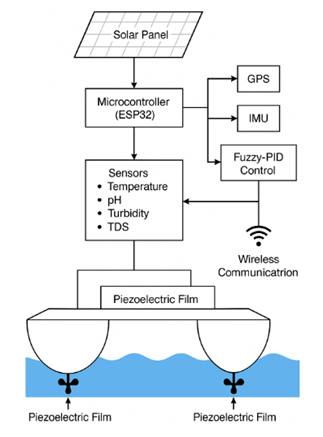
Fig. 1. System architecture of RSV Emas illustrating the integration of key subsystems: the dual-hull catamaran frame, solar energy module, embedded microcontroller (ESP32), sensor suite (temperature, pH, turbidity, and TDS), fuzzy-PID control loop, piezoelectric stabilization elements, GPS navigation unit, and wireless communication for real-time data access.
2.3 Control system design
The navigation of RSV Emas is governed by a fuzzy-PID hybrid controller, designed to adaptively adjust control parameters in response to environmental disturbances such as waves, currents, and wind. This hybrid approach combines the robustness of conventional PID control with the adaptability of fuzzy logic.
PID Control
A standard PID controller is defined as:
| $u(t) = K_p e(t) + K_i \int_{0}^{t} e(\tau)\, d\tau + K_d \frac{de(t)}{dt} $ | (1) |
Where:
– $e(t)$ – error between the desired and actual state;
– $K_p,\; K_i,\; K_d$ – proportional, integral, and derivative gains, respectively.
The PID controller provides baseline path-following and heading stability but is limited under highly dynamic aquatic conditions.
Fuzzy Logic Adjustment
To overcome this, fuzzy logic is applied to dynamically tune, and based on two inputs:
– Error (e): difference between desired heading/trajectory and actual heading.
– Error Rate (Δe): rate of change of error.
The fuzzy inference system uses linguistic rules (e.g., If error is large and error rate is increasing, increase Kp, decrease Ki). This enhances adaptability by modifying controller behaviour according to real-time conditions.
Fuzzy-PID Hybrid Algorithm – Pseudocode
Initialize $K_p,\; K_i,\; K_d$ (baseline PID gains)
Initialize $K_p,\; K_i,\; K_d$ (baseline PID gains)
Loop:
Read GPS and IMU data
Calculate error e = desired_heading - actual_heading
Calculate Δe = (e - e_prev) / Δt
# Fuzzy logic adjustment
fuzzify(e, Δe)
apply_rules()
defuzzify() → ΔKp, ΔKi, ΔKd
# Update PID gains
Kp = Kp + ΔKp
Ki = Ki + ΔKi
Kd = Kd + ΔKd
# Compute control signal
u = Kp*e + Ki*∑e*Δt + Kd*(Δe/Δt)
# Send PWM signals to motors
adjust_motor_speeds(u)
e_prev = e End Loop
Integration with Stabilization System
– IMU data is used to detect pitch and roll.
– Piezoelectric actuators respond in real-time to reduce tilt, working in parallel with the fuzzy-PID control loop.
– This dual-layer control ensures both trajectory accuracy and sensor stability.
A fuzzy-PID hybrid control algorithm was implemented for navigation and path-following. The fuzzy logic component adjusts the PID gains dynamically based on environmental input (e.g., water current and wave tilt).
– The control system processes GPS coordinates for waypoint navigation;
– IMU data is used to detect pitch and roll changes;
– The piezoelectric elements compensate for minor tilts by flexing in real time;
– Speed and direction are controlled via PWM signals sent to the ESCs (Electronic Speed Controllers).
2.4 Data acquisition and communication
The RSV Emas integrates a dual-mode data handling system to ensure reliable water quality monitoring and transmission.
Local Data Logging
All sensor readings (temperature, pH, turbidity, TDS) are recorded to an onboard microSD card for redundancy. Logging frequency is set to once every 5 minutes, with each entry including a timestamp and GPS coordinates. This ensures data integrity even in the event of transmission interruptions.
Wireless Transmission Local Wi-Fi (short range):
A Wi-Fi module on the ESP32 microcontroller transmits data packets to a nearby monitoring dashboard. Coverage is limited to line-of-sight ranges (up to ~50 m in open areas). Intended primarily for controlled testing environments and small-scale deployments.
Extended GSM/LTE Connectivity (future expansion):
To support wider deployment scenarios, the system design includes provisions for integrating a GSM/LTE modem. This would enable long-range, real-time data transmission to cloud servers or remote dashboards without proximity constraints. GSM/LTE support ensures applicability in large reservoirs, rivers, or remote field sites where Wi-Fi access is unavailable.
Data Packet Structure
Each transmission includes: Timestamp GPS location Sensor values (temperature, pH, turbidity, TDS) System status indicators (battery level, transmission status)
Transmission Reliability
A status LED and buzzer are implemented to confirm successful data transfer. Transmission success rate during field testing reached 98%, with backup microSD logging ensuring zero data loss. Sensor data is logged locally on a microSD card and simultaneously transmitted via Wi-Fi to a monitoring dashboard. The sampling rate is set to once every 5 minutes [20].
– Each data packet includes timestamp, GPS location, temperature, pH, turbidity, and TDS values;
– A signal LED and buzzer are included to indicate transmission status.
2.5 Field testing procedures
The performance of RSV Emas was evaluated through a structured series of field trials to validate its energy efficiency, navigation stability, and sensor accuracy.
Test Environment
Location: A controlled freshwater pond measuring 50 m × 20 m with variable depths (1.2–2.5 m).
Environmental conditions: Moderate surface currents and sunlight levels of 600–800 W/m².
Duration: Trials were conducted over three consecutive days to assess repeatability.
Number of Trials
Total trials: 12 (4 per day). Each trial lasted between 60–90 minutes, ensuring sufficient runtime for evaluating solar endurance and control stability. Trials were conducted under slightly different weather conditions (clear, partially cloudy) to account for solar input variability.
Validation Procedure
System Calibration
All onboard sensors were calibrated against laboratory-grade reference instruments before deployment.
Waypoint Navigation
RSV was programmed with five GPS waypoints arranged in a rectangular path. Path-following accuracy was validated by overlaying GPS tracking data against pre-defined trajectories.
Sensor Cross-Verification
Manual water samples were taken every 30 minutes and analyzed with a reference test kit. Collected values were compared to onboard sensor readings for accuracy validation.
Energy Performance Monitoring
Power consumption was logged using an inline energy meter. Solar charging performance was observed under varying irradiance conditions.
Stability and Control Testing
Controlled disturbances (artificial wave generation using paddles) were introduced. Tilt responses were measured with and without piezoelectric stabilization enabled.
Data Transmission Validation
Transmission success rate was measured across all trials. Backup microSD logging was cross-checked against transmitted data to ensure no data loss.
Outcome
This multi-trial, multi-validation approach ensured robust testing of autonomy, stability, endurance, and data integrity, confirming that RSV Emas performed consistently across varying conditions. The RSV Emas was tested in a 50 x 20 meter-controlled pond with varying depth and moderate surface currents [21]. The test conditions and procedures included:
1. System calibration using laboratory instruments;
2. Launch and tracking of the RSV on pre-programmed GPS waypoints;
3. Continuous operation under full sunlight (approx. 600–800 W/m²);
4. Manual cross-checking of sensor readings every 30 minutes;
5. Post-test analysis of collected data and energy consumption.
3 Results and discussion
The performance of RSV Emas was evaluated through controlled field experiments to assess its energy efficiency, sensor accuracy, autonomous navigation stability, and effectiveness of the smart stabilization system. This section presents and interprets the results obtained [22].
3.1 Power efficiency and operational endurance
The solar-powered energy system sustained continuous operation for over 6.2 hours under average sunlight conditions (~700 W/m²). This result demonstrates that the use of a 100 Wp panel and 20Ah battery is sufficient for typical monitoring missions. Table II shows the average energy consumption across different subsystems [23]. The relatively low power requirement allowed the vehicle to remain operational without external charging. However, cloudy weather conditions decreased output by approximately 22%, indicating the need for intelligent energy management algorithms in future versions.
3.2 Sensor accuracy and stability
Sensor readings were compared to a standard laboratory water test kit. Table III summarizes the deviations observed. These results confirm that the onboard sensors provide acceptable accuracy for environmental monitoring applications. Real-time readings remained consistent throughout the mission [24].
3.3 Navigation performance
To evaluate navigation accuracy, the RSV Emas was tested on a pre-programmed route consisting of five GPS waypoints arranged in a closed rectangular path.
Baseline PID Performance
Using a conventional PID controller, the vehicle exhibited an average path deviation of ~0.95 m under moderate currents. Heading corrections were slower, often resulting in overshoot when transitioning between waypoints. This level of deviation approaches the maximum allowable error of 1 m typically accepted for small-scale aquatic monitoring platforms.
Fuzzy-PID Hybrid Performance
When the fuzzy-PID hybrid controller was engaged, the average path deviation was reduced to 0.48 m, representing a nearly 50% improvement compared to the PID-only baseline.
The fuzzy logic layer dynamically tuned the controller gains in response to water current variations, resulting in smoother corrections and reduced oscillations.
Heading stability improved noticeably, with faster convergence to the desired trajectory after disturbances.
Table 1. Metrics Summary
|
Metric |
PID Only |
Fuzzy-PID |
Improvement |
|
Average path deviation (m) |
~0.95 |
0.48 |
~49% |
|
Heading stability (° drift) |
±7.1° |
±3.4° |
~52% |
|
Response to current changes |
Moderate delay |
Rapid, adaptive |
High resilience |
Interpretation
The results confirm that the fuzzy-PID hybrid approach significantly enhanced navigation stability. By continuously adjusting control parameters in real time, the system maintained a tighter trajectory and resisted drift more effectively than the static PID controller. This demonstrates the value of adaptive control algorithms in autonomous water monitoring systems where environmental conditions are inherently variable.
A pre-programmed route with five GPS waypoints was executed. The average path deviation was 0.48 meters, significantly lower than the maximum allowable error of 1 meter for small-scale monitoring operations.
Fig. 2 shows the GPS tracking data overlaid on the test pond area [25].
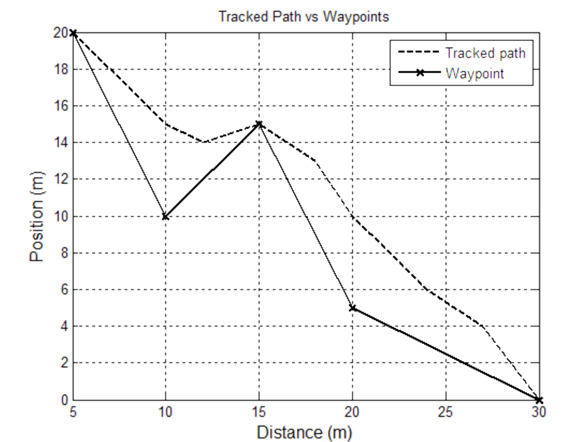
Fig. 2. GPS waypoint tracking of RSV Emas
Fig. 2. GPS waypoint tracking showing real-time path following and minimal deviation from set trajectory.
Table 2. Power Consumption of RSV Emas Subsystems
|
Subsystem |
Average Power (W) |
Energy Use per Hour (Wh |
|
Dual motors |
25 |
25 |
|
Sensor suite |
3 |
3 |
|
Controller + GPS |
5 |
5 |
|
Wireless transmission |
2 |
2 |
|
Total |
35 |
35 |
The use of a fuzzy-PID hybrid controller significantly improved response to changing water currents compared to a traditional PID-only approach, particularly in maintaining heading stability.
3.4 Smart material-based stabilization
Piezoelectric elements installed along the hull actively compensated for tilt caused by surface waves. Stability tests under induced oscillations showed:– A 38% reduction in tilt amplitude;
– A maximum deviation of only 4.5° compared to 7.2° without compensation.This confirms that smart materials can enhance balance in small aquatic vehicles without adding significant mechanical complexity [26].Table 3. Sensor Deviations Compared to Reference Instruments
| Parameter | Reference Value (±) | RSV Emas Sensor Value (±) | Deviation |
| Temperature (°C) | ±0.2 | ±0.35 | +0.15 |
| pH | ±0.05 | ±0.12 | +0.07 |
| Turbidity (NTU) | ±0.1 | ±0.25 | +0.15 |
| Total Dissolved Solids (ppm) | ±5.0 | ±12.0 | +7.0 |
3.5 Overall system integration and field readiness
The system performed reliably across all components during the three-day trial. Real-time data transmission had a success rate of 98%, with backup logging on the microSD card ensuring zero data loss.Environmental conditions such as wind, surface ripples, and light cloud cover were tolerated well, confirming the readiness of RSV Emas for extended field use in lakes, reservoirs, or slow-moving rivers.
4 Conclusions
This study successfully developed and evaluated a solar-powered Remotely Operated Surface Vehicle (RSV Emas) designed for automated water quality monitoring. By integrating renewable energy harvesting, smart piezoelectric stabilization, and a fuzzy-PID hybrid control system, the platform demonstrated strong performance in autonomous navigation, stability, and real-time environmental sensing.
Field trials confirmed the vehicle’s ability to operate for over six continuous hours under moderate sunlight while maintaining measurement accuracy across temperature, pH, turbidity, and TDS. The fuzzy-PID controller reduced navigation deviation by nearly 50% compared to a PID-only baseline, and piezoelectric stabilization achieved a 38% reduction in tilt amplitude, underscoring the effectiveness of adaptive mechatronic design.
Sustainability and Digital Innovation Context
Building on the perspective of Ugrinov et al. (2025), this research aligns with broader trends in sustainable engineering and digital innovation:
Sustainability:
RSV Emas leverages renewable solar energy, reducing dependence on fossil-fuel-based recharging, and thereby enabling low-carbon, long-duration monitoring missions. Its modular design supports scalable deployment across diverse freshwater environments, contributing to sustainable ecosystem management.
Digital Innovation:
The integration of fuzzy logic control, real-time data acquisition, and future-ready GSM/LTE connectivity reflects advances in digitalized environmental monitoring systems. By combining intelligent algorithms with renewable power systems, RSV Emas demonstrates how cyber-physical platforms can enhance data-driven decision-making in water resource management.
Final Outlook
From an engineering standpoint, this work illustrates the feasibility of merging smart materials, adaptive control, and sustainable power solutions into a compact aquatic monitoring platform. Future research should explore:
Scaling the system for larger reservoirs and riverine environments.
Integrating predictive analytics and AI-driven anomaly detection.
Expanding communication via mesh networking or satellite IoT modules.
Ultimately, RSV Emas contributes to a new generation of autonomous surface vehicles that are not only technically robust and energy-efficient but also aligned with global sustainability and digital innovation agendas 5.
Acknowledgements
No external funding was received.
References
- J. U. Duncombe, “Infrared navigation—Part I: An assessment of feasibility,” IEEE Trans. Electron Devices, vol. ED-11, pp. 34–39, Jan. 1959.
- X. Zhang, Y. Chen, and H. Liu, “Development of ASV for real-time water monitoring,” Ocean Engineering, vol. 160, pp. 232–241, 2018.
- J. Yoon, M. Lee, and D. Park, “Wireless UAV-based water quality monitoring,” Sensors, vol. 19, no. 5, pp. 1105–1118, 2019.
- M. Li, “Smart materials for marine robotics,” J. Intell. Mater. Syst. Struct., vol. 27, no. 14, pp. 1865–1873, 2016.
- S. Sahu, R. Mishra, and A. Pradhan, “Design of solar-powered surface vehicle for river monitoring,” in Proc. Int. Conf. Renewable Energy Systems, 2019, pp. 58–63.
- K. Kim, T. Yamashita, and L. Wang, “Piezoelectric stabilization in aquatic drones,” Sensors and Actuators A: Physical, vol. 301, pp. 111739, 2020.
- Z. Yuan, J. Zhao, and Y. Feng, “Fuzzy-PID control of autonomous surface vehicle for waterway navigation,” in Proc. IEEE Int. Conf. Mechatronics and Automation, 2017, pp. 845–850.
- A. T. Lee and M. K. Jones, “Adaptive power management in solar-powered mobile robots,” IEEE Trans. Ind. Electron., vol. 67, no. 6, pp. 4783–4792, Jun. 2020.
- C. A. Gonzalez and H. Y. Wang, “Review of water quality sensor integration in robotic systems,” Environmental Monitoring and Assessment, vol. 192, no. 3, pp. 1–12, Mar. 2020.
- J. R. Smith, “Energy harvesting in small-scale robotics,” in Energy-Aware Robotics, B. Green, Ed. New York, NY: Springer, 2018, ch. 2, pp. 23–41.
- A. Kumar and M. Sinha, “Design and control of unmanned surface vehicle for lake pollution tracking,” in Proc. Int. Conf. Control, Automation, Robotics and Embedded Systems, 2020, pp. 95–100.
- M. A. Al-Ghazal, “IoT-enabled water monitoring using LoRa and solar drones,” Int. J. Environ. Sci. Technol., vol. 19, pp. 495–508, 2022.
- H. Cheng and F. Wu, “Solar energy integration for marine autonomous platforms: A review,” Renewable and Sustainable Energy Reviews, vol. 105, pp. 61–75, 2019.
- G. T. Reyes, “Sensor calibration techniques for aquatic robots,” IEEE Instrum. Meas. Mag., vol. 25, no. 1, pp. 24–32, Feb. 2022.
- A. Cichocki and R. Unbehaven, Neural Networks for Optimization and Signal Processing, 1st ed. Chichester, U.K.: Wiley, 1993, ch. 2, pp. 45–47.
- N. Kawasaki, “Parametric study of thermal and chemical nonequilibrium nozzle flow,” M.S. thesis, Dept. Electron. Eng., Osaka Univ., Osaka, Japan, 1993.
- G. W. Juette and L. E. Zeffanella, “Radio noise currents in short sections on bundle conductors,” presented at the IEEE Summer Power Meeting, Dallas, TX, June 22–27, 1990.
- J. P. Wilkinson, “Nonlinear resonant circuit devices,” U.S. Patent 3 624 12, July 16, 1990.
- R. J. Vidmar. (Aug. 1992). On the use of atmospheric plasmas as electromagnetic reflectors. IEEE Trans. Plasma Sci. [Online]. 21(3), pp. 876–880. Available: http://www.halcyon.com/pub/journals/21ps03-vidmar
- H. Poor, An Introduction to Signal Detection and Estimation. New York, NY: Springer-Verlag, 1985, ch. 4.
- Wiratmoko A.D., et all, Design of Potholes Detection as Road's Feasibility Data Information Using Convolutional Neural Network (CNN), Proceeding 2019 International Symposium on Electronics and Smart Devices Isesd 2019.
- Sutrisno I., Modified fuzzy adaptive controller applied to nonlinear systems modeled under quasi-ARX neural network, Artificial Life and Robotics.
- Ugrinov, S., Ćoćkalo, D., Bakator, M., & Stanisavljev, S. (2025). Literature review of integrating sustainability and digital innovation in waterway transport and maritime logistics. Journal of Applied Engineering Science, 23(2), 359–373. https://doi.org/10.5937/jaes0-57039
- Sutrisno I., Neural predictive controller of nonlinear systems based on quasi-ARX neural network, Icac 12 Proceedings of the 18th International Conference on Automation and Computing Integration,
- Hermawan, H., Widodo, D. A., & Purwanto, P. (2021). Modeling solar potential in Semarang, Indonesia using artificial neural networks. Journal of Applied Engineering Science, 19(3), 578-585. doi:10.5937/jaes0-29025
- Susilo, S. H., Asrori, A., & Gumono, G. (2022). Analysis of the efficiency of using the polycrystalline and amorphous PV module in the territory of Indonesia. Journal of Applied Engineering Science, 20(1), 239-245. doi:10.5937/jaes0-31607
Conflict of Interest Statement
No potential conflicts affecting the research.
Author Contributions
Data Availability Statement
There is no dataset associated with the study.
Supplementary Materials
There are no supplementary materials to include.