Volume 24 article 1346 pages: 463-472
Received: Dec 15, 2025 Accepted: May 26, 2026 Available Online: Jul 01, 2026 Published: Aug 17, 2026
DOI: 10.5937/jaes0-63478
DIESEL ENGINE DAMAGE PREDICTION USING IOT-BASED TEMPERATURE SENSORS: INTEGRATED HYBRID NEURAL NETWORK-FUZZY
Abstract
Diesel engines are widely used in various sectors such as industry. Damage to diesel engines can cause production disruptions and significant financial losses. Diesel engine damage can be caused by excessively high engine temperatures (overheating) and is characterized by high exhaust emissions. This study aims to develop an expert system to predict diesel engine damage integrated with IoT-based temperature sensors with machine learning algorithms. The machine learning model developed in this study uses a hybrid artificial neural network and fuzzy logic. This study uses a research and development method, which is divided into 3 stages. The first stage is the creation of a temperature sensor-based data logger system. The second stage is the simulation of a hybrid Neural network-fuzzy prediction model for diesel engine damage. The third stage is the integration of the machine learning model into the expert system for predicting diesel engine damage. The results of the study show that the system can work to store and display diesel engine temperatures along with engine conditions, namely normal, medium, and high. The results of the simulation of diesel engine damage prediction with the ANFIS model obtained RMSE = 0.2065 and R² = 0.9273, which indicates a high level of accuracy and generalization ability.
Highlights
- Diesel engines are widely used in industry.
- Temperature is a crucial parameter in diesel engines.
- Applying machine learning to monitor and predict engine damage.
- Integrating machine learning into IoT for diesel engine failure prediction.
Keywords
Content
1 Introduction
Diesel engines are widely used in various sectors such as the mining industry, power generation, and transportation [1-3]. Economic growth can be achieved through transportation [4-6]. Transportation is becoming increasingly common due to increased industrial activity. A diesel engine has several main components: the cylinder block liner and piston for the engine's primary performance, the injection nozzle, the oil cooler as the cooling system, the air horn as the air intake, and the glow plug as the preheater [7].
The government is targeting renewable energy use of 23% by 2025 and 31% by 2050, with biodiesel being one of these renewable energy sources [8-9]. Given the dwindling supplies of natural gas, diesel, and gasoline, one of the biggest concerns in the modern world is the energy crisis. Furthermore, environmental damage is another contributing factor to resource depletion and attracting attention [10]. Due to the chemical differences between biodiesel and diesel, higher biodiesel blending ratios will impact diesel engine emissions and performance [11-13].
Research related to diesel engine failure detection is becoming increasingly important with the increasing use of diesel engines in the industrial sector [14,15]. Diesel engine failure can be caused by excessive engine temperature (overheating) and is characterized by high exhaust emissions. Poor diesel engine performance leads to higher exhaust emissions, indicating engine failure. Furthermore, the dwindling availability of fossil fuels necessitates increased use of biodiesel fuel [16-20].
An engine failure detection system requires sensors to measure engine temperature. A data recording method, one based on the Internet of Things (IoT), is required. Failure of one component can cause damage to the entire diesel engine, resulting in a complete shutdown. A diesel engine failure detection system is crucial in industry because it can help improve operational efficiency and reduce maintenance costs. With an early detection system for diesel engine failure, engine failure can be detected before serious damage occurs, allowing for repairs.
This research aims to develop an intelligent system for predicting diesel engine failures using an IoT-based temperature sensor integrated with a machine learning algorithm. The machine learning model developed in this research uses a hybrid artificial neural network and fuzzy logic.
1.1 Neural network for predicting diesel engine failure
An Artificial Neural Network (ANN) is a computational model inspired by biological nervous systems, designed to learn complex and non-linear relationships between input and output data. In diesel engine systems, operating conditions such as combustion quality, exhaust gas emissions, and thermal behavior exhibit highly nonlinear and dynamic characteristics, making ANNs a suitable approach for fault prediction and condition monitoring. ANN is an adaptive learning system where knowledge is acquired through adjusting the synaptic weights between artificial neurons [21]. This learning capability allows neural networks to identify patterns and anomalies in complex datasets, including sensor-based measurements obtained from industrial systems. These characteristics are very important in diesel engines, where indicators of damage often appear gradually and cannot be captured by deterministic models. ANN serves as a nonlinear data-driven modeling tool capable of extracting hidden patterns from multivariate datasets. ANN's ability to generalize unseen data allows it to predict future system behavior based on historical sensor information, which is crucial for predictive maintenance strategies in diesel engine applications [22].
1.2 Neural network architecture for IoT-based machine monitoring
One of the main advantages of ANNs is their ability to learn directly from data without requiring explicit mathematical modeling of the physical system. ANNs as nonlinear black box models capable of estimating unknown functions with high accuracy. This characteristic is advantageous for diesel engines, where the combustion process and component degradation mechanisms are difficult to model analytically. Additionally, ANNs exhibit robustness against noisy and incomplete data, which is a common issue in IoT-based sensing environments highlighting that neural networks maintain acceptable predictive performance even when sensor measurements are affected by noise or environmental variations [23]. This robustness enhances the reliability of the ANN-based damage prediction system implemented in the real-world operation of diesel engines.
The basic architecture of an ANN consists of an input layer, one or more hidden layers, and an output layer. In an IoT-based diesel engine monitoring system, the input layer typically receives data from several sensors, such as carbon monoxide (CO), smoke or particulate concentration, and temperature sensors. This parameter reflects combustion efficiency and the engine's health condition. Multilayer perceptrons (MLPs) and feedforward neural networks are widely used for prediction and forecasting tasks due to their ability to estimate complex nonlinear functions [24]. Multilayer architecture provides higher modeling accuracy compared to single-layer networks, especially when dealing with multi-sensor inputs and nonlinear system behavior. Therefore, the MLP-based ANN architecture is very suitable for predicting diesel engine damage using IoT sensor data.
1.3 Hybrid neural network – fuzzy approach
Despite having strong learning capabilities, ANNs are often less interpretable, which limits their effectiveness in decision-making processes that require human understanding. To overcome these limitations, a hybrid approach that combines neural networks with fuzzy logic is increasingly being adopted. In such a system, the ANN is responsible for learning patterns and relationships from sensor data, while fuzzy logic translates numerical outputs into linguistic decision variables. Recent developments in neural network research are increasingly focusing on hybrid intelligent systems that integrate ANNs with other computational intelligence techniques [23,24]. The hybrid neural network-fuzzy approach enhances system flexibility, improves decision interpretability, and increases robustness in uncertain environments. For predicting diesel engine damage, this hybrid model allows for the classification of engine condition into linguistic states such as normal, warning, and critical, thus supporting effective maintenance decisions.
2 Materials and methods
This research develops an Internet of Things (IoT)-based engine temperature monitoring system integrated with an Artificial Neural Network predictive model. The system is designed to monitor engine temperature in real time and predict temperatures for several time intervals into the future as an early warning mechanism for potential overheating. Temperature data acquisition was performed using temperature sensors installed on the machine and controlled by a Raspberry Pi as the main processing unit. Temperature data is continuously sent and recorded with a data acquisition interval of 1 second. The data obtained is processed then and stored as a historical database used for training and testing the neural network model. A neural network model is used to predict engine temperature based on a number of previous temperature data points (sliding window). In this study, the model utilizes the last 10 temperature data points as input to predict the temperature at the next interval. The training process is conducted offline using historical data, while the prediction process is implemented in real-time on the IoT system.
The condition of the engine is determined by comparing the predicted temperature value against the established temperature threshold. Machine status is classified into four main categories: cold, warming up, normal/optimal, and critical. If the predicted temperature approaches or exceeds the safe limit, the system will activate a critical mechanism in the form of visual indicators and a buzzer as an alarm. The alarm is used for the driver to immediately turn off the engine.
The hardware specifications and wiring diagram for this system consist of several main components that are integrated with each other. The Raspberry Pi 4B is used as the data processing center, with one unit. The DS18B20 waterproof temperature sensor is used to measure temperature with an accuracy of ±0.5°C, making it suitable for use in humid or wet environments. As a warning indicator, a 5V active buzzer is used, which functions as an alarm when certain conditions are met. To support data communication on the DS18B20 sensor, a 4.7 kΩ 1/4W resistor was installed as a pull-up. In this study the hardware used is shown in Table 1.
Table 1. Hardware specification
|
Component |
Specification |
Quantity |
Description |
|
Raspberry Pi |
4B |
1 |
Processor |
|
Temperature sensor |
DS18B20 Waterproof |
1 |
Accuracy ±0.5˚C |
|
Buzzer |
Active 5V |
1 |
Alarm |
|
Resistor |
4.7kΩ 1/4W |
1 |
Pull-up for DS18B20 |
|
Cabble |
Male-Female |
5 |
Connection |
|
Power Supply |
5V 3A |
1 |
For Raspberry Pi |
|
Case |
Optional |
1 |
Protection |
The components are connected using five male-female jumper wires. This system is powered using a 5V 3A power supply specifically for Raspberry Pi to maintain stable performance. Additionally, a casing (optional) is used to protect the circuit from physical interference and the surrounding environment. The wiring diagram is shown in Figure 1. In order to immediately monitor the engine's operating temperature, a temperature sensor was installed on the diesel engine's cylinder head. Since the cylinder head is one of the parts most exposed to heat during combustion, the sensor was positioned there. Real-time temperature data from the cylinder head is utilized to identify early signs of overheating and possible diesel engine damage. An Internet of Things (IoT)-based system then transmits all measurement findings, allowing for more efficient and continuous monitoring and analysis of engine damage forecasts.
Overheating can be detected in the cylinder head because this component is the part of the engine that receives heat directly from the combustion process in the combustion chamber. During diesel engine operation, the combustion temperature is first transferred to the cylinder head before being distributed to the cooling system and other components. As a result, when problems such as cooling system failure, excessive combustion, poor lubrication, or excessive engine load occur, temperature increases will be more quickly visible in the cylinder head area than in other engine parts.
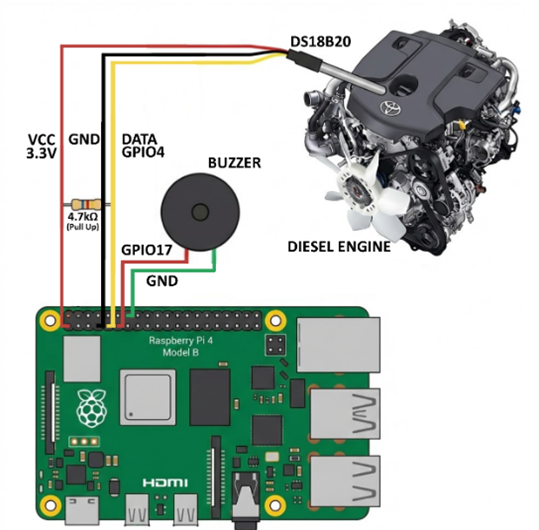
Fig. 1. System wiring diagram
Data collection in this study was conducted with the diesel engine idling, or without additional workload. Idle conditions were chosen because engine speed tends to be more stable, allowing for more consistent and accurate temperature fluctuations. Furthermore, testing at idle conditions aims to minimize the influence of external variables such as load changes and engine speed variations on temperature sensor measurements. With these stable operating conditions, the temperature data obtained is more representative for the analysis process and development of IoT-based diesel engine failure prediction models.
The software specifications and data processing flow in this system consist of several computational modules that work simultaneously and are integrated. The data acquisition algorithm is used to read the actual engine temperature from the sensor in real-time as the main system input. The intelligent computing module is applied to generate the predicted value and simultaneously calculate the model's accuracy percentage to validate any deviations in the reading data. For historical analysis purposes, the raw data is processed into temperature statistics, which include daily averages and extreme values. Early anomaly detection is performed by the Trend Analysis algorithm, which monitors the direction of temperature gradient changes (increasing/decreasing/stable). As a safety indicator, the Warning System is programmed with threshold logic to trigger an alarm when critical conditions are reached. The entire data dynamics are presented through the temperature and prediction graphs on the user interface, while the system control algorithm functions to take automatic executive actions to maintain device stability. The system flowchart is shown in Figure 2.
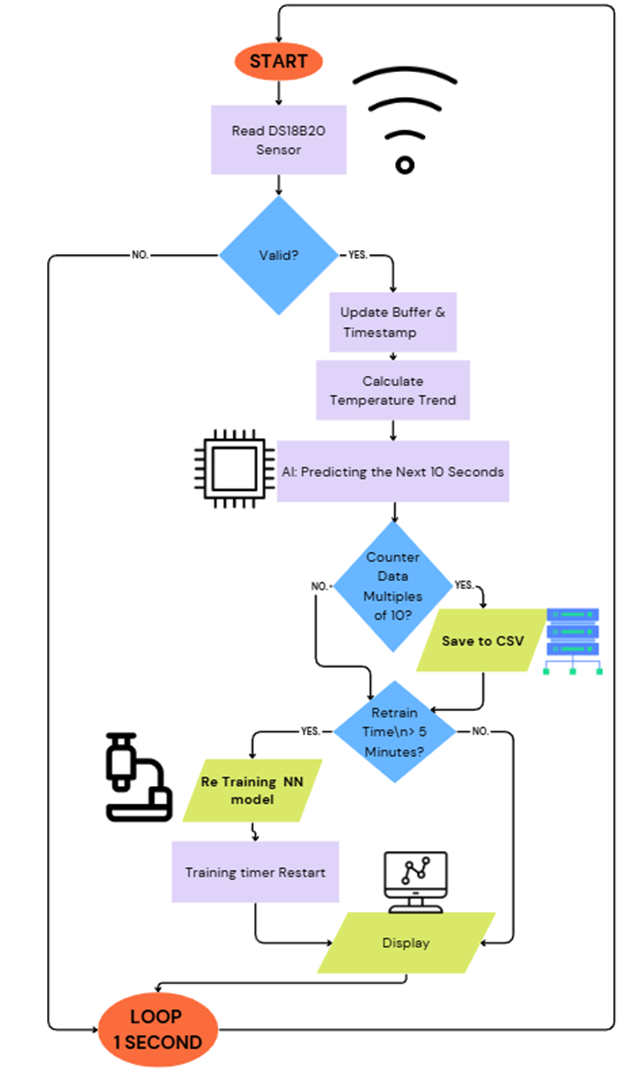
Fig. 2. System flowchart
The software implementation in this system is divided into several functional modules that are integrated with each other. The main processing module, temperature_system.py, serves as the core of the system, integrating sensor data acquisition, neural network logic processing using the MLPRegressor algorithm for prediction, and model performance evaluation based on the R² Score. This module also manages the alarm (buzzer) control mechanism and acts as a Flask and SocketIO-based backend server for real-time data transmission. On the user interface (frontend) side, the dashboard.html file is designed using HTML, CSS, and JavaScript with the Chart.js library to present temperature data visualizations in the form of dynamic graphs and provide access to system control features such as model retraining and shutdown. To ensure ease of deployment and operability, the system is equipped with the install_dependencies.sh script, which automates the creation of a virtual environment and library installation, as well as automotive_monitor.service, which configures systemd to automatically execute the application after booting (auto-start).
The model's performance was evaluated using Mean Absolute Error (MAE), Root Mean Square Error (RMSE), coefficient of determination (R2) to assess the accuracy and suitability between the actual temperature and the predicted temperature [25]. Where 𝑥𝑘 is the true engine temperature prediction value while 𝑦𝑘 is the output of the proposed network at time k. MAE is shown in equation (1). Equation (1) shows MAE serves to measure the average absolute difference, which describes how closely the model's estimates align with the actual values without considering the direction of positive or negative deviations. The coefficient of determination is shown in equation (2).
Based on equation (2), the coefficient of determination (R2) is used to show how well the model is able to explain the variation of actual data against the predicted results. The R2 value is in the range of 0 to 1, where the closer it is to 1, the better the model is considered to predict the data. Where $y_i$ is the actual data, $\hat{y}_i$ is the data predicted by the model, and y̅ is the average of the actual data. Meanwhile, RMSE on equation (3) is used to detect more extreme variations in error, with RMSE specifically presenting the magnitude of this deviation back in the original units of measurement for easier interpretation. The low scores on all three metrics indicate that the model has good generalization ability and a high level of precision in mapping the characteristics of diesel engine temperature.
3 Results and discussion
Based on the research results, the development of the hybrid ANFIS machine learning model demonstrated high accuracy in predicting diesel engine failure based on engine temperature conditions. The learning curve of the ANFIS model is shown in Figure 3. Figure 3 shows the learning curve of the Adaptive Neuro-Fuzzy Inference System (ANFIS) model in simulating temperature prediction of diesel engine damage. This curve illustrates the change in error value with the number of epochs during the training process. It can be seen that at the beginning of training (around the first five epochs), the error value experienced a very significant decrease, from around 0.248 to around 0.215.
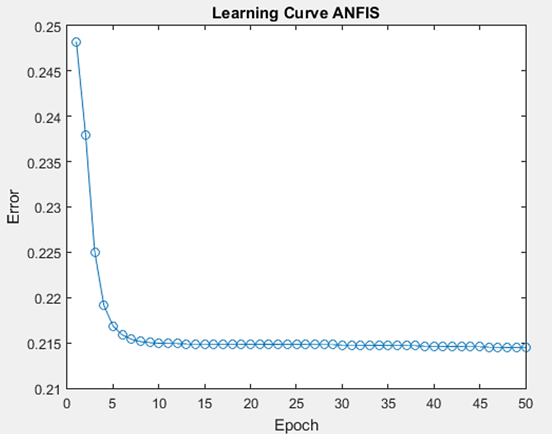
Fig. 3. Learning curve of the ANFIS model
This indicates that ANFIS is able to quickly learn the pattern of the relationship between temperature and the level of diesel engine damage. After around the 10th epoch, the curve shows a stable trend, indicating that the training process has reached convergence and there is no significant increase in model accuracy. This stability of the error value also indicates that the training process is proceeding well without indications of overfitting or unusual fluctuations. Overall, these results indicate that ANFIS has a good ability to map the relationship between temperature as an input variable and engine damage as an output variable and demonstrates efficiency in the learning process. This model has the potential to be used as an effective temperature-based damage prediction tool in diesel engine monitoring systems.
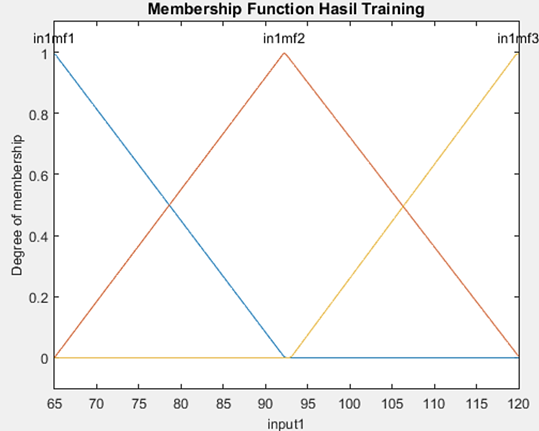
Fig. 4. Fuzzy membership function
Figure 4 shows the membership function of the fuzzy logic system after the training process. The X-axis shows the input value (input1) mapped into several fuzzy sets with a range of 65 to 120. The Y-axis depicts the degree of membership with a value between 0 and 1. A value of 0 means the input is not included in the fuzzy set. A value of 1 indicates that the input is fully included in the set. The graph displays three membership functions, namely in1mf1 (blue) representing the “Low” category, in1mf2 (red) for “Medium,” and in1mf3 (yellow) for “High.” Each is triangular in shape, indicating the use of the Triangular Membership Function. Operationally, input values between 65–80 have the highest membership in the “Normal” category, the range of 90–95 in the “Medium Damage” category, and values above 110 in the “High” category. In overlapping areas, such as input 85, the value can have partial membership in two categories at once. Thus, this graph visualizes how each input value is mapped into a fuzzy category before being processed in a fuzzy logic system to support decision-making.
Based on the ANFIS simulation results, three triangular membership functions were obtained, representing the engine condition categories: normal, light damage, and severe damage. In Figure 4, the input1 collection function shows that the low temperature range (65–85°C) is dominated by the normal category, the mid-range (80–100°C) is mapped to light damage, and the high temperature range (95–120°C) is categorized as severe damage.
During the training process, ANFIS, with three fuzzy rules, 15 parameters, and 1,009 training data sets, demonstrated stable error convergence. The training error decreased from 0.248 in the initial epoch to 0.214 after 50 epochs, indicating the model successfully learned the relationship between temperature and engine condition. Evaluation on test data demonstrated that the model was able to classify engine conditions with reasonable accuracy. For example, a temperature of 65–75 °C is predicted as normal (category 0), a temperature of 85–95 °C is recorded as light damage (category 1), while a temperature of 100–120 °C is recognized as heavy damage (category 2). The fuzzy prediction results (continuous values) are also consistently close to the categorical targets, with slight variations due to the interpolative nature of ANFIS. The distribution of conditions in the prediction system is shown in Table 2.
Table 2. Prediction of engine damage based on engine temperature
|
Temperature (oC) |
Condition / Status |
Alarm |
|
30-60 |
Normal (Cold) |
OFF |
|
61-90 |
Normal (Warming Up) |
OFF |
|
91-100 |
Moderate (Warning) |
OFF |
|
>100 |
High (Critical) |
ON |
Overall, the model performance shows a value of RMSE of 0.2065 and R² of 0.9273, which indicates a high level of accuracy and generalization ability. This proves that the ANFIS approach is effective for predicting diesel engine damage conditions based on temperature with a combination of fuzzy logic and adaptive learning. Development of an expert system for engine prediction based on engine temperature conditions. The data logger system has successfully displayed temperature and engine condition graphic data. Both normal, medium, and high conditions. Diesel engine damage prediction using an IoT-based temperature sensor-integrated hybrid neural network-fuzzy logic model which is monitored in real-time is shown in figure 5.
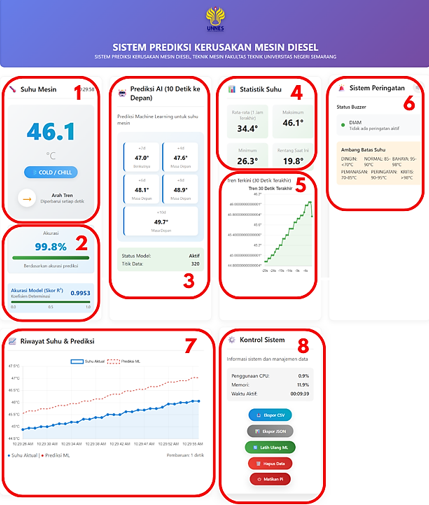
Fig. 5. Temperature diesel engine monitoring neural network (1) engine temperature; (2) system accuracy; (3) prediction; (4) temperature statistics; (5) temperature trends; (6) warning system; (7) temperature history and predictions; (8) system control
Based on figure 5 it is described as follows:
- Engine Temperature: This is the actual or real temperature value obtained directly by the sensor at a specific timestamp. This value serves as the ground truth or primary reference for validating the physical condition of the hardware in the field.
- Accuracy: Accuracy is the percentage of successful system outcomes. The smaller the difference (error) between the sensor temperature and the computer prediction, the higher the accuracy value (approaching 100%).
- Prediction: This is the estimated temperature value generated by the algorithm based on historical data patterns. This value is used for comparison.
- Temperature Statistics: This is a numerical summary that describes the characteristics of the temperature data distribution within a specific period.
- Trend: An indicator showing the direction of temperature gradient movement over time. In this system, the trend is visualized with an arrow symbol.
- Warning System: Automatic classification logic that maps temperature values into threshold-based risk categories. This system generates status labels such as "COLD", "WARMING UP", and "CRITICAL/EMERGENCY" to provide early notification to operators or trigger safety alarms.
- Temperature history and predictions: A time-series visual representation that plots the Engine Temperature curve (actual line) and the Prediction curve (expected line) on a single coordinate plane. This graph facilitates visual analysis to identify data divergences, overshoots, and recovery times.
- Control System: Information and data management along with system control. Figure 6. shows the warning system variety conditions.
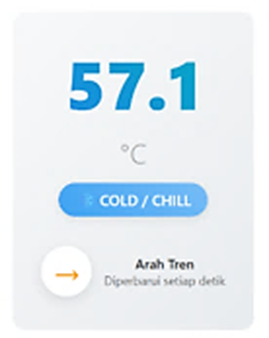
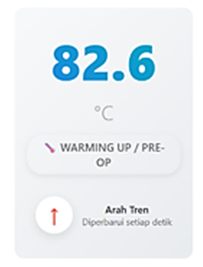
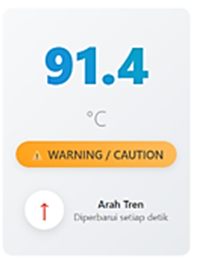

Fig. 6. Warning System variety condition
This warning system uses automatic classification logic that maps machine temperature values into threshold-based risk categories. Based on the table, conditions are grouped into “Normal” (30-90°C) status as shown in Figures 6 A and 6 B, “Warning” (90-100°C) in Figure 6 C, to “Critical” (>100°C) in Figure 6 D, which will automatically trigger a safety alarm (Alarm ON) as an early notification of the risk of machine damage.
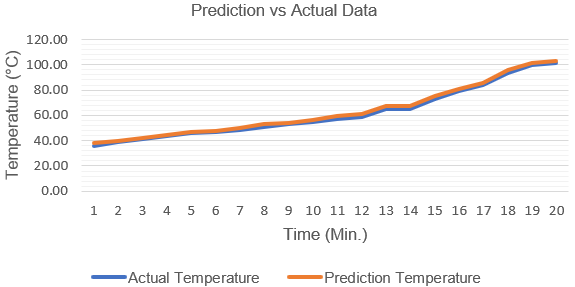
Fig. 7. Prediction vs. actual data temperature engine diesel
Based on the results of testing and evaluating the performance of the engine temperature prediction model using a neural network, relatively low error values were obtained between the actual temperature and the predicted temperature. The analysis results show that the Mean Absolute Percentage Error (MAPE) value is 1.91%, the Mean Absolute Error (MAE) is 0.71 °C, and the Root Mean Square Error (RMSE) is 1.13 °C, indicating that the predicted deviation from the actual conditions is within a very small tolerance. This shows that the model has good ability in minimizing the difference between the prediction and the actual conditions, thus significantly reducing the temperature estimation error rate.
The low error value is directly proportional to the high accuracy level of the model, indicating that the patterns of temperature increase and stabilization of the engine can be learned and well represented by the neural network model. This high accuracy is also supported by the coefficient of determination (R2) value, which shows a very strong relationship between the actual temperature data and the predicted data. Based on the temperature prediction results and real-time actual data obtained, the system is able to accurately determine the engine condition status, ranging from cold/warming up, normal/optimal, to warning conditions. This engine status determination is done by comparing the predicted temperature values against the temperature thresholds that have been set in the system. Thus, integrating the neural network model into the IoT-based temperature monitoring system not only provides accurate predictions but also plays an effective role in classifying machine conditions and providing early warnings to prevent overheating.
This research still has limitations because the system being developed is at the modeling stage of an IoT-based monitoring and alarm system. The designed system is capable of real-time temperature monitoring, but its anomaly detection capabilities are still limited to gradual temperature increases. In conditions of sudden temperature spikes, the system is not yet fully capable of providing an optimal response and anomaly identification. Therefore, further development is needed to improve the system's response speed and analytical capabilities for sudden extreme temperature changes in diesel engines.
4 Conclusions
This research successfully developed an IoT-based intelligent system integrated with a hybrid artificial neural network and fuzzy logic model to predict diesel engine damage through real-time temperature monitoring. The system proved effective in acquiring data via DS18B20 sensors and classifying engine conditions into normal, medium, and high status based on specific thresholds. The simulation results demonstrated high accuracy and generalization capability, achieving an R² score of 0.9273 and an RMSE of 0.2065, which indicates precise mapping of temperature characteristics. Furthermore, the integration of a warning system with visual and audio alarms allows for the early detection of overheating, thereby enhancing operational efficiency and preventing severe engine failure. The implementation of more adaptive data analysis methods or artificial intelligence algorithms is necessary to enable the system to provide faster and more accurate alarm responses. Future research is also recommended to conduct tests under various engine operating conditions, such as load conditions and engine speed changes, so that the monitoring system's performance can be more comprehensively evaluated.
Acknowledgements
The authors would like to thank the Ministry of Higher Education, Science and Technology (Kemdiktisaintek) for providing research funding number 089/C3/DT.05.00/PL/2025 under the Fundamental Research Scheme—Regular, with contract number 33.2.6/UN37/PPK.11/2025.
References
- Arjharn, W., Liplap, P., Maithomklang, S., Thammakul, K., Chuepeng, S., & Sukjit, E. (2022). Distilled waste plastic oil as fuel for a diesel engine: Fuel production, combustion characteristics, and exhaust gas emissions. ACS Omega, 7(11), 9720–9729. https://doi.org/10.1021/acsomega.1c07257
- Luo, X., Yan, R., Xu, L., & Wang, S. (2024). Accuracy and applicability of ship's fuel consumption prediction models: A comprehensive comparative analysis. Energy, 310, 133187. https://doi.org/10.1016/j.energy.2024.133187
- Paneerselvam, P., Panithasan, M. S., Venkatesan, G., & Malairajan, M. (2024). Optimization of common rail direct injection diesel engine performance with Melia dubia methyl ester peppermint oil blend using response surface methodology approach and investigation of hydrogen and hydroxy influence. International Journal of Hydrogen Energy, 50, 796–819. https://doi.org/10.1016/j.ijhydene.2023.07.274
- Putri, T. D. (2021). Intelligent transportation systems (ITS): A systematic review using a natural language processing (NLP) approach. Heliyon, 7(12), e08615. https://doi.org/10.1016/j.heliyon.2021.e08615
- Frias-Martinez, V., Sloate, E., Manglunia, H., & Wu, J. (2021). Causal effect of low-income areas on shared dockless e-scooter use. Transportation Research Part D: Transport and Environment, 100, 103038. https://doi.org/10.1016/j.trd.2021.103038
- Gascon, M., Marquet, O., Gràcia-Lavedan, E., Ambròs, A., Götschi, T., de Nazelle, A., ... & Nieuwenhuijsen, M. J. (2020). What explains public transport use? Evidence from seven European cities. Transport Policy, 99, 362–374. https://doi.org/10.1016/j.tranpol.2020.08.009
- Chohan, N. A., Aruwajoye, G. S., Sewsynker-Sukai, Y., & Kana, E. G. (2020). Valorisation of potato peel wastes for bioethanol production using simultaneous saccharification and fermentation: Process optimization and kinetic assessment. Renewable Energy, 146, 1031–1040. https://doi.org/10.1016/j.renene.2019.07.042
- Halimatussadiah, A., Nainggolan, D., Yui, S., Moeis, F. R., & Siregar, A. A. (2021). Progressive biodiesel policy in Indonesia: Does the government's economic proposition hold? Renewable and Sustainable Energy Reviews, 150, 111431. https://doi.org/10.1016/j.rser.2021.111431
- Putrasari, Y., Praptijanto, A., Santoso, W. B., & Lim, O. (2016). Resources, policy, and research activities of biofuel in Indonesia: A review. Energy Reports, 2, 237–245. https://doi.org/10.1016/j.egyr.2016.08.005
- Aydın, M., Uslu, S., & Çelik, M. B. (2020). Performance and emission prediction of a compression ignition engine fueled with biodiesel-diesel blends: A combined application of ANN and RSM based optimization. Fuel, 269, 117472. https://doi.org/10.1016/j.fuel.2020.117472
- Patnaik, S., Khatri, N., & Rene, E. R. (2024). Artificial neural networks-based performance and emission characteristics prediction of compression ignition engines powered by blends of biodiesel derived from waste cooking oil. Fuel, 370, 131806. https://doi.org/10.1016/j.fuel.2024.131806
- Bhagat, R. N., Sahu, K. B., Ghadai, S. K., & Kumar, C. B. (2023). A review of performance and emissions of diesel engine operating on dual fuel mode with hydrogen as gaseous fuel. International Journal of Hydrogen Energy, 48(70), 27394–27407. https://doi.org/10.1016/j.ijhydene.2023.03.251
- Ai, W., & Cho, H. M. (2024). Predictive models for biodiesel performance and emission characteristics in diesel engines: A review. Energies, 17(19), 4805. https://doi.org/10.3390/en17194805
- Bai, H., Zhan, X., Yan, H., Wen, L., Yan, Y., & Jia, X. (2022). Research on diesel engine fault diagnosis method based on stacked sparse autoencoder and support vector machine. Electronics, 11(14), 2249. https://doi.org/10.3390/electronics11142249
- Chunyu, Z., Xinyang, Q., Haiyu, Q., Yun, L., & Junchao, Z. (2023). Research on fault diagnosis method of turbocharger rotor based on Hu-SVM-RFE. Journal of Mechanics, 39, 344–351. https://doi.org/10.1093/jom/ufad028
- Wirawan, S. S., Solikhah, M. D., Setiapraja, H., & Sugiyono, A. (2024). Biodiesel implementation in Indonesia: Experiences and future perspectives. Renewable and Sustainable Energy Reviews, 189, 113911. https://doi.org/10.1016/j.rser.2023.113911
- Khanyi, N., Inambao, F., & Stopforth, R. (2025). Prediction of diesel engine performance and emissions under variations in backpressure, load, and compression ratio using an artificial neural network. Applied Sciences, 15(19), 10588. https://doi.org/10.3390/app151910588
- Roy, S., Das, A. K., Bhadouria, V. S., Mallik, S. R., Banerjee, R., & Bose, P. K. (2015). Adaptive-neuro fuzzy inference system (ANFIS) based prediction of performance and emission parameters of a CRDI assisted diesel engine under CNG dual-fuel operation. Journal of Natural Gas Science and Engineering, 27, 274–283. https://doi.org/10.1016/j.jngse.2015.08.065
- Hosoz, M., Ertunc, H. M., Karabektas, M., & Ergen, G. (2013). ANFIS modelling of the performance and emissions of a diesel engine using diesel fuel and biodiesel blends. Applied Thermal Engineering, 60, 24–32. https://doi.org/10.1016/j.applthermaleng.2013.06.040
- Kassem, Y., Çamur, H., & Esenel, E. (2017). Adaptive neuro-fuzzy inference system (ANFIS) and response surface methodology (RSM) prediction of biodiesel dynamic viscosity at 313 K. Procedia Computer Science, 120, 521–528. https://doi.org/10.1016/j.procs.2017.11.274
- Madhiarasan, M., & Louzazni, M. (2022). Analysis of artificial neural network: Architecture, types, and forecasting applications. Journal of Electrical and Computer Engineering, 2022(1), 5416722. https://doi.org/10.1155/2022/5416722
- Taye, M. M. (2023). Theoretical understanding of convolutional neural network: Concepts, architectures, applications, future directions. Computation, 11(3), 52. https://doi.org/10.3390/computation11030052
- Velichko, A., Korzun, D., & Meigal, A. (2023). Artificial neural networks for IoT-enabled smart applications: Recent trends. Sensors, 23, 4853. https://doi.org/10.3390/s23104853
- Abiodun, O. I., Jantan, A., Omolara, A. E., Dada, K. V., Mohamed, N. A., & Arshad, H. (2018). State-of-the-art in artificial neural network applications: A survey. Heliyon, 4(11), e00938. https://doi.org/10.1016/j.heliyon.2018.e00938
- Naryanto, R. F., Hadromi, Musyono, A. D. N. I., Setiadi, R., & Caesarendra, W. (2025). Diesel engine power prediction based on fuel blends using neural network. Reports in Mechanical Engineering, 6(1), 127–135. https://doi.org/10.31181/rme492
Conflict of Interest Statement
The authors declare that there is no conflict of interest regarding the publication of this paper.
Author Contributions
Data Availability Statement
There is no dataset associated with the study.
Supplementary Materials
There are no supplementary materials to include.