Volume 23 article 1309 pages: 742-751
Received: Aug 10, 2025 Accepted: Nov 26, 2025 Available Online: Dec 13, 2025 Published: Dec 15, 2025
DOI: 10.5937/jaes0-60751
EXPERIMENTAL ENHANCEMENT OF SOLAR WATER HEATER FOR USING IN A LOW TEMPERATURE WITH HEAT EXCHANGER VERTICAL COLLECTOR BY CONCENTRATOR AND ACETONE
Abstract
In the current work, the authors introduce a new solar water heating system that uses a condenser and a water/acetone as the working fluid and it provides a promising solution to the main issue in the solar energy use, such as the cost-effectiveness, the best angle positioning, and the material restriction. The suggested design is much better at thermal performance; thus, it can be considered as an acceptable alternative to the traditional flat-plate solar collector. The experimental outcomes show that there is an increased efficiency of 80 as compared to the conventional systems. This performance is attributed to two key attributes, first, improved collector design: The use of a spiral-coil tube design helps to increase the radiation uptake in all directions without the need to carefully align the solar angle. Second, better heat conductive fluid. The acetone employed as the working fluid because of its high level of thermophysical characteristics enhances the rate at which heat is transferred in a thermosyphon based natural circulation system largely. Single and double loop efficiencies of acetone were determined as being more efficient by 77.66% and 70.78% of the larger percentage than the fractions of water. By combining all these innovations, the quantity of energy taken and heat generated during adverse conditions will remain constant. In addition, the scalability and possibility to upgrade the system should imply that it could be widely used in the engineering field in applications such as residential, industrial, and agricultural heating. This rotating solar collector will become a breakthrough in the traditional solar thermal technologies because it aims to solve the cost constraints and efficiency limitations under currently used solutions to solar thermal, thereby hastening the implementation of renewable energy solutions.
Highlights
- The proposed study provides a new model of solar water heating where a condenser is combined with water or acetone as the working fluid, which can be a promising chance to solve the major problems in the solar energy application, such as cost efficiency, optimum angle position, and constraints on materials.
- This study is aimed at coming up with a new cylindered vertical-type of solar collector that can substitute the traditional flat plate collectors but it occupies minimum space in the area of installation.
- The system is based on the use of acetone as a working fluid and its excellent thermal characteristics are used.
Keywords
Content
1 Introduction
Solar thermal energy is among the most important uses of renewable energy which have provided a sustainable solution in heating, generation of electricity as well as industrial processes. One of the crucial issues involved in the design of solar collector is to make the most as possible out of solar radiations and the lesser thermal losses of the absorber. Solar energy can be used in other applications in addition to heating water such as drying, to produce photovoltaic electricity, cooling, distillation and cooking among others, hence it is a multi-purpose source that can be used easily by both the rural and urban communities today. The growing significance of solar energy use in India is highlighted by the fact that ongoing technological development in the country aims to cut back on conventional energy requirements in the country by a margin of 2000 MW of conventional energy requirement by the year 2025. Solar thermal systems are believed to have originated in the late 19th century, when glass boxes with coper tubes which were covered with glass became known to warm water to take a bath. In more recent development today, there has been a major development in the thermosiphon-based systems in which fluid moves without the need of pumping since the absence of pumping is a natural process based on the thermal gradient. The tropical areas especially enjoy the full radiation of the sun, and solar thermal technologies will therefore be the best option to sustainable power sources. In the recent past, an effort has been directed towards optimizing the design of collectors so as to make them more effective. Akber and Abduljabbar [1] conducted an experiment on the influence of transparent polycarbonate (PC) and glass sheets covered solar collector on the solar power. They discovered that the 4 mm and 6 mm thick sheets of polycarbonate which were transparent and, in contrast to glass sheets, could be viewed as transparent sheets, suffered a loss of 11% and 22% of the solar energy respectively. Rajive [2] designed a solar water heater that had a thermal efficiency of 70.54% and a solar concentration ratio of 1.8 and which was cost effective and also very efficient. Meanwhile, Arekete [3] tested a double-glazed flat plate collector in Nigeria, and concluded its best performance was at a 20o tilt angle. Cozzini et al. [4] studied the large-scale flat-plate solar field to be used as an industrial heat source, and Brunold et al. [5] did a comparison between three types of collectors, namely, flat-plate, vacuum tube, and CPC vacuum tube with these efficiency, angular response, and energy output. Some analyses have been made regarding how solar energy can be used in rural development. Prasad et al. [6] showed its effect in India in water heating, cooking, distillation and drying whereas Hoffman and Ngo [7] suggested cheaper systems in heating water in rural Dominican Republic with more simplified systems. Arunachala et al. [8] have performed experimental and theoretical research on flat-plate collectors based on thermosiphons, and Das [9] has optimized the exergy in collectors. Kumar et al. [10] examined the thermodynamic variables in the performance of a collector, and Ayompe et al. [11] compared heat pipe evacuated tube collectors and plain plate during temperate weather conditions. This study highlights the possibility of new solar collector technology, including the thermosiphon system with helical coils and acetone as the working fluid to address existing drawbacks of the cost, efficiency, and angle dependence in order to make solar use greater. The study by Das et al. [12] rated the excellence of acetone as a heat carrier fluid on a solar system, and its services were excellent. This paper looks into a hybrid photovoltaic thermal (PV-T) system that will produce electricity and hot water and cool solar panels to enhance efficiency. This system was designed pumpslessly and managed to generate 60oC hot water with two heat transfer fluids acetone and mobiltherm and uniform panel cooling so as to achieve uniform cooling of the panel. It was experimentally found that mobiltherm performed better than acetone (23.4L water output, electricity 9.62 percent and thermal 45.48 percent). The PV-T system proves to be efficient in terms of the energy recovery of panel waste heat and maximizes the productivity of the whole system. Ajib and Karno found the physico-mechanical criteria to comprehend the functioning of pure acetone and achieve good results as the chart (log P, h) [13]. In this research, the essential thermophysical characteristics of acetone zinc bromide solutions that were used in the absorption refrigeration were measured and analyzed. There were high correlations found on the experimental file data on vapor pressure, density and viscosity among other key parameters thus, correct state diagrams at log p-T and h-T could be constructed. This work proves the potential of this solution as a good working fluid to low-temperature closed absorption refrigeration system. Tarango Brito et al. [14] This article has designed a solar distillation technique to recycle acetone in wastewater of the pharmaceutical industry and the recovery rate is 80-85 percent. The obtained acetone (84% purity) could not be used as a pharmaceutical reagent but was quite efficient to eliminate organic contamination of oil refinery catalyst wastes and decrease the carbon level by 29 percent. Abed et al. [15] In this analysis, the energy mix of Iraq is assessed depending on the contribution of oil/gas processes and power distribution to the CO2 emission and evaluates the potential of solar, wind, tidal, and geothermal available energy. Solar installations (PV, CdTe, solar chimneys) are located in the most appropriate places depending on the radiation and geographical dangers. The solutions to be advanced in the study such as solar-powered desalination of water and green belts are also suggested in order to minimize negative impact on environment and to improve sustainability. Alsehli [16] the average efficiency of a conventional solar still was 31.5%. When using water and an external condenser with a new solar still, the thermal efficiency reached 49.7%. The thermal efficiency of a new solar still equipped with hot water, a condenser, and a phase change agent reached 56.5%. Alsehli et al. [17] The total accumulated freshwater distillation output from the conventional solar still and modified solar still (MSS) equipped with a double glass and condenser was 3,370 ml/m² during the day and 6,150 ml/m² during the day, respectively. As a result, the productivity of the MSS equipped with a double glass and condenser was approximately 82.50% higher than that of the conventional solar still. Furthermore, the thermal efficiency and energy coefficient were 31% and 2.54%, respectively. Kazem et al. [18] Several experiments were conducted on working fluids, and the effect of each on pure water yield was studied. Methanol was found to be the best in terms of yield. Yield improved by 40%. Efficiency also improved from 58% to 78% when using a solar collector and PCM. Using a different working fluid with the collector and PCM increased the distillate's yield from 0.657 liters/m²/day to 2.06 liters/m²/day. Jaiswal et al. [19] The heat transfer capabilities of nanofluids of different sizes and geometries were compared with those of conventional fluids, and their potential applications in solar water heating were discussed. Nanda et al. [20] brings out several types of solar water heater collectors and other research work. The findings determine the technical and policy issues that their practice faces. In addition, the limitations of the existing solar water heater technology are also discussed in this study through providing their specifications and properties. Naveenkumar et al. [21] elaborates on other recent changes made on solar water heaters and solar cells to improve their performance and the use of artificial neural networks (ANNs) that other studies had not considered before. This concise article presents techniques for improving both solar water heaters and solar cells to harness the abundant, renewable, sustainable, and environmentally friendly solar energy. It also discusses in detail future considerations for these heaters, as a framework for further work and progress in the field of clean energy devices. Hussain et al. [22] In this study, an experimental investigation was conducted on the efficient behavior of a closed-loop solar water heater with thermosiphon riser tubes (80 cm wide and 120 cm high) and two acrylic covers. Ethanol was used as the working fluid. Afshon et al. [23] investigated the process of incorporating graphene nanoparticles into heat transfer fluid to improve the thermal performance of evacuated tube solar collectors (ETCs). During their experiments, they compared the thermal performance of evacuated tube solar collectors in two cases: with and without graphene nanoparticles, and at different flowrates of the condenser water (from 5 to 20 L/h in 5-L/h steps) in an open space in Babol, northern Iran, through two periods in August 2022. The results indicate a 10.64% higher Nusselt number and improved overall thermal performance when using an acetone-graphene nanofluid at a flow rate of 20 L/h under vacuum conditions (-0.6 bar) with a nanoparticle volume fraction of 0.08%.
Some of the challenges encountered by existing solar water heating systems are dependence on the accurate orientation to the sun cause, large amounts of thermal losses, and low-efficiency heat transfer, especially in low temperatures. Certain traditional designs, such as flat-plate collectors and traditional thermosiphon systems have inefficiencies in terms of geometric limitations and poor working fluids. The proposed study fills these gaps by suggesting a new version of vertical solar collector, that is, spiral-coil tube design, which increases the ability to be omnidirectionally absorbed by solar and reduce dependency on angles.
2 Materials and methods
The system utilizes acetone as the working fluid, capitalizing on its excellent thermal properties as shown in the Fig. 1 and Table 1, to enhance heat transfer efficiency within a passive thermosiphon circulation mechanism. These combined advancements address key limitations in current solar thermal technologies, offering a scalable and energy-efficient solution for diverse applications.
Table 1. Thermophysical Properties of Acetone
|
Property |
Value |
|
Melting Point |
-94.7 °C |
|
Boiling Point |
56.05 °C |
|
Heat of Vaporization |
31.3 kJ/mol |
|
Specific Heat Capacity |
2.16 J/g·K |
|
Thermal Conductivity |
0.16 W/m·K |
|
Thermal Expansion Coefficient |
1.43 × 10⁻³ K⁻¹ |
|
Density |
784.5 kg/m3 |
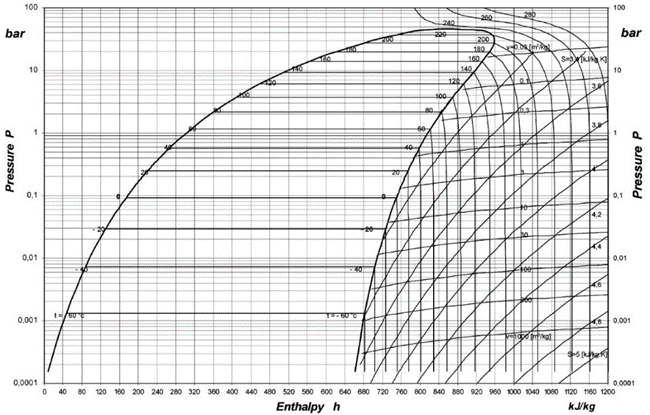 Fig. 1. Enthalpy diagram of the pure acetone [13].
2.1 Performance evaluation
The thermal efficiency of a solar water heater, which is considered a key performance metric, can be calculated as follows [3]:
| $\eta_{\mathrm{th}} = \frac{Q_{\mathrm{out}}}{Q_{\mathrm{in}}}$
|
(1) |
| $\Delta T = T_{\mathrm{out}} - T_{\mathrm{in}}$
|
(2) |
| $∆T= T_out-T_in$
|
(3) |
| $Q_{\mathrm{in}} = I_T \, A_1 + I_R \, A_2$
|
(4) |
- $\dot{m}$ = Mass flow rate of the fluid (water or acetone) (kg/s).
- $C_{\mathrm{p}}$ = Specific heat of the fluid = 4.18 kJ/kg.K (for water) and = 2.1 kJ/kg.K (for acetone).
- $T_{\mathrm{out}}$ = Outlet temperature of the fluid (K).
- $T_{\mathrm{in}}$ = Inlet temperature of the fluid (K).
- $I_{\mathrm{T}}$ = Irradiation intensity (around between 825 – 1000 W/m2).
- $I_{\mathrm{R}}$ = Irradiation reflect (around between 560 – 600 W/m2).
- $\mathrm{A}_1$ = Frontal face area of the collector (exposed area to the sun) (m2).
- $\mathrm{A}_2$ = Back face area of the collector (m2).
The mass flow rate through the closed loop of the collector can be calculated as follows:
| $Q = \dot{m}\,(h_2 - h_1) = I_T\,A_1 + I_R\,A_2$
|
(5) |
For $h_{\mathrm{1}}$ and $h_{\mathrm{2}}$, we get them from the water and acetone tables depending on the atmospheric pressure and temperature, for water (100°C) and acetone (56.05°C).
Where,
- $h_{\mathrm{1}}$ = Specific enthalpy of the saturated liquid ( ) for (water and acetone) (kJ/kg).
- $h_{\mathrm{2}}$ = Specific enthalpy of the saturated vapor ( ) for (water and acetone) (kJ/kg).
The frontal and back face area of the collector can be calculated as follows:
|
$A_1 = (50 \times 25) \times 10^{-4} = 0.125 \, \mathrm{m}^2 = A_2$
|
(6) |
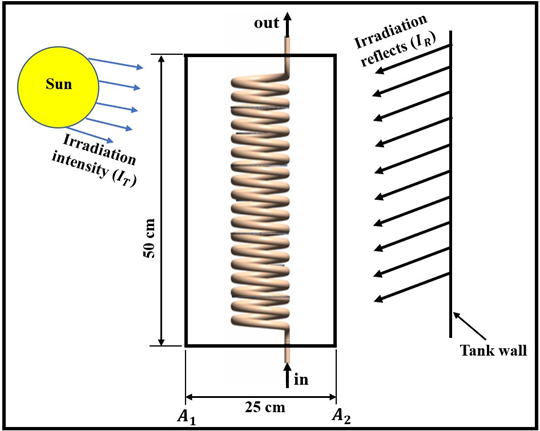
Fig. 2. Schematic diagram of the vertical solar collector
2.2 Experimental setup and testing methodology
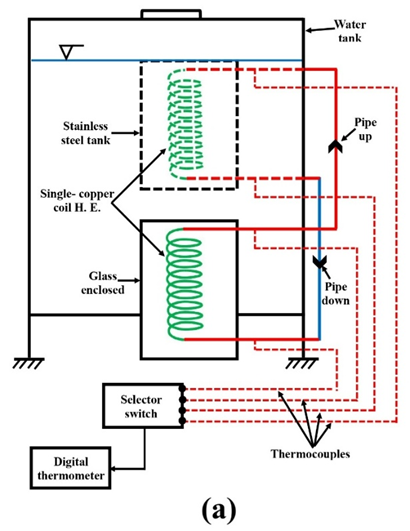
This experimental study investigates a natural circulation solar water heating system based on thermosiphon principles. The pump-free and electricity-independent design makes this system particularly advantageous for high solar irradiance regions. As shown in the Fig. 3 (a and b) the closed-loop configuration comprises two principal elements: the solar collector assembly and the storage tank. The solar collector assembly features an innovative helical coil configuration fabricated from a 6-meter-long copper tube with 12 mm outer diameter and 1 mm wall thickness. The coil forms six complete loops with 200 mm outer diameter and 50 mm pitch between turns. The assembly of this absorber takes the form of a protective glass housing 250 mm x 250 mm x500 mm with 10 mm thick glazing such that it reduces the amounts of convective heat loss whilst maximizing the amount of solar energy absorbed. The system is designed with a verticulently oriented storage tank making it 300 mm x 300 mm x 500 mm and which is strategically set at elevation of 1.5 meters above collector plane to have proper therapeutic siphonic head. A built-in central position within the tank is a double-coil heat exchanger which corresponds with the primary collector specifications in length (6 m) and diameter (12 mm copper tubing of the same helical geometry) to optimize the exchanger heat transfer. The functioning of systems is completely based on fluid dynamics with the density being natural. The incident solar radiation is used to heat up the working fluid (water or acetone) in the collector coil that lowers the density of the fluid which generates a buoyancy force that results in upward flow. At the same time, the storage tank releases the cooler or warmer fluid in a cloudy form to the ground level at the same time, creating the supply chain of cooler or warmer fluid. The secondary heat exchanger coil holds thermal energy that is transmitted to domestic water line without getting mixed with the heat transfer and potable water loops. The design has several benefits: full removal of mechanical pumps and electrical parts ensures that the system is operation free, the coil design is highly perfective in ensuring that the heat transfer area is increased through the use of a spiral type coil and the system requires no electricity other than the sun thus making the whole system applicable in off-grid mode. The trial processing was done using a strict 3-stage procedure. The first charging of the system was used when the select working fluid (water or acetone) was carefully added both into the collector and storage circuit. In the solar exposure test, the array was put under controlled irradiance conditions and parameters like temperature altered at strategic points which include the collector outlet stream, tank inlet and tank outlet ports. The overall performance test was used to evaluate several indicators: the rise of the temperature kinetics, the ability to retain heat, and the stability of the cycle under different conditions of solar flux variation.
The books were experimented on the 6th, 8th, 11th, and the 13th of September, 2022, in Baghdad, Iraq. The tests were all at an 8.00 a.m. -4.00 p.m. time period at an incline (45) to the south facing the sun on clear days. This type of thermosiphon design shows to be much better than the traditional flat-plate collectors, and it enhances the level of heat transfer and minimizes the cases of thermal loss. The system provides a safe and long-lasting solution to domestic water heating applications especially in remote where the electric power supply is not available or is not reliable. The higher performance of the spiral coil design, combined with the optimization of the components and the heat exchange system, offers the advantage of the absolute performance and the preservation of the entire energy autonomy.
 |
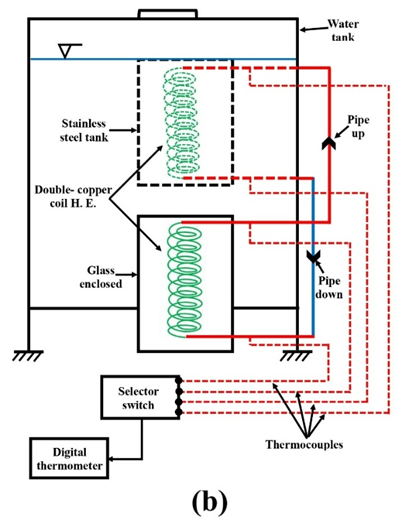 |
Fig. 3. Schematic of a vertical solar thermal collector with (a) single coil and (b) double coil
3 Results and discussion
The experimental data will offer the most important results in terms of the thermal performance of the solar water heating system used in the reality of solar irradiation conditions. Data on the temperature change with time of the two systems (two-loop and single-loop) can be presented in Fig. 4. As seen in the figure, the ambient temperature was 20oC at 8.00 AM and their highest value of 35oC was at 1.00 PM and then they are increasingly decreasing up to 29oC at 6.00 PM. It is also possible to explain this somewhat advance attainment of high temperature by the cylindrical geometry of the collector because, by virtue of its design, it has the capability to absorb solar energy at all angles around the sun on a daily basis. An analytical comparison of the single and double coil configurations illustrates that there are huge variations in performance.
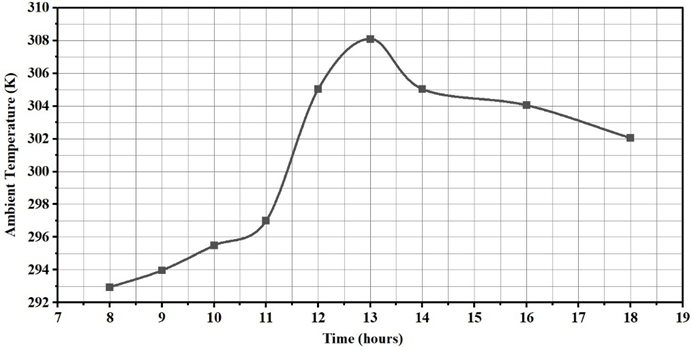
Fig. 4. Variation of ambient temperature with time for single and double-loop systems
The variation between the inlet and outlet temperatures in both the single- and double-loop cases for the water and acetone versus time can be illustrated in Figs. 5 and 6, respectively. Whereas, Fig. 7 shows the relationship between the outlet temperature of water and acetone, and for both single and double loops, versus time. The temperature profile analysis of the vertical collector, presented in Figs. 5 and 6, reveals that the system reaches its maximum operating temperature at 1:00 PM, achieving 72°C when using water as the working fluid and 100°C with acetone vapor. Fig. 5 clearly shows that the double-loop design improves water inlet temperatures by 32.4% compared to the single-loop arrangement, while maintaining a consistent linear temperature increase pattern during daylight operation. With respect of acetone, the Fig. 6 show the increase percentage of the acetone inlet temperature by 12.5%. The outlet temperature measurements, illustrated in Fig. 7, further confirm the advantages of the double-coil system of the acetone, which achieves a 7.67% at 1:00 PM higher than that of the double-loop for water. The increased heat transfer surface area of the double coil set up which strengthens the absorption of solar energy and the natural thermosiphon circulatory effect brings about this improvement.
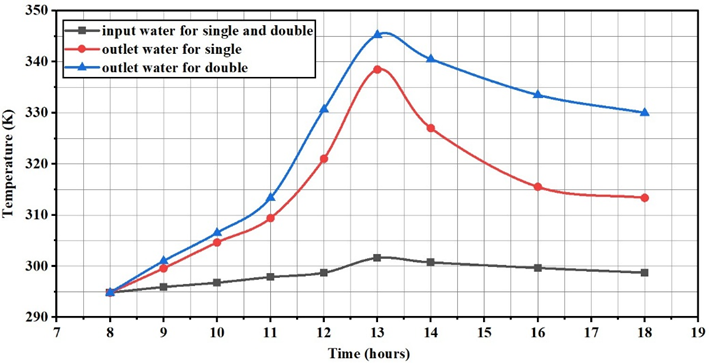
Fig. 5. Variation of the temperatures in both the single- and double-loop versus time (only water)
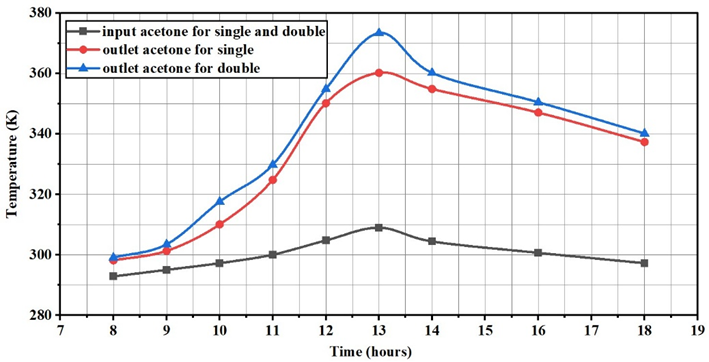
Fig. 6. Variation of the temperatures in both the single- and double-loop versus time (only acetone)
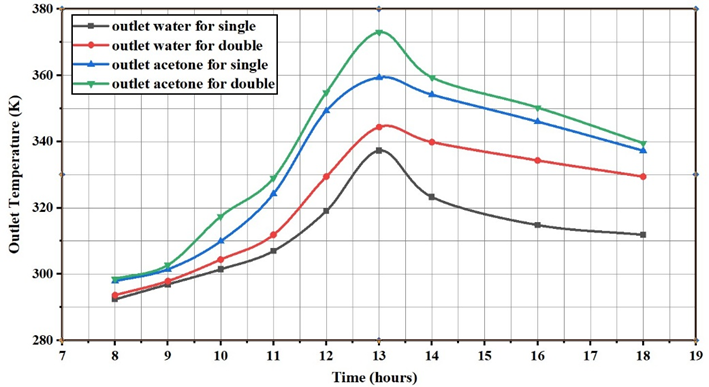
Fig. 7. The outlet temperatures in both the single- and double-loop versus time (water and acetone)
Fig. 8 indicates the dependence of storage temperature of water and acetone of the single and the two loops with time. Its profile of efficiency illustrated in Fig. 8 is two-stage in nature. At the first stage, the efficiency is gradually peaking and directly proportional to increasing solar irradiance reaching the highest value at the 1:00 PM. The second one is characterized by a sharp rise of efficiency towards the end of the afternoon, where the maximum storage temperature is 4:00 PM. This sluggish peak performance is contributed by two important reasons: by the good preservation of the residual heat in the storage tank and by the increased convective heats conduction measures that are in the system. Such a considerable improvement of performance was mainly obtained through the use of two novel design characteristics, the helical coil arrangement that has caused the best utilization of the solar exposure and the heat transfer efficiency, and the use of the two-loop configuration that has decreased the fluid residence time but increased the thermal exchange capacity. These detailed experimental findings are conclusive in their ability to confirm that the system has high performance based on the traditional solar thermal technologies. It is especially useful in the applications where space is a sensitive issue, maintenance is a key factor, and energy efficiency is a concern, and the design is an impressive solution to the new-age sustainable heating.
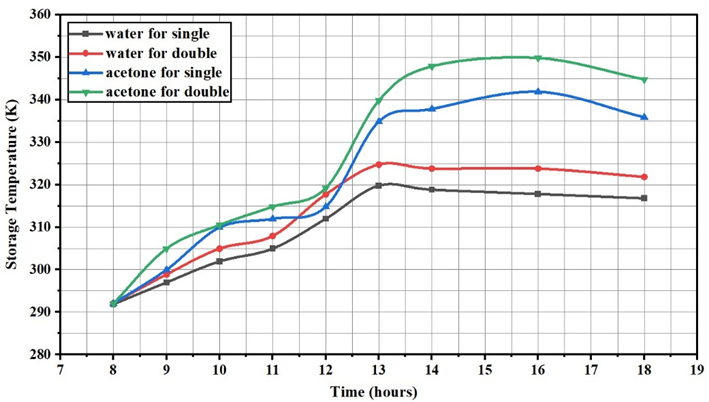
Fig. 8. The storage temperatures in both the single- and double-loop versus time (water and acetone)
The variation between the thermal efficiency in both the single- and double-loop cases for the water and acetone versus time can be illustrated in Fig. 9. For all cases, it can be seen from the figure that the efficiency starts to increase from 8:00 AM until it reaches its maximum value at 1:00 PM, after which it starts to gradually decrease. It was also observed that acetone had higher efficiency in both the single- and double-loop cases compared to water, where it increased by 77.66 and 70.78% respectively. Compared to the single-loop case, the efficiency of the double-loop case was found to be increased by 13.76% and 34.07% for acetone and water, respectively.
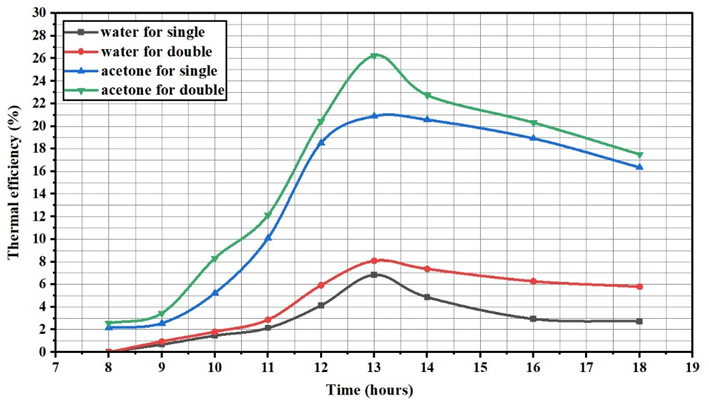
Fig. 9. Variation the thermal efficiency with time for single and double loop (water and acetone)
4 Conclusions
The study was able to come up with a new design of a solar collector which greatly improved the thermal performance with practical benefits in terms of production and operation. The paper proposed an innovative solar heating device with double coils which utilized both water and acetone as working fluids which proved to show great energy capture characteristics than the conventional systems. The thesis findings have demonstrated that the developed system covers high thermal performance and that the efficiency rates are significantly higher in comparison to the traditional solar collectors. The individual system that the collector is designed to fits gives the collector a better opportunity to maximize the amount of solar energy that is used during the day. The findings of tests are clear indicators that the new design is more efficient to trap and retain heat making them maintain constant temperatures even when there is variation in the amount of solar irradiance. The performance has been enhanced through a number of design innovations. The dual coil system offers a more effective channel of convection of heat whereas the thermosiphon system allows the efficient functioning of the instrument without having to inject any external energy into the system. This becomes especially suitable due to the fact that the system can be used in areas which have plenty of sunshine and hence offers a viable alternative to water heating sustainability systems.
This paper validates the fact that the vertical collector type is a feasible alternative to the traditional solar thermal systems. This is due to the fact that it is an efficient, easy to build and operate and therefore serves as a good alternative to use in residential and commercial uses. Proper use of this technology has the potential of making positive contributions on tackling the global energy problems through increasing the use of solar energy.
The experimental validation of the proposed vertical spiral-coil solar water heating system was conducted in this work under a limited range of climatic conditions, notwithstanding the favorable thermal performance indicated in this work. All tests were performed in Baghdad, Iraq, in the first week of September in clear sunlight days with high solar irradiance, high average ambient temperatures in the daytime, average relative humidity, low wind, and low rainfall. This scenario fits a hot, dry, sunny climate that is ideal for solar thermal applications, but it would not necessarily be representative of the availability of solar resource and the environment heat loss in angles of temperate, humid, cloudy, or cold regions where the availability of solar resource and the ambient heat losses greatly differ. Accordingly, all thermal efficiencies, temperature profiles, and storage behavior indicated in this work will reflect system performance for these localized weather conditions, and not as values extensible to other locations. For example, partial cloud scenarios, lower rates of irradiance, long periods of cold ambient temperature, or above-average wind may result in different efficiency trends and operating temperatures that have not been studied. Long‑term monitoring also needs to take place across seasons and fundamental differences in seasonal rainfall patterns and climatic zones tested to quantify further the robustness, reliability, and generalizability of this design.
4.1 Future research directions
Although acetone showed better thermal performance during the experiment, the use of acetone as a working fluid in a solar thermal system has to be evaluated systematically, not only in terms of initial efficiency of heat transfer (1.1). the long-term durability of system components subjected to acetone needs to be rigorously studied to determine any potential chemical interactions or material degradation, particularly metal tubing, seals, or storage tanks, over long-term operation. due to the volatility and possible solvent effects of acetone, the physicochemical properties of acetone may affect the liver and blood system longevity and integrity if the containment materials are incompatible (allophane). much effort needs to be invested into devising maintenance protocols unique to those systems based on acetone, especially with respect to monitoring fluid stability, possibly controlling evaporation losses, and leak prevention to maintain device efficiency. due to acetone being extremely flammable and volatile, appropriate assessments, proper ventilation design, flame-retardant solutions, and strong containment solutions must be implemented to reduce fire and explosion risks. Also, operational limits for safe acetone application need to be unambiguously determined via accelerated aging and safety experiments, for instance, maximum service temperature and pressure. To substantiate the viability and safety of acetone as a working fluid for solar thermal applications, future research must be initiated that can experimentally demonstrate long-term durability, receive safety certification, lifecycle cost, and best-practice maintenance and risk management guidelines.
Acknowledgements
References
- Akber, A. O., & Abduljabbar, A. A. (2022). Performance of a heat pipe solar collector with evacuated polycarbonate front cover. Journal of Applied Engineering Science, 20(3), 852-860. https://doi.org/10.5937/jaes0-33617
- Rajive, V. (2016). Thermal Performance of Modified V-Trough Solar Water Heater. International Journal for Research in Applied Science & Engineering Technology (IJRASET), Vol. 4, no. V, pp. 557-563. https://www.ijraset.com/fileserve.php?FID=4835
- Arekete, S. A. (2013). Performance of solar water heater in Akure, Nigeria. Journal of energy technologies and policy, Vol. 3, no. 6, pp. 1-9. https://www.iiste.org/Journals/index.php/JETP/article/view/6450
- Cozzini, M., Pipiciello, M., Fedrizzi, R., Hassine, I. B., Pietruschka, D., & Söll, R. (2016). Performance analysis of a flat plate solar field for process heat. Energy Procedia, Vol. 91, pp. 11-19. https://doi.org/10.1016/j.egypro.2016.06.164
- Brunold, S., Frey, R., & Frei, U. (1994). Comparison of three different collectors for process heat applications. In Optical materials technology for energy efficiency and solar energy conversion XIII, Vol. 2255, pp. 107-118. SPIE. https://doi.org/10.1117/12.185361
- Prasad, A. R., Singh, S., & Nagar, H. (2017). Importance of solar energy technologies for development of rural area in India. International Journal of Scientific Research in Science and Technology, Vol. 3, no. 6, pp. 585-599. https://ijsrst.com/home/issue/view/article.php?id=IJSRST1736124
- Hoffman, L. A., & Ngo, T. T. (2018). Affordable solar thermal water heating solution for rural Dominican Republic. Renewable energy, Vol. 115, pp. 1220-1230. https://doi.org/10.1016/j.renene.2017.09.046
- Arunachala, U. C., Bhatt, S., & Sreepathi, L. K. (2013). Experimental and theoretical validation of numerical code to analyze the performance of thermosiphon flat plate solar water heater. Int. J. Renew. Energy Technol, Vol. 2, no. 6, pp. 112-116. https://www.researchgate.net/publication/292139466
- Das, S. (2016). Simulation of optimal exergy efficiency of solar flat plate collector. Jordan Journal of Mechanical and Industrial Engineering, Vol. 10, no. 1, pp. 51- 65. https://jjmie.hu.edu.jo/vol10_1/JJMIE-125-14-01.pdf
- Kumar, A., Lal, S, & Harenderc. (2017). Thermodynamic analysis of Factors affecting the Performance of Solar Collectors. International Journal of Scientific Engineering and Technology, Vol. 6, no. 2, pp. 113-117. https://ijset.com/publication/v6/112.pdf
- Ayompe, L. M., Duffy, A., Mc Keever, M., Conlon, M., & McCormack, S. J. (2011). Comparative field performance study of flat plate and heat pipe evacuated tube collectors (ETCs) for domestic water heating systems in a temperate climate. Energy, Vol. 36, no. 5, pp. 3370-3378. https://doi.org/10.1016/j.energy.2011.03.034
- Das, S. S., Kumar, P., & Sandhu, S. S. (2023). Performance investigation of acetone and mobiltherm as a heat transfer medium in a hybrid photovoltaic-thermal system. Energy Sources, Part A: Recovery, Utilization, and Environmental Effects, Vol. 45, no. 3, pp. 7122-7135. https://doi.org/10.1080/15567036.2022.2032882
- Ajib, S., & Karno, A. (2008). Thermo physical properties of acetone–zinc bromide for using in a low temperature driven absorption refrigeration machine. Heat and mass transfer, Vol. 45, pp. 61-70. https://doi.org/10.1007/s00231-008-0409-1
- Tarango Brito, E. C., Barrera Díaz, C. E., Ávila Córdoba, L. I., Frontana Uribe, B. A., & Solís Casados, D. A. (2025). Recovery and Reuse of Acetone from Pharmaceutical Industry Waste by Solar Distillation. Processes, Vol. 13, no. 2, pp. 361. https://doi.org/10.3390/pr13020361
- Abed, F. M., Al-Douri, Y., & Al-Shahery, G. M. (2014). Review on the energy and renewable energy status in Iraq: The outlooks. Renewable and Sustainable Energy Reviews, Vol. 39, pp. 816-827. https://doi.org/10.1016/j.rser.2014.07.026
- Alsehli, M. (2023). Improving the performance of a modified solar distiller with phase change material and parabolic trough collector. Environmental Science and Pollution Research, Vol. 30, no. 12, pp. 32710-32721. https://doi.org/10.1007/s11356-022-24238-4
- Alsehli, M., Essa, F. A., Omara, Z. M., Othman, M. M., Elsheikh, A. H., Alwetaishi, M., ... & Saleh, B. (2022). Improving the performance of a hybrid solar desalination system under various operating conditions. Process Safety and Environmental Protection, Vol. 162, pp. 706-720. https://doi.org/10.1016/j.psep.2022.04.044
- Kazem, H. A., Shareef, A. S., & Azziz, H. N. (2024). Experimental investigation of solar still enhanced with a different working fluid for brine desalination heat pipe. In IET Conference Proceedings CP906 Vol. 2024, No. 34, pp. 238-244. Stevenage, UK: The Institution of Engineering and Technology. https://doi.org/10.1049/icp.2025.0089
- Jaiswal, P., Kumar, Y., Das, L., Mishra, V., Pagar, R., Panda, D., & Biswas, K. G. (2023). Nanofluids guided energy-efficient solar water heaters: Recent advancements and challenges ahead. Materials Today Communications, Vol. 37, pp. 107059. https://doi.org/10.1016/j.mtcomm.2023.107059
- Nanda, I. R., Pambudi, N. A., & Aziz, M. (2023). Review on the progress of solar water heaters and their future perspectives. Energy Technology, Vol. 11, No. 10, pp. 2300191. https://doi.org/10.1002/ente.202300191
- Naveenkumar, R., Venkateshkumar, R., Mohanavel, V., Franklin, C., Ismail, S. O., Ravichandran, M., ... & Soudagar, M. E. M. (2025). Recent developments in solar water heaters and solar collectors: A review on experimental and neural network analysis. Results in Engineering, Vol. 25, 104394. https://doi.org/10.1016/j.rineng.2025.104394
- Hussein A. Mahmood, Ali D. Salman and Mohammed F. Mohammed, (2023). Investigating the performance of a solar water heater under variable pressure of the latent heat of ethanol. The 18th International Middle Eastern Simulation and Modelling Conference. https://www.researchgate.net/publication/382312719
- Afshoon, S. Y., Shafaghat, R., & Gorji Bandpy, M. (2025). Experimental Investigation of Average Nusselt Number Variations in a Heat Pipe-Evacuated Tube Solar Collector due to Presence of Acetone-Graphene Nanofluid. Iranica Journal of Energy & Environment, Vol. 16, No. 3, pp. 400-412. https://doi.org/10.5829/ijee.2025.16.03.02
Conflict of Interest Statement
The authors declare that they have no competing interests.
Author Contributions
Data Availability Statement
There is no dataset associated with the study or data is not shared.
Supplementary Materials
There are no supplementary materials to include.