Volume 24 article 1353 pages: 555-568
Received: Feb 26, 2026 Accepted: Jun 09, 2026 Available Online: Jul 05, 2026 Published: Aug 17, 2026
DOI: 10.5937/jaes0-66069
NUMERICAL INVESTIGATION OF THE DYNAMIC CHARACTERISTICS OF ADHESIVELY BONDED CANTILEVER LAP JOINTS CONSIDERING BOND AREA VARIATION AND ADHESIVE VOLUME REDUCTION
Abstract
In this study, we investigated the dynamic response of cantilever interlocking joints using the finite element method. The effect of the adhesive contact area width and the contact length on the structural properties was examined through a series of analyses using ANSYS 19 APDL software. We adopted two main approaches for the study. In the first approach, the contact area was varied using three dimensions (5 × 25 mm, 25 × 25 mm, and 50 × 25 mm). In the second approach, an additional 5 mm thick adhesive layer was applied to both sides of the joint. In the third approach, the contact area was fixed at 25 × 25 mm, and a central void with dimensions of (5 × 5 × 0.2 mm, 10 × 10 × 0.2 mm, and 15 × 15 × 0.2 mm) was created in the adhesive layer to study the effect of reducing the amount of adhesive on the dynamic response. The results show that while increasing bonding area improves the overall stiffness, it may cause a reduction in natural frequencies when the increase in mass and change in span geometry. Moreover, including internal voids was shown to produce lower equivalent stiffness and natural frequencies but an increased damping ratio caused by localized shear deformations and the viscoelastic behavior of the adhesive. Results exhibits that the first-mode equivalent stiffness increases to 11.88% (from4.29 x 104 N/m to 4.80 x 10⁴ N/m) with increasing bonding area from 5 x25 mm to50 x25 mm on the other hand, using a 5 mm thick adhesive support layer lowered the first natural frequency by 7.33% (from 240.33 Hz to 222.71 Hz) and with a thickness of 15 mm the reduction was 22.14% (187.13 Hz). In addition, the creation of a centralized void measuring 15 x 15 mm (reduce adhesive volume) resulted in small reductions to natural frequencies across modes but caused significant drops by more than 5.96% on fourth-mode equivalent stiffness (3.67 x 10⁶ to 3.45 x 10⁶ N/m), while increasing structural damping ratio owing to local shear deformations. The increase of damping ratio in specimens with internal cavities is also ascribed to the shear deformation which occurred in a localized manner, and the increased hysteretic energy dissipation in the remaining adhesive region. The results presented offer valuable insight for the design and optimization of bonded structural systems under dynamic loading, underscoring the importance of accounting for the configuration of adhesive and potential defects in production.
Highlights
- Bonding area significantly affects the dynamic stiffness and vibration stability of adhesive joints.
- Adhesive volume reduction and internal voids decrease equivalent stiffness and natural frequencies.
- Internal voids increase damping due to localized deformation and energy dissipation.
- Adhesive distribution and manufacturing defects are critical for optimizing the dynamic performance of bonded joints.
Keywords
Content
1 Introduction
Compared with traditional mechanical fastening methods, adhesively bonded joints are commonly used in modern engineering structures. When compared to bolts or rivets, adhesive bonding offers superior stress distribution, less localized stress concentrations, lower structural weight and better fatigue performance. For these reasons, bonded joints are commonly employed in aerospace, automotive, and mechanical engineering applications. In recent years, considerable research has been conducted on the static and fatigue performance of adhesively bonded joints. However, the dynamic behavior of such joints has received comparatively less attention. In many practical engineering systems, bonded structures are subjected to dynamic loads and vibrations, which may significantly influence their structural integrity and long-term performance. The dynamic characteristics of bonded joints depend on several parameters, including adhesive properties, bond geometry, overlap length, and boundary conditions. Among these factors, the bonding area and structural span play an important role in determining the stiffness and vibration response of the structure.
Single- and double-action adhesives are the most common types used in bonded joints. The influence of functionalized boron carbide and boron nitride nanoparticles on the bonded interfaces of aluminum alloy (AA2024-T3) was rigorously analyzed by [1]. The effects of surface preparation on the mechanical strength and operational efficacy of single-lap aluminum-copper alloy joints intended for automotive applications were systematically examined by [2]. Thomas et al. in 2021 [3], investigated the bonding strength of single-layer overlap joints made of hybrid metal-fiber reinforced polymer. Hussain and Ingole in 2022 [4], reviewed significant advances in the dynamic properties of mechanical and structural joints, as well as a dynamic frequency-domain analysis methodology for determining nonlinear system parameters in structural dynamics. Aabid et al. in 2021 [5], studied adhesive joints in a radial plate structure, using 2024-T3 aluminum and 2014 Araldite to bond the beam and the adhesive. They concluded that the adhesive layer used in the overlap joint should be long and thick to improve the structural performance of miniature composite models. Dhilipkumar et al. in 2022 [6], have attempted to give a brief summary of the vibrational characteristics that affect the strength of adherently connected joints, including natural frequency, damping factor, and modal strain energies. The most recent research on the numerical analysis of the dynamic behavior of adhesive joints was reviewed by [7]. Under dynamic behavior, three different domains were recognized: fatigue, variable strain rate and impact, and modal analysis. In their FEM model, Sindi et al. in 2021 [8], compared steel and aluminum adherents using a functionally graded adhesive, and they discovered that it generated natural frequency predictions that agreed with the analytical model.
Researcher in [9] performed a phenotypic analysis on two-, three-, and four-step adhesive overlap joints, as well as double overlap joints, made of aluminum (Al), copper (Cu), and mild steel (Ms) using an Araldite epoxy adhesive, numerical analysis was performed using the commercial Ansys software. Researchers in [10] studied the mechanical properties of the bonding area and several bonding areas. Researcher in [11] has deeply studied (both experimentally and numerically) the free vibration of sandwich plates with structural cutouts. The developed technique assesses how different cutout presence and shapes will affect the natural frequencies and mode shapes of a structure in order to maximize its dynamic stability. Abstract Step-lap joints, formed using the lap joint concept, have been used in many practical applications because of their simplicity of manufacturing and assembly. It gives key perspectives on the resultant effect of harshness disaggregation and/or into or through-layer failure along out-of-plane layered interfaces induced by the stepped-lap geometry on both mechanical durability as well as dynamic response of these multi-material structures. Vibration control is a main point of concern in engineering structures and mechanical systems, where large vibration may limit operation stability, increase damage wear rate, thus complicating structural reliability. Vibration of mechanical parts and piping systems has been a critical concern in recent investigations emphasizing the necessity for evaluation and reduction [12]. Moreover, parametric investigations are a common practice in engineering studies to understand the influence of geometric, material and operational inputs on system performance. For example, as shown in studies within engineering systems [13], flow distribution and design configuration have a dramatic impact on heat transfer and hydrodynamic performance. And contrarily, in another engineering application, structural or material modification has been adopting to modify the overall system response to enhance performance [14]. The findings demonstrated that the natural frequencies are little affected when the bonding region of single overlap joints is modeled as two-, three- and four-step adhesive overlap joints. The natural frequencies are somewhat impacted by this simulation.
The mechanical and dynamic behavior of adhesively bonded joints has been the subject of numerous investigations, but most previous research has mainly focused on parameters such as adhesive overlap length, adhesive thickness, and material properties while generally assuming a fully solid and uniformly distributed adhesive layer and the earlier research has not explicitly tackled the effect of voids on natural frequency, equivalent stiffness, and damping. Despite the importance of these factors, the combined effect of adhesive bonding area and internal adhesive volume reduction on the dynamic response of cantilevered lap joints has not been sufficiently addressed in the existing literature. Therefore, the objective of the present study is to numerically investigate the dynamic behavior of adhesively bonded cantilever lap joints with different bonding areas and internal cavities within the adhesive layer while maintaining a constant external bonding area. The study evaluates the influence of these parameters on the natural frequencies, mode shapes, damping ratio, and equivalent stiffness using finite element analysis. Recent studies on composite stepped-lap joints [15] have also reported that the joint configuration and material combination had a significant effect on the interface characteristics, tensile-shear response and vibration performance. The contribution of this work is a clearer understanding of how the distribution of adhesive and internal material reduction influences dynamic performance within effective bonding structures, which should guide future design and optimization of adhesive joints in mechanical application subjected to dynamic loads. This approach has not been previously investigated in literature with respect to its impact on cantilevered joint dynamic response at the servo rather than isolated from a base motion source, nor is it common to investigate low-temperature adhesive bond area and volume at this resolution. Whereas previous studies mostly consider a fully solid adhesive layer, this study aims to improve the understanding of how internal cavities within an adhesive layer affect interfacial behavior (while keeping an external bonding area constant). It offers new perspectives on how adhesive distribution influences the stiffness and vibration performance of structures that are bonded together.
Furthermore, it was found that adding any adhesive to either side of the joint or to one of the joints results in a decrease in the natural frequency, so maintenance personnel should exercise caution as this may cause design flaws.
2 Materials and methods
2.1 Geometry of models
Finite element models were constructed to systematically study the effect of the bonding area on natural frequencies, maximum deformation, and bonding stiffness in cantilever plates. The base sample consisted of a rectangular plate (120 mm × 25 mm × 2 mm) bonded to another plate with dimensions of (50 mm × 25 mm × 2 mm). The study of the bonding area focused on two axes: the first axis investigated the effect of the bonding area between the two pieces, considering three cases: (25 mm × 50 mm ´ 0.2 mm), (25 mm × 25 mm ´ 0.2 mm), and (25 mm × 5 mm ´ 0.2 mm). The second axis investigated increasing the bonding area by adding adhesive to both sides of the pieces, similar to the model used in [10, 16], as shown in Figure 1. The effect of the adhesive size on the dynamic properties of the bonded structure was studied, with three cases studied: (5 x 5 mm), (10 x 10 mm) and (15 x 15 mm).
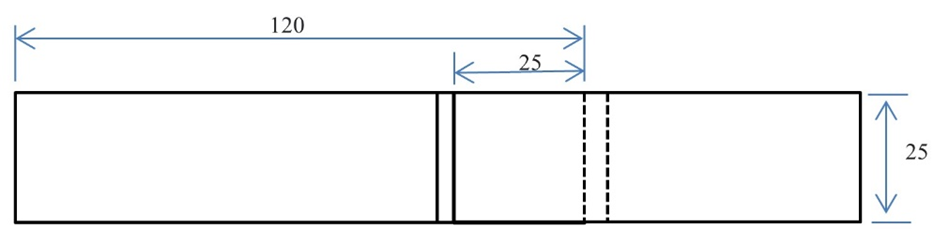
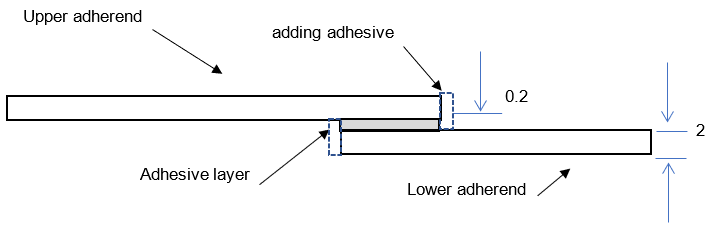
Fig. 1. Geometry of the adhesively bonded cantilever lap joint (all dimensions in mm)
2.2 Meshing and material properties
A simulation using the finite element method in ANSYS 19 software a comprehensive analysis was conducted to assess the dynamic characteristics of the bonded cantilever plates. The models were segmented into elements using Solid 185 elements as shown in Figure 2 which are widely used in mechanical property analysis. The mesh was optimized in the splice region of both pieces and the splice zone to capture gradients of mechanical deformation. A mesh convergence study was performed, where the maximum deformation of progressively finer meshes was recalculated until the variance between successive optimizations was less than 2%. Figure 3 shows the final mesh and the fine mesh respectively. The converged mesh had a final element count of approximately (4863) and node count of (1387). The small adhesive thickness and the anticipation of high stress gradients in the overlap region resulted in concentration of mesh refinement within the adhesive overlap region. The metal to adhesive interface by using a perfectly bonded metadata was modelled with the VGLUE operation in ANSYS APDL. Therefore, coincident nodes across the interface were shared to ensure total displacement compatibility and force transfer without separation or sliding
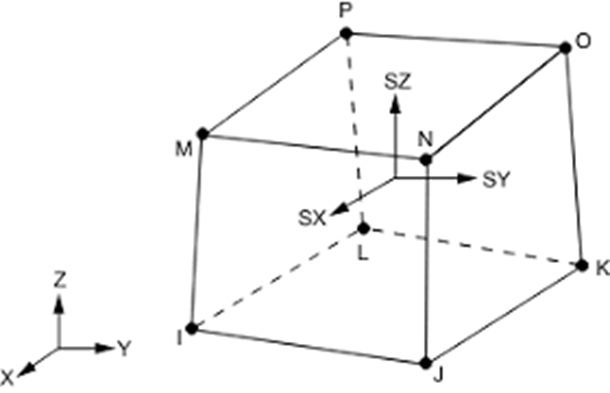
Fig. 2. Finite element model used in the numerical simulation (element solid 185)
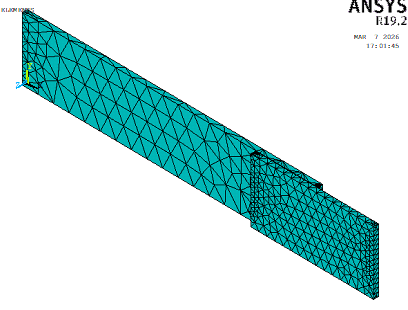
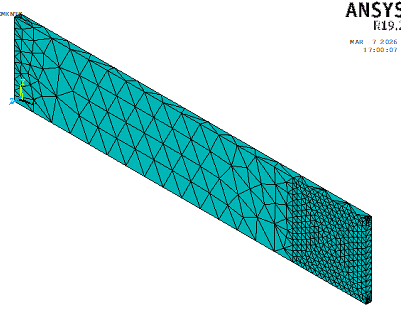
Fig. 3. Mesh configuration of the adhesive joint (a) final mesh (b) fine mesh
The boundary conditions mimicked a protruding configuration. All translational degrees of freedom (UX, UY, UZ) were constrained at the fixed end. The material properties were determined according to [9] shown in Table 1. The epoxy type (Araldite brittle AV138/HV998) was used. This type of adhesive is very hard and has high resistance but low breaking energy. The material to be bonded (MILD STEEL) was modeled as homogeneous and linearly elastic, which is consistent with previous studies on the dynamic properties [8].
In the numerical model, Rayleigh damping was included to analyze harmonic response. The damping matrix was defined based on:
\[[C]=\alpha[M]+\beta[K]\]
is the mass- and stiffness-proportional damping modes where, is. In the actual study, in the ANSYS APDL using commands ALPHAD and BETAD, values of $\alpha=5$ and $\beta=1$ x 10-6 were chosen. Last, running the harmonic response across the defined frequency range gave us a frequency response function (FRF) to use to estimate the damping ratio with the Half-Power Bandwidth Method. (The Rayleigh damping coefficients selected were chosen so as to ensure that a harmonic response remains stable and then extracted modal damping characteristics through the frequency response function (FRF) procedure.
Table 1. Mechanical properties of steel and epoxy adhesive
|
Adherend properties |
Adhesive properties |
||||
|
Modulus of Young (E) (GPa) |
Poisson’s ratio (ν) |
Density (kg/m3) |
Modulus of Young (E) (MPa) |
Poisson’s ratio (ν) |
Density (kg/m3) |
|
210 |
0.33 |
7850 |
4890 |
0.3 |
1180 |
3 Results and discussion
The source [9] states that the length of the continuous segment was fixed at 200 mm in the verification technique section. The reference study was used to determine the adhesive layer's thickness, which was fixed at 0.09 mm. Using the same analytical technique, the investigation was repeated for a 25 mm overlap of a single adhesive layer. Table 2 displays the outcomes of the first three natural frequencies. The results of natural frequencies in the current work are a little over obtained in Ref. Differences were between approximately 9% and 12% in Table 2 [9]. Such differences may be due to the different numerical modelling strategies used in the two studies. In [9], the bonded interface was modeled using ANSYS Workbench contact-based definitions while, in this study a completely bonded (glued) interface with APDL commands is utilized. These pore-volume fractions and interfacial friction will affect on the load-transfer mechanism and thus also influence the effective stiffness of bonded joints, this in turn leads to changes in a predicted natural frequency. Such variations in (material, geometrical and loading parameters) will affect the joint stiffness throughout the bonded joint and thus, will influence their calculated natural frequencies. Additionally, small differences in the model setup such as boundary conditions, material properties and discretization for the adhesive layer thickness numerical representation can also account for the discrepancy in dynamic response observed. Overall, the numerical results for all given errors are in good agreement with the reference study and show that the present numerical model produces a fairly accurate estimate of natural frequencies of bonded joint systems.
Table 2. Comparison of the first three natural frequencies between the present model and the reference study [9]
|
Reduction % |
Natural frequency reference (Ali İhsan KAYA, 2024), Hz |
Natural frequency (present study), Hz |
Mode No. |
|
10.28% |
59.002 |
65.76 |
I |
|
11.95% |
42.062 |
47.77 |
II |
|
9.02% |
58.208 |
63.98 |
III |
3.1 Effect of adhesive areas on dynamic characteristics
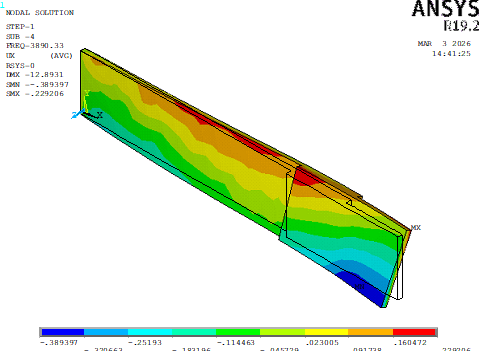
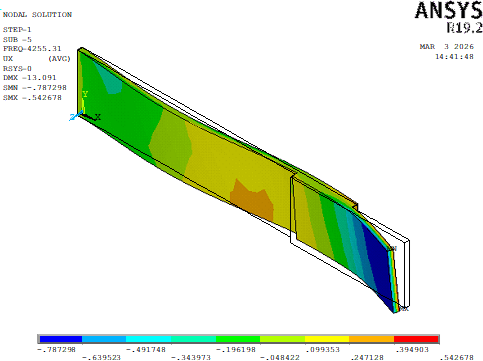
First, the impact of the adhesive bonding area on the cantilever joint's dynamic properties was examined. Three different bonding areas were considered: (5 × 25), (25 × 25) and (50 × 25) all dimensions in mm. Figure 4 shows the mode shape of the bonded adherends in a five-mode configuration. In [17], a free-vibration parametric study of single-lap joints showed how changing different parameters related to joint geometry and its modelling can influence the natural frequencies and mode shapes of the joint. The results that have been analyzed indicate that the bonding area is significant when it comes to obtaining the dynamic response characteristics of an adhesively bonded joint. This behavior is consistent with previous experimental research which showed that the mechanical response of epoxy- or polyurethane-bonded composite single-lap joints strongly depended on bonding area dimensions [18]. As the bonding area increases, the stiffness of the joint improves due to the larger load transfer region between the bonded plates. But the frequency decreasing as shown in Figure 5, the primary reason for the frequency decrease when the bonding area increases in this particular model is due to the "span length" effect and the mass-to-stiffness distribution, as detailed below.
3.1.1 Span length effect
Research in [5] indicates that the span distance plays a crucial role. When the bonding area increases to 50 x 25 mm instead of 5 x 25 mm, this expansion alters the geometry of the unsupported length of the beam. Increasing the overall length or changing the mass concentration leads to increased structural "flexibility" in certain areas, thus reducing the natural frequency.
3.1.2 Mass effect
The physical formula for natural frequency is based on the square root of the stiffness divided by the mass ($f_n \propto \sqrt{\frac{K}{m}}$). Increasing mass led to adding adhesive over larger areas (e.g., increasing the length of a joint) increases the overall mass of the system. This mass increase dominates the response directly resulting in a decrease in natural frequency. While a larger bonding area often enhances load-transfer ability and the stiffness of joints, increased adhesive coverage also alters the global dynamic characteristics of structures. Because the adhesive has a modulus many orders of magnitude lower than steel, an increase in bonded area does not provide rigidity at the same pace as that being added mass. In addition, longer bonded lengths shall change the effective vibrating span and reallocate modal strain energy through the joint. The increase in mass could supersede the gain in stiffness, and it leads to reducing natural frequency for some vibration modes.
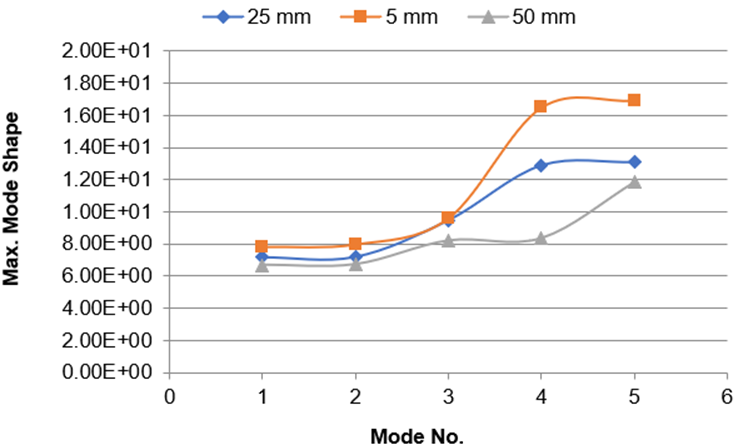
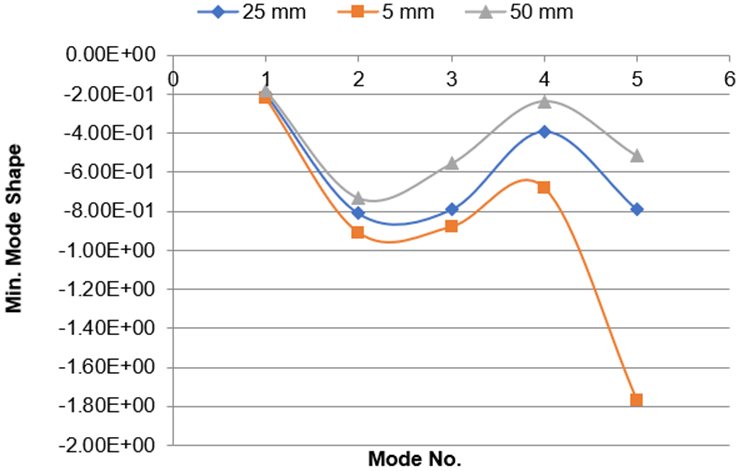
Furthermore, the vibration patterns derived from numerical simulations indicate that the maximum and minimum deformation values decrease with increasing adhesive area. This means that the joint becomes more stable and vibration-resistant when a larger adhesive area is used. The adhesive layer acts as a structural constraint, limiting the relative displacement between the bonded parts, as illustrated in Figure 6.
The damping ratio was assessed through the Half-Power Bandwidth Method derived from the frequency response curve in this method, the natural frequency $f_n$ is first identified at the peak amplitude of the resonance curve. Then, the two frequencies $f_1$ and $f_2$ corresponding to the half-power points (where the amplitude decreases to 1/$\sqrt{2}$ of the peak value) are determined. The damping ratio is subsequently calculated using the relation $\xi=\frac{f_1-f_2}{2f_n}$.
It was also observed that the damping ratio obtained using this method is influenced by the surface area of the adhesive material, as illustrated in Figure 7. Increasing the damping ratio by increasing the surface area of the adhesive layer enhances the system's ability to dissipate vibration energy due to the adhesive's flexible and viscous nature. This interpretation is in accord with recent work on bonded overlap joints [19, 20], which showed strong influence of adhesive type, overlap configuration and shear deformation mode in the adhesive layer on damping properties. As a result, there will be bigger internal energy dissipation in the bonding zone and lower vibration amplitude of system. This agrees with [5] study results.
The equivalent stiffness of the joint is expected to consistently increase with a larger bonding area although slight discrepancies in some modes exist in Table 3. For a 50 × 25 mm bonding area, the reduction seen in the equivalent stiffness of Mode 5 cannot be solely attributed to an increase in bonded area. Higher vibration modes develop a very low uniform energy distribution, as it depends mainly on the modal shape. With increasing bonded area, a much larger portion of the adhesive layer can be located in regions where the relative displacement between adherends is relatively low. So, the excess of glue does not help with effective load transfer and strain-energy storage. Additionally, the higher-order modes consist of several curvature reversals and zones of localized deformation. At these revered modes, an adhesive layer records three-dimensional shear and normal stresses transferring the modal strain energy away from the bonding region. Thus, the increase in bonded area does not lead to a proportional increase in equivalent stiffness. This indicates that the dynamic response is not only defined by the bonded area but also depends on the position of the bonded region with respect to the modal strain-energy density. For the higher vibration modes, the benefit from adding adhesive becomes mode-dependent, as evidenced by the non-monotonic trend shown in Table 3.
In higher vibration modes, the deformation field is possible to displace from the bonded zone, weakening impact of adhesive area on calculated equivalent stiffness directly. The small decrease in the equivalent stiffness for Mode 5 when bonding area increased from 30×30 mm to 50 × 25 mm can also be explained due to mode-dependent redistribution of strain energy. Since parts of the bonded region could coincide with nodal/low-deformation zones in higher vibration modes, there is lack of uniformity in load transfer in the adhesive layer. As a result, the extra surface area of adhesive does not help in storage of modal strain energy. Furthermore, as the bonded area increases so does the mass of the system which alters the modal stiffness-to-mass ratio. Thus, a non-monotonic variation of equivalent stiffness to the higher modes is possible despite an actual increase in bonded area. Dominated by shear interfacial instead of volumetric effect.
Table 3. The equivalent stiffness ($K_{eq}$) (N/m) for different bonds areas
|
Mode |
5 x 25 mm |
25 x 25 mm |
50 x 25 mm |
|
1 |
4.29E+04 |
4.43E+04 |
4.80E+04 |
|
2 |
6.06E+05 |
6.65E+05 |
6.73E+05 |
|
3 |
1.19E+06 |
1.28E+06 |
1.92E+06 |
|
4 |
2.66E+06 |
3.62E+06 |
3.86E+06 |
|
5 |
3.05E+06 |
4.18E+06 |
3.47E+06 |
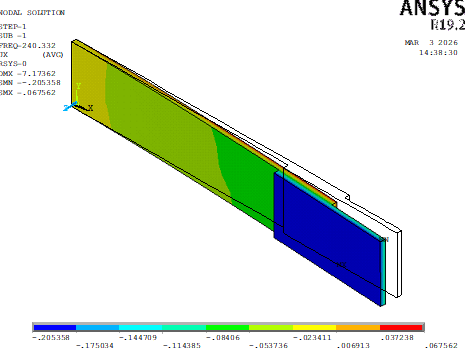
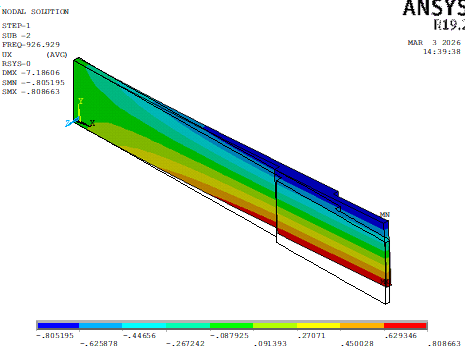
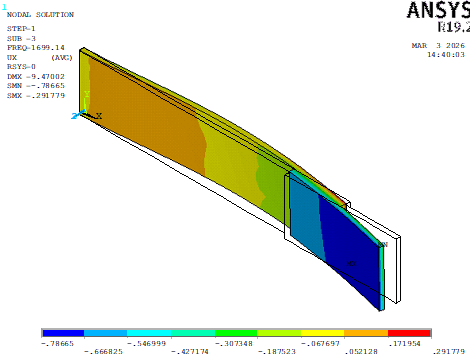
Mode shape -5-
Fig. 4. Effect of bonding length on the natural frequency (Hz) and mode shape
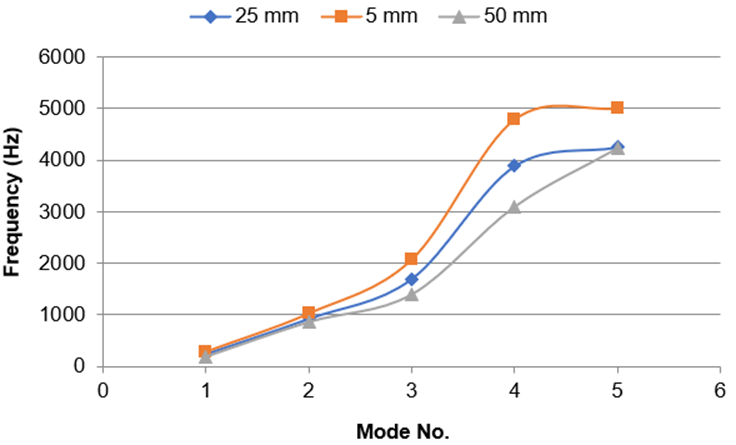
Fig. 5. Variation of natural frequency with adhesive bonding area
(a)
(b)
Fig. 6. Influence of span length on the modal response of the joint
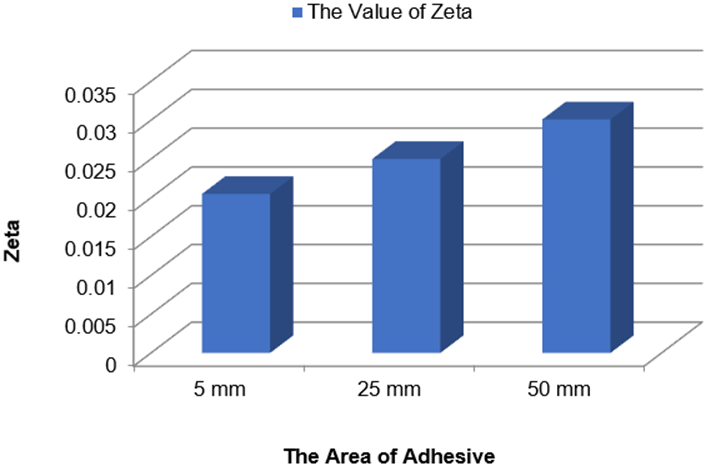
Fig. 7. Damping ratio ($\zeta$) for various bonding area
A significant decrease in natural frequency is seen when the adhesive pads were placed on both sides of the bonded specimen (5, 10 and 15 mm). The reason for these decreases can be explained as, in addition to the increase in effective mass of the system, there is also a redistribution of structural stiffness through the length of the bonded joint.
The addition of adhesive material increases the total mass of the structure, while the relatively lower stiffness of the adhesive compared with the adherends modifies the stiffness distribution in the joint region. As a result, part of the deformation becomes concentrated within the adhesive layer, leading to a reduction in the overall structural stiffness. Since the natural frequency is proportional to the square root of the ratio between stiffness and mass ($f_n \propto \sqrt{\frac{k}{m}}$ ), the combined effect of the increased mass and the altered stiffness distribution leads to a decrease in the natural frequency.
A slight change in the maximum and minimum mode shape, along with an increase in damping ratio, compared to the model without adding any support, as shown in Table 4.
Table 4. The results when added supports
|
Mode No. |
Frequency (Hz) without support |
Frequency with support (Hz) |
||
|
5 mm |
10 mm |
15 mm |
||
|
1 |
240.332 |
222.71 |
205.503 |
187.129 |
|
2 |
926.929 |
879 |
837.8 |
799.064 |
|
3 |
1699.14 |
1652.2 |
1556.28 |
1447.79 |
|
4 |
3890.23 |
3684.7 |
3356.8 |
3072.42 |
|
5 |
4255.31 |
4479.2 |
4491.46 |
4418.88 |
|
Max. mode shape |
||||
|
1 |
7.17E+00 |
6.83435 |
6.5045 |
6.21786 |
|
2 |
7.19E+00 |
6.83346 |
6.52088 |
6.24055 |
|
3 |
9.47E+00 |
8.42276 |
7.91664 |
7.05846 |
|
4 |
1.29E+01 |
9.85036 |
9.10811 |
8.2629 |
|
5 |
1.31E+01 |
10.8525 |
8.90226 |
7.52043 |
|
Min mode shape |
||||
|
1 |
-2.05E-01 |
-0.19447 |
-0.18344 |
-0.17527 |
|
2 |
-8.05E-01 |
-0.76184 |
-0.72881 |
-0.69156 |
|
3 |
-7.87E-01 |
-0.7119 |
-0.66034 |
-0.32762 |
|
4 |
-3.89E-01 |
-0.26913 |
-0.24086 |
-0.20385 |
|
5 |
-7.87E-01 |
-0.77203 |
-0.59884 |
-0.42392 |
|
Damping ratio |
||||
|
|
Damping ratio |
|||
|
With support |
0.091 |
|||
|
Damping ratio without supporting |
0.025 |
|||
However, in measuring the ($K_{eq}$) condition, we note that the greater the length of the non-adhesive area (i.e., the greater the adhesive area from each part of the piece), the stiffness will be determined, as also in Table 5.
Table 5. Calculate the equivalent stiffness ($K_{eq}$) (N/m), when added supports
|
Mode No. |
|
|
|
|
1 |
1.29E+00 |
1.36E+00 |
1.38E+00 |
|
2 |
3.05E+06 |
2.77E+07 |
2.82E+07 |
|
3 |
8.08E+07 |
9.05E+07 |
9.27E+07 |
|
4 |
4.36E+08 |
4.44E+08 |
4.72E+08 |
|
5 |
7.09E+08 |
7.86E+08 |
7.91E+08 |

3.2 Effect of adhesive volume reduction
The second part of the study examined the effect of reducing the size of the adhesive while maintaining a constant outer bonding area of 25 × 25 mm. This was achieved by inserting square cavities in the center of the adhesive layer with dimensions of 15 × 15 mm and 5 × 5 mm.
Natural frequencies slightly decrease when the adhesive material's size is reduced, according to numerical results. This decrease is attributed to the smaller size of the active bonding material responsible for load transfer, which reduces the joint's rigidity. As a result of the slight change, the results were divided by the natural frequency of the adhesive piece without a cavity to show the magnitude of the change, as shown in Figure 8.
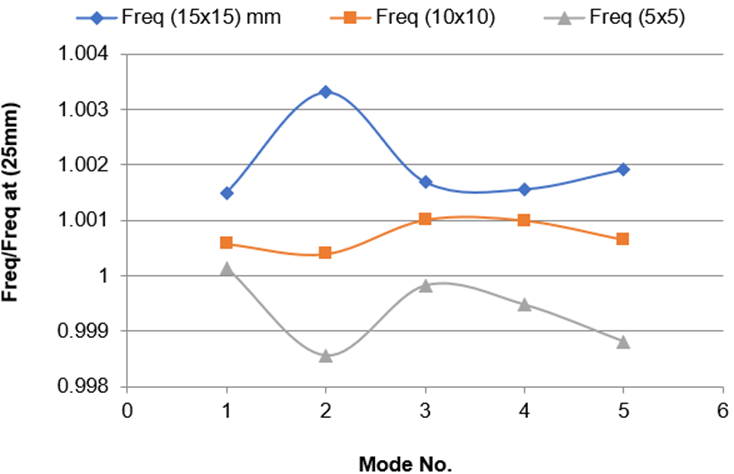
Fig. 8. Effect of adhesive void size on the natural frequency
The recorded vibration patterns for the different configurations show similar deformation patterns; however, the amount of deformation increases slightly as the number of adhesive decreases. This indicates that the structural rigidity of the joint weakens with a decrease in the amount of effective adhesive, as shown in Figure 9.
It was also shown that the damping ratio is affected by decreasing volume, as seen in Figure 10. The damping ratio's rise when the adhesive volume is reduced can be explained by the viscoelastic nature of the adhesive material. When cavities are introduced inside the adhesive layer, the stress distribution becomes more localized around the remaining adhesive regions. Higher local shear deformation occurs in the adhesive material, which increases internal energy dissipation. Thus, despite the overall adhesive volume being reduced, the viscoelastic characteristics of the remaining adhesive yield a proportionately higher damping ratio.
The same is true for the equivalent stiffness ($K_{eq}$), which reaches lower values with decreasing adhesive volume. This shows that the amount of adhesive in the load transfer is the most effective variable on the stiffness of bonded joint, as reflected in Table 6.
The increase in damping ratio with increasing void size can also be interpreted from the viewpoint of stress concentration.
These cavities perturb the homogeneous stress field inside of the adhesive layer, and induce localized concentrations of stress surrounding the void borders. With increasing void size, the remaining adhesive layer is required to transfer the applied loads through a less-than-optimal smaller effective area, leading to higher local shear stresses and strain amplitudes. These zones of localized deformation serve as loci for minimal energy dissipation per unit extension during cyclic vibration. Hence, this allows a higher share of the vibrational energy converted into internal damping of the adhesive layer. Hence, the reduction in actual adhesive volume leads to lower levels of dissipation, but there is a major effect from stress-concentration around the voids making an increase of damping ratio. The enhanced damping ratio in the presence of internal cavities is attributed, on top of the viscoelastic properties of epoxy adhesive, as well to local stress redistribution mechanisms. Voids decrease the effective area under load-transfer and increase localized shear deformation of surrounding adhesive regions during vibration. These higher concentrations of strain lead to greater hysteretic energy dissipation in the adhesive layer. In addition, the discontinuity due to the cavities alters the local deformational field and increases micro-scale relative motion between nearby adhesive regions. As a result, more of the vibration energy transforms into internal material damping rather than being stored elastically. This is why almost equal, or even slightly increasing damping ratio but reduced total adhesive volume.
Table 6. Volume reduction and equivalent stiffness. (N/m)
|
Mode |
15 x 15 mm |
10 x 10 mm |
5 x 5 mm |
|
1 |
4.48E+04 |
4.48E+04 |
4.49E+04 |
|
2 |
6.64E+05 |
6.65E+05 |
6.65E+05 |
|
3 |
1.27E+06 |
1.28E+06 |
1.28E+06 |
|
4 |
3.45E+06 |
3.64E+06 |
3.59E+06 |
|
5 |
4.13E+06 |
4.24E+06 |
4.20E+06 |
|
|
|
(a) |
|
|
|
(b) |
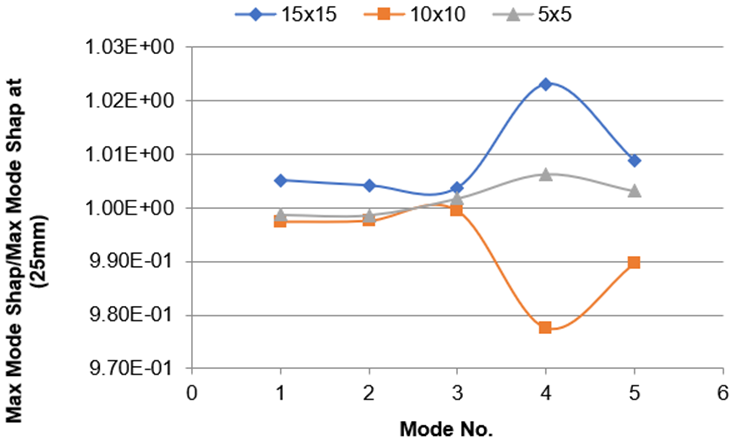
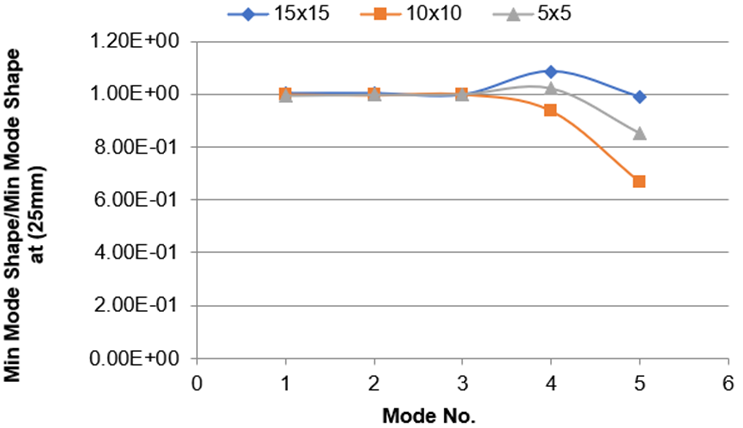
Fig. 9. Influence of void size on the modal response of the joint
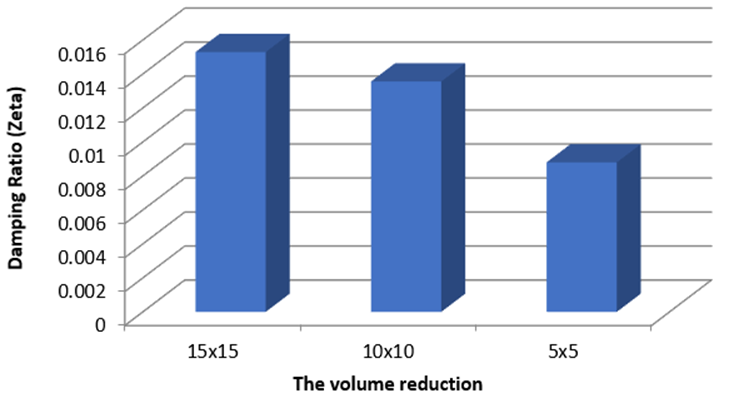
Fig. 10. Damping ratio ($\zeta$) at different volume reduction
Taken together, the results suggest that it is possible to optimize dynamic behavior characteristics of bonded structures by focusing on two main parameters that are: The contact area and the quantity of adhesive in general Increasing contact area leads to improved stiffness and resistance to vibration However decreasing the volume of adhesive has an adverse effect on performance.
4 Conclusions
Based on the numerical simulation results, the following conclusions are drawn:
- At the same time, bonding area can significantly improve the dynamic stiffness and load transfer efficiency of the joint. Which typically enhances vibration stability.
- The natural frequency is sensitive to the ratio of mass-to-stiffness; for cases with new adhesive extensions largely increasing system effective mass or span length, a lowering in this parameter can be observed.
- The adhesive surface area and volume distribution have positive correlation with the damping ratio. The energy dissipation of vibration modes reduced by the elastic and viscous epoxy layer.
- The reduction of internal adhesive volume (the occurrence of voids) leads to a proportional decrease in equivalent stiffness and small drop of natural frequencies which is caused by the effective material responsible for transferring loads.
- While the overall volume of adhesive might decrease, the damping ratio will be increased in presence of voids due to increased localized stress concentration and greater internal energy dissipation taking place within these open areas.
- The results from the study emphasize that a constant external bonding area will not necessarily interpolly lead to consistent dynamic performance if internal voiding or dimensions differ, which must be taken into account in structural health monitoring and design.
- As a recommendation for future research, it is highly suggested to investigate the dynamic characteristics and mechanical properties of bonded joints featuring a sinusoidal-wave adhesive area configuration. This approach could potentially optimize load distribution, reduce localized stress concentrations, and enhance energy dissipation under dynamic loading [16].
4.1 Limitations of the present study
- Several limitations of the present investigation should be taken into account when interpreting the results.
- The study has two major limitations: it relies entirely on linear elastic numerical simulations and does not validate the choices made in the configurations chosen for investigation using experimental approaches first.
- Second, the adhesive material was assumed as a homogeneous and isotropic while in fact real adhesive layers can be nonlinear viscoelastic, sensitive to temperature, may have shaping imperfections or cured iterations.
- Third, the internal cavities that were investigated in this study included only square voids with pre-defined large dimensions centered inside rectangular materials. In real life, it is impossible to have voids in perfect shapes and uniformly or randomly distributed as well with different volume fractions thereby changing the dynamic response.
- In addition, since the damping ratios were calculated with the Half-Power Bandwidth Method, they only denote equivalent modal damping, and not a complete viscoelastic model of the adhesive material.
- Lastly, it was restricted to a certain cantilever lap-joint configuration and mild steel–epoxy system. Consequently, the quantitative data obtained may not be directly applicable to other joint configurations apart from those being tested in this study, adhesive systems or loading conditions.
- Experimental modal testing, advanced viscoelastic material modeling and investigation of randomly distributed manufacturing defects should be part of future work to expand the present findings
4.2 Main Findings and Engineering Implications
The structure of the adhesive bonding area, the distribution of the adhesive volume and internal voids directly affect dynamic response of cantilever lap joints. An increased bonding area has been found to increase equivalent stiffness and aid vibration stability, but it also adds adhesive mass and is likely to change the span geometry which may reduce natural frequencies in some cases. Internal adhesive voids were also found to decrease stiffness and natural frequencies and increase damping as a result of localized shear deformation and hysteretic energy dissipation. These findings reveal the significance of managing adhesive distribution and eliminating internal manufacturing flaws in bonded structures that experience vibration, from an engineering perspective. The findings can assist in the design of lightweight bonded joints in mechanical, automotive and aerospace applications.
Acknowledgements
No external funding was received.
References
- Gültekin, K., & Yazici, M. E. (2022). Mechanical properties of aluminum bonded joints reinforced with functionalized boron nitride and boron carbide nanoparticles. Proceedings of the Institution of Mechanical Engineers, Part L: Journal of Materials: Design and Applications, 236(1), 37–49. https://doi.org/10.1177/14644207211056020
- Boutar, Y., Naïmi, S., Mezlini, S., & Ali, M. B. S. (2016). Effect of surface treatment on the shear strength of aluminium adhesive single-lap joints for automotive applications. International Journal of Adhesion and Adhesives, 67, 38–43. https://doi.org/10.1016/j.ijadhadh.2015.12.023
- Thomas, R., Fischer, F., & Gude, M. (2021). Adhesives for increasing the bonding strength of in situ manufactured metal-composite joints. Proceedings of the Institution of Mechanical Engineers, Part D: Journal of Automobile Engineering, 235(13), 3256–3269. https://doi.org/10.1177/0954407020965759
- Hussain, F., & Ingole, S. (2022). A review on frequency domain analysis approach for parametric identification of nonlinear joints. In V. K. Gupta, C. Amarnath, P. Tandon, & M. Z. Ansari (Eds.), Recent advances in machines and mechanisms: Select proceedings of the iNaCoMM 2021 (pp. 79–96). Springer. https://doi.org/10.1007/978-981-19-3091-3_8
- Aabid, A., Khan, S. A., Al-Khalifah, T., Parveez, B., & Anjum, A. (2021). Parametric analysis of adhesively bonded single lap joint using finite element method. In Intelligent manufacturing and energy sustainability: Proceedings of ICIMES 2020 (pp. 675–686). Springer. https://doi.org/10.1007/978-981-15-8359-3_54
- Dhilipkumar, T., Rajesh, M., & Soundhar, A. (2022). Dynamic behaviour of adhesively bonded structures in aerospace applications: An overview. In Repair of advanced composites for aerospace applications (pp. 47–53). CRC Press.
- Ramalho, L., Sánchez-Arce, I. J., Gonçalves, D. C., Belinha, J., & Campilho, R. (2022). Numerical analysis of the dynamic behaviour of adhesive joints: A review. International Journal of Adhesion and Adhesives, 118, 103219. https://doi.org/10.1016/j.ijadhadh.2022.103219
- Sindi, S. A., Othman, R., & Almitani, K. H. (2021). Theoretical solution for the axial vibration of functionally graded double-lap adhesive joints. Mathematics and Mechanics of Solids, 26(6), 823–842. https://doi.org/10.1177/1081286520967709
- Kaya, A. İ. (2024). Effect of different step-lap joints on the natural frequencies of different adhesively bonded metallic materials: A numerical study. Black Sea Journal of Engineering and Science, 7(1), 121–128. https://doi.org/10.34248/bsengineering.1399881
- Ameen, K. A., Aziz, Al-Dulaimi, M., Abdulaziz Abrahem, H., & Hasan, H. (2020). Experimental study to increase the strength of the adhesive bond by increasing the surface area arrangement. IOP Conference Series: Materials Science and Engineering, 765, 012054. https://doi.org/10.1088/1757-899X/765/1/012054
- Emad, S. (2025). Experimental and numerical study for free vibration analysis of sandwich plates with cutout. Journal of Applied Engineering Science, 23(3), 421–436. https://doi.org/10.5937/jaes0-54004
- Hussein, Z. A., Ghlaim, K. H., & Mahmood, T. R. (2025). Efficient techniques for the examination and reduction of vibration rates in the cooling pipelines of aircraft. AIP Conference Proceedings, 3292(1), 030008. https://doi.org/10.1063/5.0265361
- Ameen, K. A., Hussein, Z. A., Mohammed, A. A., & Mahmood, T. R. (2026). Influence of air distributors on heat transfer and hydrodynamic performance in fluidized bed heat exchangers. Thermal Science, 30(1B), 731–742. https://doi.org/10.2298/TSCI250929221A
- Hussein, Z. A., Aneed, H. L., & Hameed, M. A. (2022). Enhancement of the performance of automobile refrigeration system by using a cellulose pad. International Journal of Engineering Trends and Technology, 70(4), 272–277. https://doi.org/10.14445/22315381/IJETT-V70I4P223
- Öztoprak, N., Gençer, G. M., & Akdağ, M. (2025). Characterization of interface, tensile-shear, and vibration performance of AA2024-T351/PP composite stepped-lap joint. The International Journal of Advanced Manufacturing Technology, 138, 5537–5553. https://doi.org/10.1007/s00170-025-15759-6
- Hussein, Z. A., Mahmood, T. R., & Ameen, K. A. (2025). Numerical study of heat transfer enhancement in solar channels using sinusoidal velocity modulation compared to geometric wall modification. International Journal of Heat and Technology, 43(5), 1891–1900. https://doi.org/10.18280/ijht.430528
- Ramalho, L. D., Sanchez-Arce, I. J., Gonçalves, D. C., Campilho, R. D., & Belinha, J. (2023). Free vibration parametric study of a single lap joint using the radial point interpolation method. Composite Structures, 308, 116668. https://doi.org/10.1016/j.compstruct.2023.116668
- Abbasi, M., Ciardiello, R., & Goglio, L. (2023). Experimental study on the effect of bonding area dimensions on the mechanical behavior of composite single-lap joint with epoxy and polyurethane adhesives. Applied Sciences, 13(13), 7683. https://doi.org/10.3390/app13137683
- Hussein, Z. A., Alobaidi, M. H., & Ghlaim, K. H. (2023). Solar parabola mirror with power generation. AIP Conference Proceedings, 2830(1), 070023. https://doi.org/10.1063/5.0156717
- Damm, J., & Albiez, M. (2023). Damping properties of large-scale overlap joints bonded with epoxy hybrid resin or polyurethanes: Experimental characterisation and analytical description. Polymers, 15(5), 1102. https://doi.org/10.3390/polym15051102
Conflict of Interest Statement
The authors declare that there is no conflict of interest regarding the publication of this paper. The research was conducted independently, without any commercial or financial relationships that could be construed as a potential conflict of interest.
Author Contributions
Data Availability Statement
No separate dataset was used or generated as part of this study. The supporting data are presented within the article.
Supplementary Materials
There are no supplementary materials associated with this study.