Volume 24 article 1340 pages: 378-393
Received: Dec 23, 2025 Accepted: May 18, 2026 Available Online: May 30, 2026 Published: May 31, 2026
DOI: 10.5937/jaes0-63546
SHEAR STRESSES OF HOLLOW CYLINDRICAL CONCRETE BEAMS MADE WITH RECYCLED CERAMICS AGGREGATES
Abstract
The main focus of the study presented in the work is an experimental investigation into the effects related to recycled ceramic coarse aggregates from the industrial brick waste on reinforced concrete beams (RCBs) shear behavior. For such an aim, a total of twelve concrete beams with 250mm height, 1200mm length, and 140mm width have been employed. A total of six Normal Concrete Beams (NCB) models made up of three Solid Normal Concrete Beams (SNCB) and Hollow Normal Concrete Beams (HNCB). Of the six models of Recycled Ceramic Concrete Beams (RCCB), there are also three Solid Recycled Ceramic Concrete Beams (SRCCB) and three Hollow Recycled Ceramic Concrete Beams (HRCCB). At such percentages of 0% and 30%, the weight related to coarse aggregate in concrete mixes is replaced with crushed ceramic that is acquired from building demolition wastes. A total of four points on the samples were examined for bending. The mid-span of the beam had the most deflection. The test evaluated the behavior related to beam concrete with the waste material by measuring the ultimate shear strength and diagonal cracking load. The experiment was designed to determine the impact of crushed ceramic on mechanical characteristics of RCBs. Additionally, the results show that, when compared to control samples, adding crushed ceramic improved the properties of the samples in shear behavior with reference to crushed ceramic concrete beams. Results have shown that the use of recycled ceramic aggregates caused a reduction in ultimate shear capacity of approximately 10–15% compared with conventional beams, while reducing stirrup spacing significantly enhanced shear resistance and crack control. Results have confirmed that recycled ceramic aggregates can be effectively used in reinforced concrete beams without significantly compromising structural performance. This study is limited to a 30% replacement ratio and monotonic static loading conditions. To the best of the authors’ knowledge, limited studies investigated combined effect of recycled ceramic aggregates and longitudinal hollow sections on shear behavior of reinforced concrete beams. This study provides additional information about the feasibility of utilizing ceramic waste in structural applications, thereby supporting sustainable construction practices and reducing environmental impacts associated with construction waste.
Highlights
- This study systematically evaluates the shear and flexural performance of hollow and solid reinforced recycled ceramic aggregates incorporating recycled ceramics as a partial aggregate replacement.
- An experimental program was conducted using 4-point bending tests on twelve RC beams, comprising three solid and three hollow specimens, which have been tested under 4-point bending loading to characterize their flexural response.
- Results indicate that beams containing a 30% replacement ratio of conventional aggregate with recycled ceramics aggregate exhibit load–deflection behavior comparable to that of conventional reinforced concrete beams.
- The results indicate that recycled ceramic aggregates can be used for structural purposes and their use can promote sustainability in the construction sector.
Keywords
Content
1 Introduction
The utilization of natural resources, like cement and natural aggregates, is presently posing problems for the building sector [1, 2]. Using different waste ratio materials as aggregate substitutes in production of new concrete has gained popularity lately [3–9]. Several of CDW's components are highly valuable resources that could be utilized again in a variety of construction-related applications [10]. Ceramic waste is one type of waste from demolition and construction that has a lot of potential for use in mortar and concrete. For the past few years, there has been a lot of research on using ceramic wastes in concrete [10–34]. Bricks from demolished construction [12, 18, 29] as well as recovered floor and wall tiles [14, 40] are the sources associated with ceramic waste. Most of such wastes are being evaluated as coarse aggregates [10, 11, 13, 16, 18, 21–23, 25, 26, 28, 29, 34] to partially substitute natural aggregates in the concrete production. Tensile splitting strength, compressive strength, elasticity modulus, flexural tensile strength, shrinkage, density, abrasion resistance, creep, water permeability, water absorption, freeze-thaw resistance, pore size distribution, carbonation, and chloride penetration are the properties regarding concrete that have been hardened and are being assessed in the published studies using ceramic wastes [15–40]. The slump test, as well as the bulk density test, has been used in such investigations to consistently assess the fresh characteristics of concrete. Using recycled concrete aggregate (RCA), which includes crushed ceramic, in the making of concrete has been shown in numerous studies for the enhancement of durability of concrete blocks. Lotfi et al. (2015) concluded that adding ceramic waste to concrete increased the material’s resistance to chloride penetration, improving its durability against corrosion [41]. Pešta et al. (2020) proved that a sustainable construction requires reusable constructions using recycled aggregate. They compared different forms of concrete building using the life cycle assessment (LCA) method. According to their findings, conventional concrete walls had a greater influence on the majority of impact categories. The primary variables that influence environmental impact are the reuse and recycling of aggregate and blocks [42].
In spite of the growing body of research about the recycled ceramic aggregates in concrete, most previous investigations have focused primarily on basic material characteristics like compressive strength, tensile strength, and durability characteristics. Comparatively limited research has examined structural performance of reinforced concrete members produced with recycled ceramic aggregates, particularly with respect to their shear behavior. In addition, there is limited research on hollow RCBs made with recycled ceramic aggregates.
Hollow concrete beams have been under the attention of people in the field of structural engineering due to the advantages of decreasing its self-weight and ensuring its structural capacity. But the presence of such voids can affect the stress distribution and crack behavior as well as failure modes of RC beams, particularly subjected to shear loading. Thus, it is important to know the structural properties of hollow beams fabricated with recycled aggregates to ensure safe and efficient structural applications.
The literature survey reveals that, the substitution of construction aggregates by crushed ceramic in the concrete blocks significantly enhances the characteristics of the concrete blocks. This investigation was planned based upon the background. A well-planned experimental investigation of the shear behavior of hollow as well as solid concrete beams that are composed of recycled ceramic aggregates is presented in the manuscript. This aligns with the current sustainability activities being implemented in the construction sector. Twelve RC beams have been made with different steel ratio and aggregate (recycled ceramic aggregates, virgin aggregates etc.). The beams have been tested under 4-point bending loading that was applied to the beams during testing. The ultimate moment, failure pattern and cracking moment are noted for comparison with virgin ceramic aggregates.
The novelty of the present study is based on an experimental investigation of the combined effect of recycled ceramic coarse aggregates and hollow beam configuration on the shear behavior of RC beams. This study aims to assess the structural performance, crack propagation, ultimate shear capacity and load–deflection response of solid and hollow reinforced concrete beams with various stirrup spacing under four point bending loading unlike previous studies which mainly focused on material properties or solid reinforced concrete elements. The research also offers deeper insights into the viability of recycled ceramic aggregates to be used in structural concrete elements, helping to construct in a more sustainable way and decreasing the environmental impact that is caused by construction waste.
2 Materials and methods
In the present research, recycled concrete beams (RCBs) have been manufactured with the use of ceramic waste and granular waste as coarse aggregates, in combination with box plastic, Portland cement, and steel reinforcing bars as primary constituent materials.
2.1 Materials properties
Natural coarse aggregates (NCA), Portland cement, ceramic RCA, and natural sand (NFA) are the raw materials that have been utilized in the study, as shown in Figure 1. Table 1 and Table 2 list the mechanical and physical characteristics of ceramic RCAs. Reinforcing Bars:
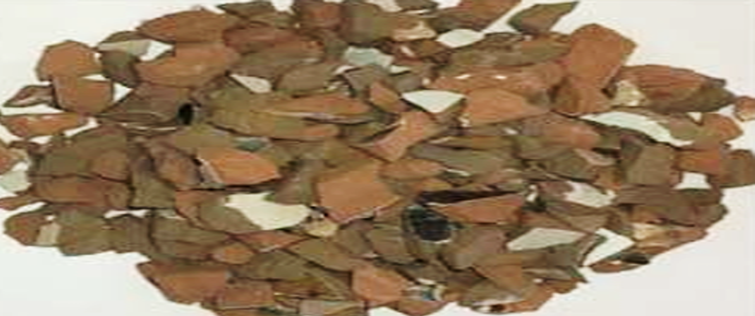
Fig. 1. Ceramic recycled coarse aggregates (RCA)
Table 1. Physical characteristics of ceramic recycled coarse aggregates
|
Physical characteristics |
Values obtained |
|
Specific gravity |
2.40 |
|
Water absorption (%) |
2.50 |
Table 2. Mechanical characteristics of ceramic recycled coarse aggregates
|
Chemical properties |
Values obtained |
|
CaO (%) |
22.03 |
|
SiO2 (%) |
27.52 |
|
Al2O3 (%) |
22.21 |
|
Fe2O3 (%) |
5.71 |
|
MgO (%) |
2.93 |
|
K2O (%) |
1.58 |
|
Loss on ignition (LOI) (%) |
0.51 |
2.1 Steel reinforcement
This research uses longitudinal steel bars that are ribbed and have nominal diameters of 12, 16, and 6mm. Steel bars' mechanical properties, including their average yield tensile strength, maximum elongation, and ultimate tensile strength, have been listed in Table 3, and each one of the inspections of steel bars' compliance with ASTM standards.
Table 3. Steel bars’ mechanical characteristics
|
Steel bar diameter |
Bar type |
Yield strength (fy) |
Ultimate strength (fu) |
Max. elongation (%) |
|
6mm |
Round |
463MPa |
492MPa |
31 |
|
12mm |
Ribbed |
651MPa |
756MPa |
22 |
|
16mm |
Ribbed |
542MPa |
647MPa |
20 |
2.2 Box plastic
Plastic pipe: pipes were made of plastic. The diameter of hollow concrete beams is 6.5 cm across the entire beam, as depicted in (Fig. 2). Mixing Water: tap water is utilized for casting and curing all beam specimens.
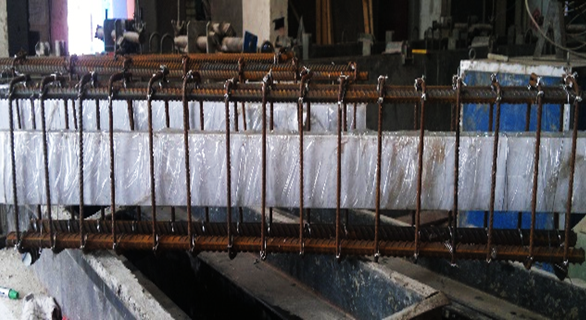
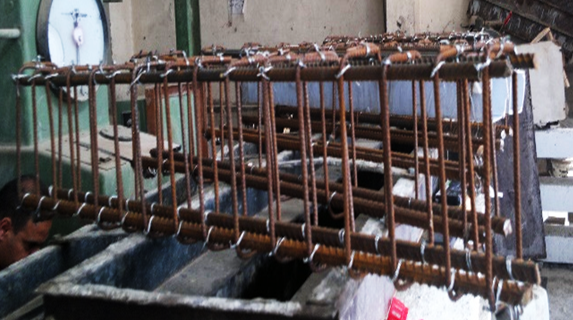
Fig. 2. Reinforcing bars and plastic pipe
2.3 Mix design
Table 4 indicates the concrete mix by weight.
Table 4. Mixture proportions by weight

2.4 Descriptions of molds and specimens
Twelve concrete beams with a 140 mm width, 250 mm height, and 1200 mm length have been used as cement, and transverse reinforcement spaces have always been the same. Models that have been utilized in the presented work included specifications that complied with ACI-318 guidelines, which are crucial as a foundation for further research. Both the computation for the reinforcing steel ratio as well as the ratio of width, length, and height fell within specification parameters, six models of NCB in all, including three SNCB without hollow and three HNCB with poured Hollow Low Diameter of 6.5cm over all of the 120cm beams, were created. Three HRCCBs and three SRCCBs without hollows were among the six additional RCCB variants that were prepared. Cross-sectional characteristics of those specimens have been depicted in Fig3, and all of the measurements are in millimeters. The mean cube compressive strength (fcu) related to recycled ceramic concrete was 38 MPa, compared to 42 MPa for regular concrete. For deforming to steel reinforcing bars with 12mm and 16mm diameters, all the beams have undergone longitudinal reinforcement from top to bottom. Furthermore, reinforcing bars with vertical stirrups with a 6mm diameter have been positioned at intervals of 50, 14, and 7 cm, as shown in Figures 4 and 5. Every measurement is expressed in millimeters.
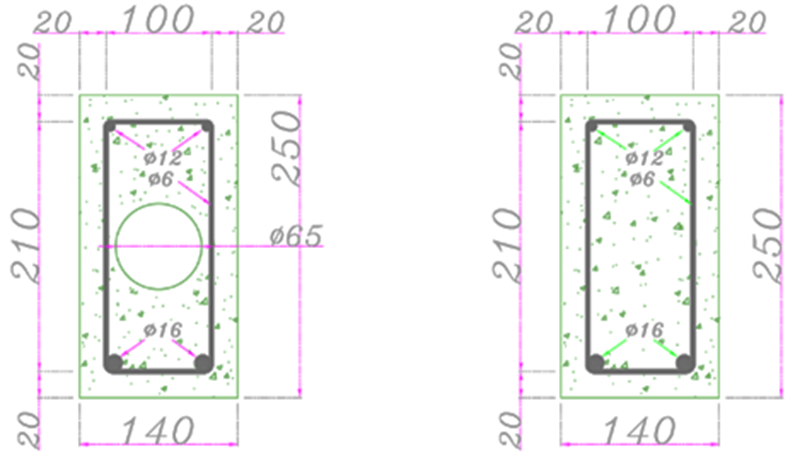
Fig. 3. Cross-sectional details of the hollow and solid concrete beams
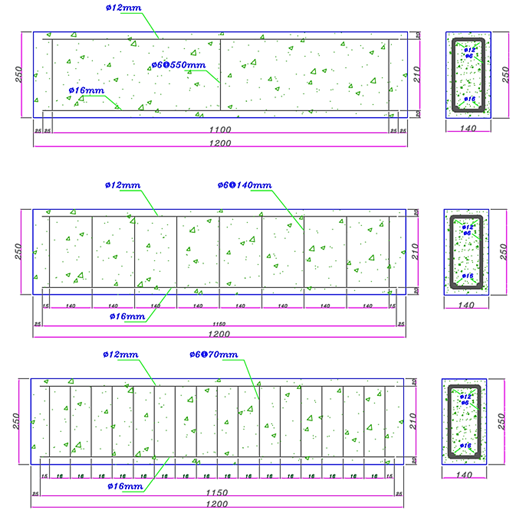
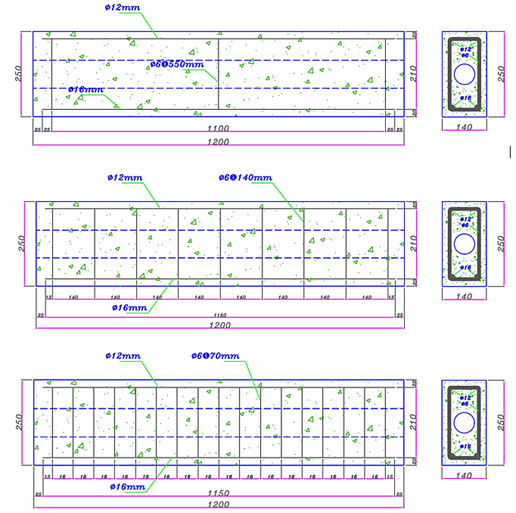
Fig. 4. Elevation details of beam [cross section] (2-D)
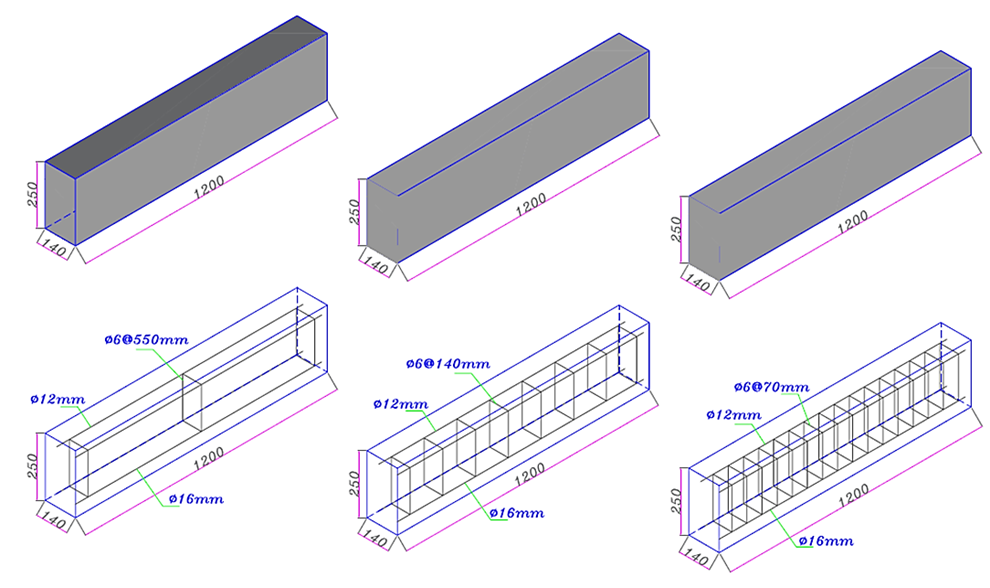
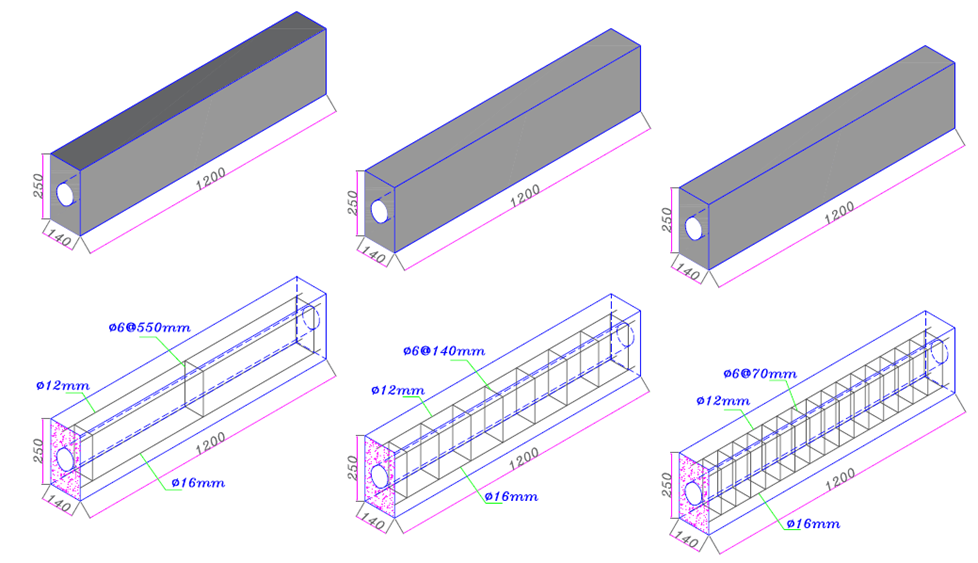
Fig. 5. Elevation details of beam [cross section] (3-D)
2.5 Specimen preparation
In the lab, each specimen has been prepped. All SNCB, HNCB, SRCCB, and HRCCB were cast using mixed concrete. One day later, exactly twenty-eight days later, the beams have been removed from the curing water tank. As seen in (Fig. 6).
2.6 Test setup and instrumentation details
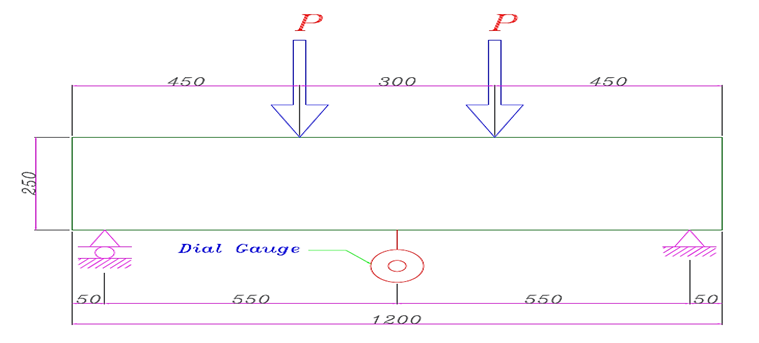
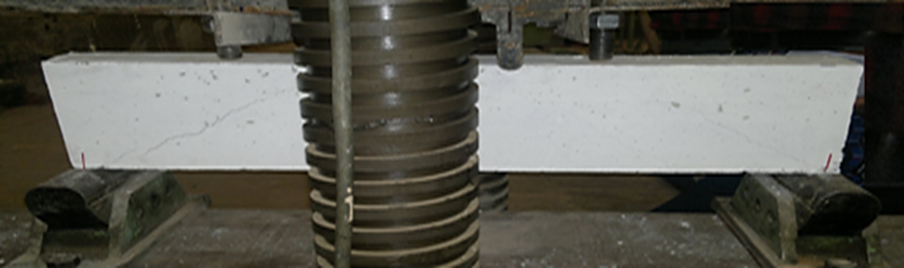
The structural responses of SNCB, HNCB, SRCCB, and HRCCB are represented by a single dial gauge (ELE type). For verifying the downward deflection, it was placed halfway beneath the beams, as seen in Fig. 7.
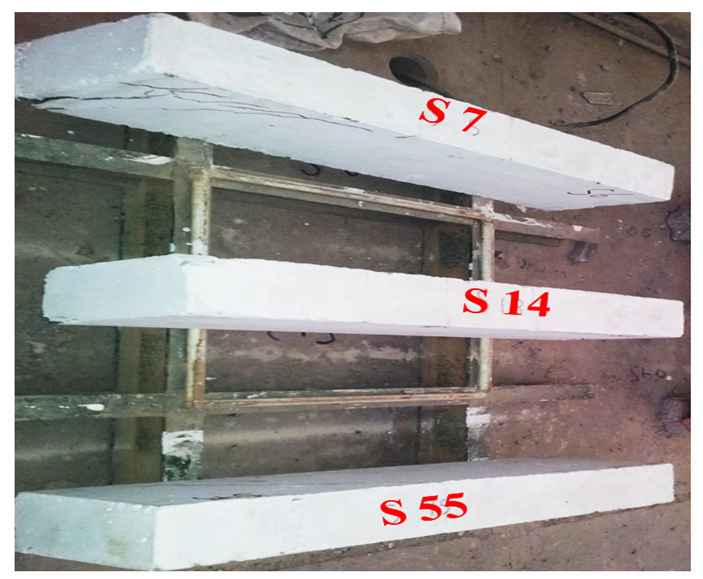
Fig. 6. SNCB, HNCB, HRCCB, and SRCCB out of water
 |
|
a) Side view of the beam |
 |
| b) Universal testing machine |
Fig. 7. Instrumentation of testing
3 Results and Discussion
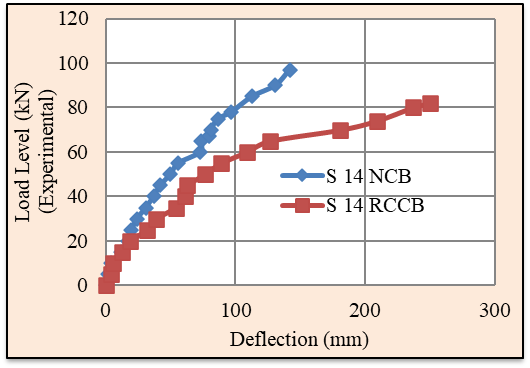
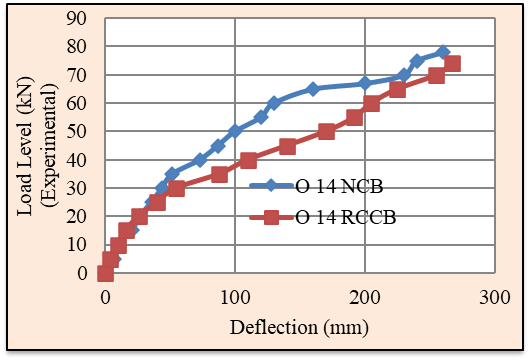
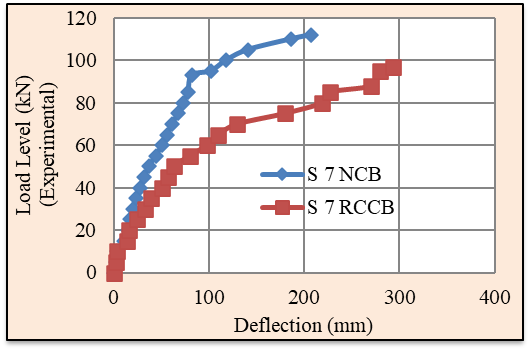
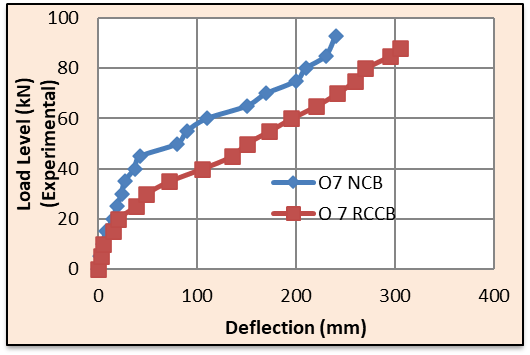
The presented work examines twelve instances of RCBs. The thickness, width, and length of RCB are all the same. A number of 6 mm-diameter steel stirrup bars spaced 550 mm, 140 mm, and 70 mm apart were manufactured as web reinforcement. Six RCB models (S 55 RCCB, S 14 RCCB, and S 7 RCCB) have three SRCCBs without a hollow. The three extra HRCCBs (O 55 RCCB, O 14 RCCB, and O 7 RCCB) poured 65mm diameter cavities along a 1200mm al beam. Six RCB models have three hollow-free SNCB (S55 NCB, S14 NCB, and S7 NCB). Along the 1000mm al beam, the 3 additional HNCB (O55 NCB, O14 NCB, and O7 NCB) poured cavities that measured 65mm in diameter. Results have been analyzed in terms of first cracking load, ultimate load capacity, crack patterns, and load–deflection response.
3.1 Mechanical properties (first crack loads, ultimate loads, and crack patterns)
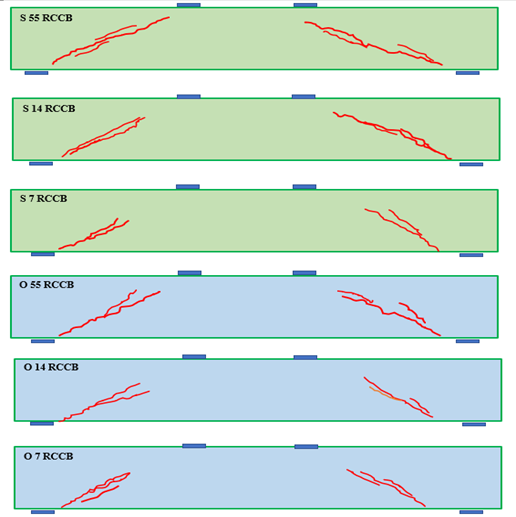
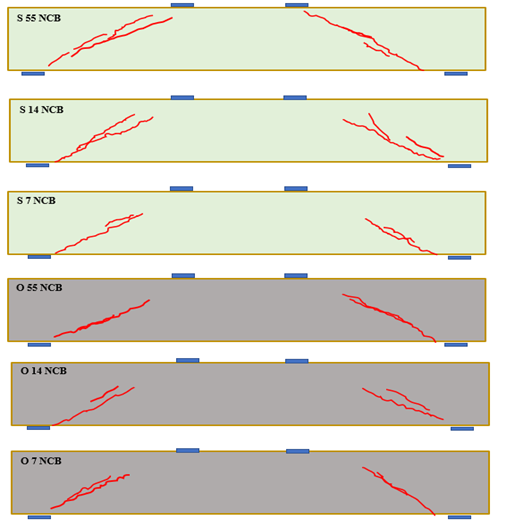
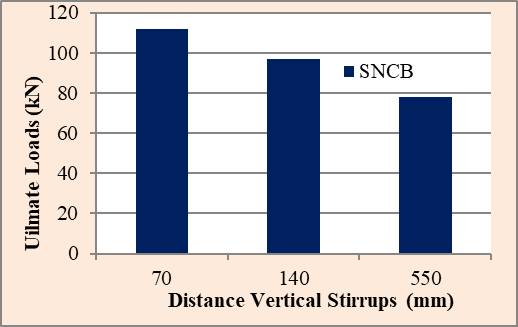
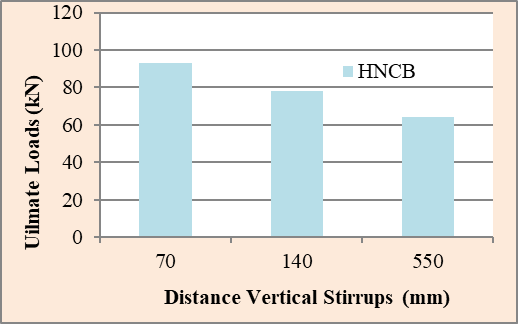
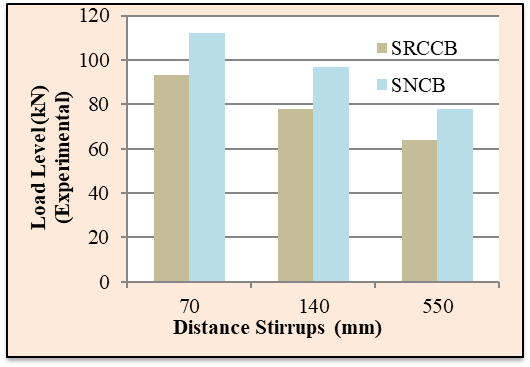
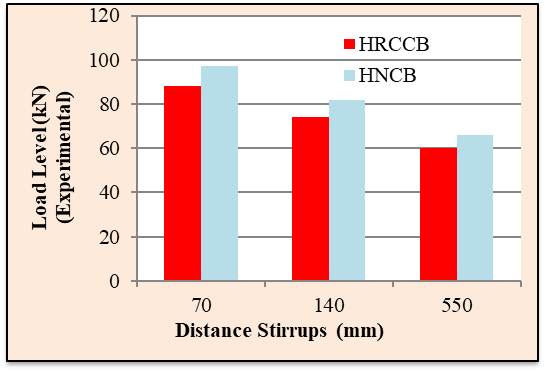
Initial cracks were observed in the constant moment region near mid-span and were predominantly flexural in nature. As the applied load increased, inclined cracks developed within shear spans, indicating the onset of shear-related stresses. The results of the load-carrying level capability and cracking tests are shown in Table 5. SRCCB and HRCCB specimens were subjected to Load Level (kN) (Experimental) carry capacity; the first cracks had formed at around 17.0–29.0% of RCB's Load Level (kN) (Experimental) carry capacity. Also, SNCB and HNCB have a carry capacity of approximately 17.4–28.1% regarding experimental load level (kN) for RCB. RCB models include three SRCCB models with no hollow (S 55 RCCB, S 14 RCCB, and S 7 RCCB). The initial values of crack load (Pcr) are 14.50, 15.50, and 16.50kN. The kN values of the three additional HRCCBs are 15, 17.5, and 19.5 for O 55 RCCB, O 14 RCCB, and O 7 RCCB. In RCB models, the first crack load (Pcr) for three SNCB models (S55NCB, S14NCB, and S7 NCB) with no hollow is 17.50, 18.50, and 19.50kN. The three additional HNCB (O 55 RCCB, O 14 RCCB, and O 7 RCCB) have respective values of 18, 20, and 22 kN. Three SRCCB (S 55 RCCB, S 14 RCCB, and S 7 RCCB) had Ultimate Load Level (Pu) values of 66, 82, and 97kN, but three HRCCB (O55 RCCB, O14 RCCB, and O7 RCCB) had values of 49, 58, and 69 kN. The Ultimate Load Level (Pu) values of 3 SNCB (S55 NCB, S14 NCB, and S7 NCB) were 78, 97, and 112 kN, whereas the Ultimate Load Level (Pu) values of three HNCB (O55 NCB, O14 NCB, and O7 NCB) were 64, 78, and 93 kN. Three HRCCB (O 55 RCCB, O 14 RCCB, and O 7 RCCB) and three SRCCB (S 55 RCCB, S 14 RCCB, and S 7 RCCB) RCB models demonstrate shear cracks that follow yielding related to steel reinforcement as well as the eventual crushing of the RC Beam in the compression zone (Fig. 8). The difference between all of these RCCB test results, as well as 6 NCBs of normal weight, has been < 15%. Because the hollow cylindrical diameter extends along the concrete beam, hollow beam models are less tolerant or weaker of forces than solid beams, which improves the accuracy. For both conventional concrete beams (NCB) and recycled ceramic concrete beams (RCCB), the crack propagation followed a similar pattern. However, RCCB specimens exhibited slightly wider and more distributed cracking. This behavior can be a result of higher porosity and weaker ITZ (i.e., interfacial transition zone) that is related to recycled ceramic aggregates, which reduces crack resistance and stiffness. The final failure mode for most specimens was characterized by diagonal shear cracking followed by concrete crushing in the zone of compression. This behavior confirms that the beams were predominantly governed by shear-related failure mechanisms. Reducing stirrup spacing improved crack distribution and delayed shear failure by enhancing confinement and shear transfer mechanisms.
 |
 |
| a) HRCCB and SRCCB | b) HNCB and SNCB |
Fig. 8. Patterns of cracks
Table 5. First crack and ultimate loads (SNCB, HNCB, HRCCB, & SRCCB
|
Group name |
Beam designation |
fcu (MPa) |
First crack load level (Pcr) (kN) |
Ultimate load (Pu)(kN) |
|
|
Solid normal concrete beams (SNCB) |
S 55 NCB |
42.0 |
17.5 |
78 |
22.4 |
|
S 14 NCB |
41.5 |
18.5 |
97 |
19.07 |
|
|
S 7 NCB |
43.5 |
19.5 |
112 |
17.4 |
|
|
HNCB |
O 55 NCB |
43.0 |
18 |
64 |
28.1 |
|
O 14 NCB |
42.5 |
20 |
78 |
25.6 |
|
|
O 7 NCB |
41.0 |
22 |
93 |
23.7 |
|
|
SRCCB |
S 55 RCCB |
38.5 |
14.5 |
66 |
22.0 |
|
S 14 RCCB |
37.0 |
15.5 |
82 |
18.9 |
|
|
S 7 RCCB |
37.5 |
16.5 |
97 |
17.0 |
|
|
Hollow recycled ceramics concrete beams (HRCCB) |
O 55 RCCB |
39.0 |
15.0 |
60 |
25.0 |
|
O 14 RCCB |
37.5 |
17.5 |
74 |
23.6 |
|
|
O 7 RCCB |
38.0 |
19.5 |
88 |
22.2 |

3.2 Ultimate loads values
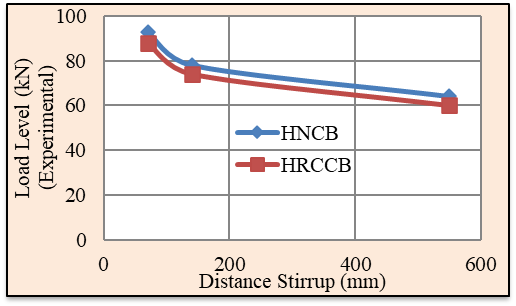
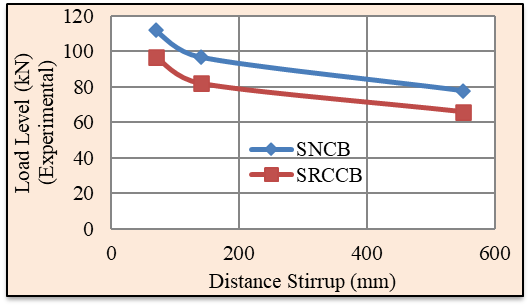
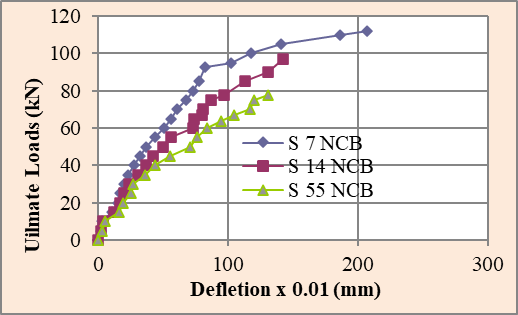
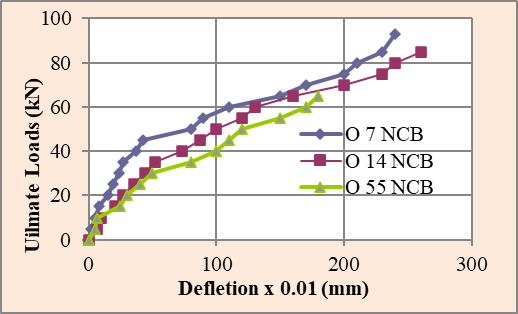
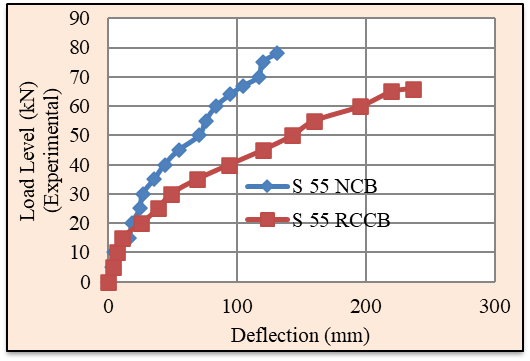
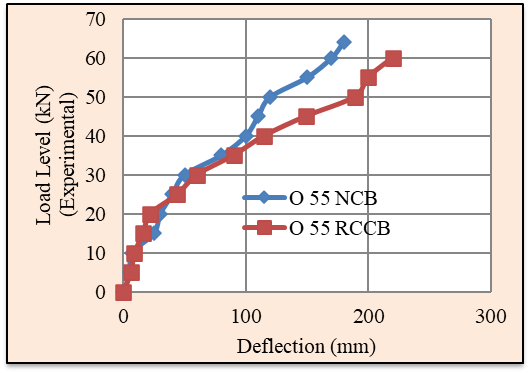
According to test results in Figure 9 and Table 5, Ultimate Load Levels for SRCCB (S 55 RCCB, S 14 RCCB, and S 7 RCCB) were stronger compared to HRCCB Load Levels (O 55 RCCB, O 14 RCCB, and O 7 RCCB). RCCB and NCB comparison is shown in Figures 10–11. The load-carry level capacity with regard to all beams (SRCCB and HRCCB) increases with distance related to vertical stirrup bar reinforcement (6.0mm diameter), as shown in Figures 12–13. Figures (14–15) show the comparison between RCCB and NCB. The average load level capacity decline of solid beams (S 55 RCCB, S 14 RCCB, and S 7 RCCB) is approximately 10% lower than that of hollow beams (O55 RCCB, O14 RCCB, and O7 RCCB). Despite this reduction, the overall structural behavior remained comparable, suggesting that recycled ceramic aggregates can be successfully utilized in reinforced concrete beams with acceptable performance. The reduction in ultimate load observed in recycled ceramic concrete beams is mainly related to the porous nature of ceramic aggregates and the weaker interfacial transition zone (ITZ), which reduces stiffness and accelerates diagonal crack propagation under shear loading.
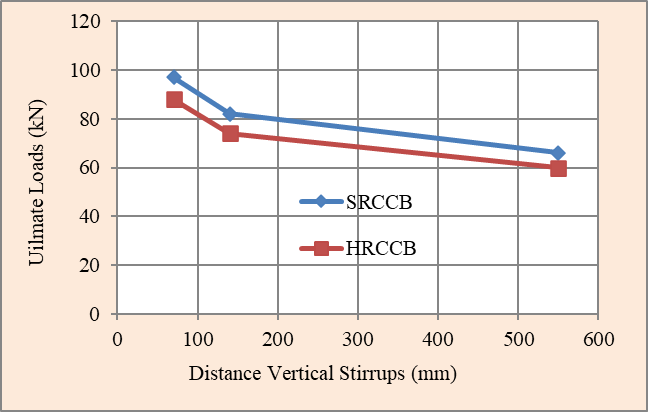
Fig. 9. Ultimate load-distance vertical stirrups bar reinforcement (7cm, 14cm, 55cm) relationships for SRCCB & HRCCB
3.3 Load - deflection correlations
The deflection experimental results for SNCB, HNCB, SRCCB, and HRCCB beams have been shown in Table5. Results that are associated with experimental testing show that, similar to HNCB and HRCCB beams, SRCCB and SNCB beams show max deflection at ultimate load of 7cm in a case where distance between vertical stirrup bar reinforcement (6 mm diameter) is 6 cm. Fig16 and Fig17 show the load-deflection relation for beams (SNCB and HNCB beams). Beams with smaller results showed that the stiffness and deflection of the stirrup spacing under the progressive loading improved. The results of this observation indicate the importance of shear reinforcement in the control of crack propagation and load carrying capacity of RCBs. Figures 18 to 23 show a comparison related to recycled ceramic concrete as well as normal-weight beams.
Table 6. Mid span deflection at first crack and load level carry capacity
|
Group name |
Beam designation |
Mid-span deflection at first crack |
Mid-span deflection at ultimate load level |
|
SRCCB |
S 55 RCCB |
0.09mm |
2.15mm |
|
S 14 RCCB |
0.10mm |
2.40mm |
|
|
S 7 RCCB |
0.14mm |
2.73mm |
|
|
HRCCB |
O 55 RCCB |
0.20mm |
1.93mm |
|
O 14 RCCB |
0.26mm |
2.10mm |
|
|
O 7 RCCB |
0.31mm |
3.41mm |
3.4 Comparison of shear strength with ACI 318 predictions
3.4.1 Shear strngth equations according to ACI 318
According to the provisions of ACI 318, the nominal shear strength of reinforced concrete beams is expressed as sum of concrete contribution and transverse reinforcement contribution [43]:
where:
- Vn represents nominal shear strength
- Vc represents shear contribution of concrete
- Vs represents shear contribution of transverse reinforcement
For non-prestressed reinforced concrete beams subjected to shear and normal-weight concrete:
where:
- λ = 1 for normal-weight concrete
- bw represents web width (mm)
- fc' represents concrete compressive strength (MPa)
- d represents effective depth (mm)
The shear resistance provided by vertical stirrups is:
where:
- Av = area of shear reinforcement within spacing s
- fy = yield strength of stirrups
- s = stirrup spacing
The design shear strength is:
where:
- φ = 0.750
3.4.2 Experimental-to-ACI shear strength ratio
The experimental shear capacities of the tested beams have been qualitatively compared to predictions that have been obtained from ACI 318 equations using the ratio [42].: Vu (exp) / Vu (ACI)
- Vu (exp): experimental ultimate shear capacity
- Vu (ACI): predicted shear capacity according to ACI 318
The comparison between experimental and ACI 318 predicted shear capacities (SNCB, HNCB, HRCCB, & SRCCB) is shown in Table 7. The results indicate that the ACI 318 provisions generally provide conservative predictions for beams containing recycled ceramic aggregates. Although the recycled aggregate beams exhibited slightly lower shear resistance than conventional concrete beams, the overall behavior remained reasonably consistent with the assumptions adopted by the code for reinforced concrete beams that have been subjected to shear loading. The hollow beam specimens showed lower experimental shear capacities than solid beams due to the reduction in effective shear area and the modification of stress distribution caused by the longitudinal voids. Nevertheless, the influence of stirrup spacing remained significant and consistent with ACI 318 expectations.
Table 7. Comparison between experimental and ACI 318 predicted shear capacities (SNCB, HNCB, HRCCB, & SRCCB)
|
Beam designation |
fcu (MPa) |
Vu (exp) (kN) |
Vu (ACI) (kN) |
Vu (exp)/Vu (ACI) |
|
S 55 NCB |
42 |
78 |
70 |
1.11 |
|
S 14 NCB |
41.5 |
97 |
86 |
1.13 |
|
S 7 NCB |
43.5 |
112 |
98 |
1.14 |
|
O 55 NCB |
43 |
64 |
59 |
1.08 |
|
O 14 NCB |
42.5 |
78 |
71 |
1.10 |
|
O 7 NCB |
41 |
93 |
84 |
1.11 |
|
S 55 RCCB |
38.5 |
66 |
61 |
1.08 |
|
S 14 RCCB |
37 |
82 |
74 |
1.11 |
|
S 7 RCCB |
37.5 |
97 |
87 |
1.12 |
|
O 55 RCCB |
39 |
60 |
55 |
1.09 |
|
O 14 RCCB |
37.5 |
74 |
67 |
1.10 |
|
O 7 RCCB |
38 |
88 |
79 |
1.11 |
The comparison between the experimentally obtained shear capacities and the predictions based on ACI 318 demonstrates that the code equations provide reasonably conservative estimates for reinforced concrete beams incorporating recycled ceramic aggregates. The average Vu(exp)/Vu(ACI) ratios remained greater than unity for all tested specimens, indicating that the code provisions can adequately capture the general shear behavior despite the presence of recycled ceramic aggregates and longitudinal hollow sections.
However, the hollow beam specimens exhibited slightly lower agreement with the code predictions due to the reduction in effective web area and the altered internal stress trajectories induced by the longitudinal cavities. Since the ACI 318 shear design equations were originally developed for conventional solid reinforced concrete members, additional considerations may be required when applying these provisions to hollow structural members containing recycled aggregates.
Furthermore, the recycled ceramic aggregate beams exhibited slightly increased crack widths and reduced stiffness compared with conventional beams, which may be a result of higher porosity and weaker interfacial transition zone that is associated with the ceramic aggregates. Despite these effects, the overall structural performance remained within acceptable engineering limits, supporting feasibility of using recycled ceramic aggregates in sustainable reinforced concrete structural applications.
3.5 Limitations of the study
This study is limited to a short-term experimental investigation under static four-point bending loading conditions. Only one replacement ratio (30%) of recycled ceramic coarse aggregate and one hollow diameter configuration were considered. In addition, the number of tested specimens was limited to laboratory-scale beams. Therefore, the results obtained should be interpreted within the scope of the investigated parameters. Further studies are recommended to examine different replacement ratios, larger-scale structural members, cyclic and fatigue loading conditions, and long-term durability performance. Furthermore, durability characteristics and numerical finite element simulations were not considered in this study.
4 Conclusions
The current work provides the results of an experimental assessment of reinforced HRCCB. With the use of a four-point bending approach, six reinforced recycled ceramic concrete beams were constructed and tested. The reinforced HRCCB beams' size and configuration served as study parameters. The increased ultimate deformation capacity of reinforced SRCCB with the hollow part removed has been compared. The degradation of concrete shear resistance is the primary subject of discussion for the shear resistance mechanism pertaining to HRCCB and SRCCB beams. Based on the experimental investigation conducted in this study, the following conclusions can be drawn:
- Hollow beams exhibited lower shear capacity and higher deflection than solid beams due to the reduction in effective shear area.
- Recycled ceramic aggregate beams showed acceptable structural performance with only moderate reductions in ultimate load compared with conventional concrete beams.
- Reducing stirrup spacing significantly improved crack control, stiffness, and shear resistance.
- The dominant failure mode was diagonal shear cracking followed by concrete crushing in compression zone.
- The experimental behavior generally agreed with the expected trends of ACI 318 provisions for RCBs subjected to shear loading.
The principal reason for this decrease in the shear capacity of the beams made with recycled ceramic aggregates is the increased porosity and poor ITZ characteristics, which leads to a decrease in stiffness and shear resistance of recycled concrete, compared with conventional concrete. Furthermore, the introduction of a longitudinal hollow core will change the stress distribution and decrease the shear area which results in stress concentration and earlier appearance of diagonal shear cracks. Hollow beams, therefore, have less load capacity and more deflection than solid beams. It is also shown that the effect of shear reinforcement is very important, with a decrease in the spacing between the stirrups, which is a measure of crack control, the shear resistance is increased. In general, the performance of the tested beams is in good agreement with that prescribed by design codes (e.g., ACI 318), but the combined use of recycled aggregates and hollow sections needs to be carefully considered in structural design.
The findings of this study contribute to a better understanding of shear behavior of RCBs incorporating recycled ceramic aggregates. Further research is recommended to investigate long-term durability and structural performance of recycled ceramic concrete in other structural elements like slabs, columns, and large-scale structural systems.
Acknowledgements
The authors would like to thank Mustansiriyah Univ. (www.uomustansiriyah.edu.iq) for helping to make the present study possible.
References
- Pavlů, T., Fořtová, K., Diviš, J., & Hájek, P. (2019). The utilization of recycled masonry aggregate and recycled EPS for concrete blocks for mortarless masonry. Materials, 12(12), Article 1923. https://doi.org/10.3390/ma12121923
- Salem, M., Ali, H., Scholz, S. G., Elkaseer, A., Salama, M., & Scholz, S. (2018). Approaches to a practical implementation of Industry 4.0. ResearchGate. https://www.researchgate.net/publication/324040762
- Faris, H. A., Alharishawi, S. S. C., & Rajaa, N. (2024). Shear behavior of solid and hollow cylindrical concrete beams made with recycled brick. Annales de Chimie - Science des Matériaux, 48(5), 321–328. https://doi.org/10.18280/acsm.480503
- Alharishawi, S. S. C., Abd, H., & Abass, S. (2020). Employment of recycled wood waste in lightweight concrete production. Archives of Civil Engineering, 66(4), 675–688. https://doi.org/10.24425/ace.2020.135244
- Alharishawi, S. S. C., Rajaa, N., & Jabur, A. R. (2023). Laboratory tests of solid and hollow concrete beams made with glass waste. Archives of Civil Engineering, 69(4), 163–178. https://doi.org/10.24425/ace.2023.147644
- Alharishawi, S. S. C., Rajaa, N., & Shihab, L. (2021). Shear stresses of hollow lightweight concrete beams made with wood waste. Archives of Civil Engineering, 67(1), 657–672. https://doi.org/10.24425/ace.2021.136495
- Rajaa, N., Alharishawi, S. S. C., & Faris, H. A. (2025). Experimental study of shear stresses of solid and hollow concrete beams made with waste tire rubber. Journal of Applied Engineering Science, 23(2), 208–219. https://doi.org/10.5937/jaes0-52938
- Alharishawi, S., Rajaa, N., & Aljumaily, H. (2021). Subject review: A comparison of lightweight concrete made with sawdust. International Journal of Engineering Research and Advanced Technology, 7(2), 1–5. https://doi.org/10.31695/IJERAT.2021.3691
- Alharishawi, S. S. C., Rajaa, N., & Jabur, A. R. (2021). Experimental investigation of using recycled glass waste as fine aggregate replacement in concrete. Archives of Civil Engineering, 67(4), 27–38. https://doi.org/10.24425/ace.2021.138484
- Isidoro, R. A. S. M. (2013). Valorización de residuos de demolición: Caracterización, condiciones de seguridad en su manipulación y posibilidades de uso en la fabricación de hormigones (Doctoral dissertation, University of Extremadura).
- Mansur, M. A., Wee, T. H., & Cheran, L. S. (1999). Crushed bricks as coarse aggregate for concrete. ACI Materials Journal, 96(4), 478–484.
- De Brito, J., Pereira, A. S., & Correia, J. R. (2005). Mechanical behaviour of non-structural concrete made with recycled ceramic aggregates. Cement and Concrete Composites, 27(4), 429–433. https://doi.org/10.1016/j.cemconcomp.2004.07.005
- Khatib, J. M. (2005). Properties of concrete incorporating fine recycled aggregate. Cement and Concrete Research, 35(4), 763–769. https://doi.org/10.1016/j.cemconres.2004.06.017
- Senthamarai, R. M., & Manoharan, P. D. (2005). Concrete with ceramic waste aggregate. Cement and Concrete Composites, 27(9–10), 910–913. https://doi.org/10.1016/j.cemconcomp.2005.04.003
- López, V., Llamas, B., Juan, A., Morán, J. M., & Guerra, I. (2007). Eco-efficient concretes: Impact of the use of white ceramic powder on the mechanical properties of concrete. Biosystems Engineering, 96(4), 559–564. https://doi.org/10.1016/j.biosystemseng.2007.01.004
- Debieb, F., & Kenai, S. (2008). The use of coarse and fine crushed bricks as aggregate in concrete. Construction and Building Materials, 22(5), 886–893. https://doi.org/10.1016/j.conbuildmat.2007.01.010
- Kesegić, I., Netinger, I., & Bjegović, D. (2008). Recycled clay brick as an aggregate for concrete: Overview. Technical Gazette, 15(3), 35–40.
- Gomes, M., & de Brito, J. (2009). Structural concrete with incorporation of coarse recycled concrete and ceramic aggregates: Durability performance. Materials and Structures, 42(5), 663–675. https://doi.org/10.1617/s11527-008-9411-9
- Pacheco-Torgal, F., & Jalali, S. (2010). Reusing ceramic wastes in concrete. Construction and Building Materials, 24(5), 832–838. https://doi.org/10.1016/j.conbuildmat.2009.10.023
- Cachim, P. B. (2009). Mechanical properties of brick aggregate concrete. Construction and Building Materials, 23(3), 1292–1297. https://doi.org/10.1016/j.conbuildmat.2008.07.023
- Senthamarai, R., Manoharan, P. D., & Gobinath, D. (2011). Concrete made from ceramic industry waste: Durability properties. Construction and Building Materials, 25(5), 2413–2419. https://doi.org/10.1016/j.conbuildmat.2010.11.049
- Guerra, I., Vivar, I., Llamas, B., Juan, A., & Morán, J. (2009). Eco-efficient concretes: The effects of using recycled ceramic material from sanitary installations on the mechanical properties of concrete. Waste Management, 29(2), 643–646. https://doi.org/10.1016/j.wasman.2008.06.018
- Medina, C., Sánchez de Rojas, M. I., & Frías, M. (2012). Reuse of sanitary ceramic wastes as coarse aggregate in eco-efficient concretes. Cement and Concrete Composites, 34(1), 48–54. https://doi.org/10.1016/j.cemconcomp.2011.08.015
- Pereira-de-Oliveira, L. A., Castro-Gomes, J. P., & Santos, P. M. S. (2012). The potential pozzolanic activity of glass and red-clay ceramic waste as cement mortars components. Construction and Building Materials, 31, 197–203. https://doi.org/10.1016/j.conbuildmat.2011.12.110
- Medina, C., Sánchez de Rojas, M. I., & Frías, M. (2013). Properties of recycled ceramic aggregate concretes: Water resistance. Cement and Concrete Composites, 40, 21–29. https://doi.org/10.1016/j.cemconcomp.2013.04.005
- Medina, C., Sánchez de Rojas, M. I., & Frías, M. (2013). Freeze-thaw durability of recycled concrete containing ceramic aggregate. Journal of Cleaner Production, 40, 151–160. https://doi.org/10.1016/j.jclepro.2012.08.042
- Vieira, T. F. (2013). Betão com incorporação de agregados finos cerâmicos reciclados: Desempenho em termos de durabilidade (Master’s thesis, Instituto Superior Técnico, University of Lisbon).
- Martins, D. J. M. (2013). Comportamento ao fogo de betões com agregados grossos cerâmicos reciclados (Master’s thesis, Instituto Superior Técnico, University of Lisbon).
- Gomes, M., de Brito, J., & Bravo, M. (2014). Mechanical performance of structural concrete with the incorporation of coarse recycled concrete and ceramic aggregates. Journal of Materials in Civil Engineering, 26(10), 04014076. https://doi.org/10.1061/(ASCE)MT.1943-5533.0000979
- Alves, A. V., Vieira, T. F., de Brito, J., & Correia, J. R. (2014). Mechanical properties of structural concrete with fine recycled ceramic aggregates. Construction and Building Materials, 64, 103–113. https://doi.org/10.1016/j.conbuildmat.2014.04.037
- Silva, R. V., de Brito, J., & Dhir, R. K. (2015). Tensile strength behaviour of recycled aggregate concrete. Construction and Building Materials, 83, 108–118. https://doi.org/10.1016/j.conbuildmat.2015.03.003
- Asensio de Lucas, E., Medina, C., Frías, M., & Sánchez de Rojas, M. I. (2016). Clay-based construction and demolition waste as a pozzolanic addition in blended cements: Effect on sulfate resistance. Construction and Building Materials, 127, 950–958. https://doi.org/10.1016/j.conbuildmat.2016.10.047
- Anderson, D. J., Smith, S. T., & Au, F. T. K. (2016). Mechanical properties of concrete utilising waste ceramic as coarse aggregate. Construction and Building Materials, 117, 20–28. https://doi.org/10.1016/j.conbuildmat.2016.04.153
- González, J. S., Gayarre, F. L., Pérez, C. L. C., López, M. A. S., & Ros, P. S. (2017). Influence of recycled brick aggregates on properties of structural concrete for manufacturing precast prestressed beams. Construction and Building Materials, 149, 507–514. https://doi.org/10.1016/j.conbuildmat.2017.05.147
- Nepomuceno, M. C. S., Isidoro, R. A. S., & Catarino, J. P. G. (2018). Mechanical performance evaluation of concrete made with recycled ceramic coarse aggregates from industrial brick waste. Construction and Building Materials, 165, 284–294. https://doi.org/10.1016/j.conbuildmat.2018.01.052
- Parashar, A. K., Sharma, P., & Sharma, N. (2022). An investigation on properties of concrete with the adding of waste of ceramic and micro silica. Materials Today: Proceedings, 62, 4036–4040. https://doi.org/10.1016/j.matpr.2022.04.603
- Shaqour, E. N., Hassan, A. M. S., Abo Alela, A. H., & Mohamed, A. S. (2025). Life cycle impact assessment of solid concrete blocks incorporating recycled fine and coarse crushed ceramic aggregates. Journal of Architectural Engineering, 31(1), 05024010. https://doi.org/10.1061/JAEIED.AEENG-1812
- Siddique, S., Chaudhary, S., Shrivastava, S., & Gupta, T. (2019). Sustainable utilisation of ceramic waste in concrete: Exposure to adverse conditions. Journal of Cleaner Production, 210, 246–255. https://doi.org/10.1016/j.jclepro.2018.10.231
- Siddique, S., Shrivastava, S., Chaudhary, S., & Gupta, T. (2018). Strength and impact resistance properties of concrete containing fine bone china ceramic aggregate. Construction and Building Materials, 169, 289–298. https://doi.org/10.1016/j.conbuildmat.2018.02.213
- Jerônimo, V. L., Meira, G. R., & da Silva Filho, L. C. P. (2018). Performance of self-compacting concretes with wastes from heavy ceramic industry against corrosion by chlorides. Construction and Building Materials, 169, 900–910. https://doi.org/10.1016/j.conbuildmat.2018.03.034
- Lotfi, S., Eggimann, M., Wagner, E., Mróz, R., & Deja, J. (2015). Performance of recycled aggregate concrete based on a new concrete recycling technology. Construction and Building Materials, 95, 243–256. https://doi.org/10.1016/j.conbuildmat.2015.07.021
- Pešta, J., Pavlů, T., Fořtová, K., & Kočí, V. (2020). Sustainable masonry made from recycled aggregates: LCA case study. Sustainability, 12(4), 1581. https://doi.org/10.3390/su12041581
- ACI Committee 318. (2019). Building code requirements for structural concrete (ACI 318-19) and commentary. American Concrete Institute.
Conflict of Interest Statement
The authors declare no conflicts of interest.
Author Contributions
Data Availability Statement
The data are contained within the article.
Supplementary Materials
There are no supplementary materials to include.