Volume 24 article 1338 pages: 358-366
Received: Dec 07, 2025 Accepted: Mar 19, 2026 Available Online: Apr 16, 2026 Published: Apr 30, 2026
DOI: 10.5937/jaes0-63288
TEMPERATURE-DEPENDENT RELATIONSHIP BETWEEN INDIRECT TENSILE STRENGTH AND STIFFNESS MODULUS OF SBS-MODIFIED ASPHALT MIXTURES
Abstract
This study investigated the temperature-dependent relationship between indirect tensile strength (ITS) and indirect tensile stiffness modulus (ITSM) in styrene–butadiene–styrene (SBS) polymer-modified asphalt mixtures using a PG 76-22 binder. Cylindrical specimens were tested at four temperatures (20, 30, 40, and 50°C) to evaluate their tensile resistance and stiffness. The results show that both ITS and ITSM decrease markedly with increasing temperature, reflecting a reduction in binder viscosity and a weakening of aggregate interlock. Statistical analysis confirmed a strong positive correlation (r = 0.914, p < 0.001) between ITS and ITSM, with linear regression (R² = 0.9045) indicating that ITS is a reliable predictor of ITSM. An analysis of variance showed that temperature had significant effects on ITS and ITSM. These findings highlight the coupled mechanical behavior of ITS and ITSM, supporting their integration into mechanistic-empirical pavement design and performance-based mix evaluation. The study reinforces the role of SBS modification in enhancing thermal resilience and provides a practical framework for predicting stiffness modulus from tensile strength under varying thermal conditions.
Highlights
- Investigated the relationship between indirect tensile strength and indirect tensile stiffness modulus in SBS-modified asphalt mixtures.
- Decreasing ITS and ITSM with increasing temperature reflects reduced tensile resistance and diminished load-spreading ability.
- ITS and ITSM are correlated and play complementary roles in mixture performance
Keywords
Content
1 Introduction
Flexible pavements rely on asphalt mixtures for their durability and load-bearing capacity; however, their mechanical performance is highly sensitive to temperature fluctuations. At elevated temperatures, asphalt binders soften, leading to rutting and permanent deformation under traffic loads [1], [3]. Conversely, at low temperatures, mixtures become brittle and prone to thermal cracking [2], [3]. Fatigue damage is particularly pronounced at intermediate temperatures, where repeated loading accelerates microcrack initiation and propagation [2], [4]. These temperature-driven mechanisms underscore the importance of mix designs and polymer modification strategies that enhance resilience under diverse climatic conditions.
Two parameters widely employed to evaluate asphalt mixture performance are the indirect tensile strength (ITS) and the indirect tensile stiffness modulus (ITSM). ITS reflects the tensile resistance of mixtures and is a key indicator of cracking potential, particularly under low-temperature conditions [6], [7]. Discrete element modeling has further confirmed its sensitivity to temperature, air voids, and loading rate [8]. ITSM, in contrast, quantifies stiffness and load-spreading ability, serving as a measure of resistance to deformation and fatigue [9], [10]. Polymer modification studies have demonstrated that increased ITSM values improve rutting and fatigue resistance [6], thereby reinforcing its role in mixture design and performance evaluation.
Previous studies have consistently reported that both ITS and ITSM decrease with increasing temperature because of binder softening and reduced aggregate interlock [17], [18]. Their complementary roles of ITS and ITSM have been highlighted in mechanistic-empirical pavement design, in which laboratory parameters are integrated into models predicting long-term distresses such as rutting, fatigue cracking, and thermal cracking [18], [19]. Binder type and aggregate structure also strongly influence stiffness and strength, linking ITS and ITSM to performance-based mix design frameworks [15], [16]. SBS modification, in particular, has been shown to improve elasticity, rutting resistance, and temperature stability, making PG 76-22 binder highly effective under demanding traffic and climate conditions [20], [21].
The objective of this study is to investigate the temperature-dependent relationship between indirect tensile strength (ITS) and indirect tensile stiffness modulus (ITSM) in SBS-modified asphalt mixtures prepared with PG 76-22 binder. Specifically, the study aims to: (i) quantify the correlation between ITS and ITSM across a controlled temperature range, (ii) develop a regression model to predict ITSM from ITS, and (iii) evaluate the applicability of this model for mechanistic-empirical pavement design and performance-based mix evaluation. These goals establish the framework for connecting the experimental results with practical design implications.
2 Materials and methods
SBS-modified asphalt mixtures were prepared using PG 76-22 binder. Twelve cylindrical specimens were tested at 20, 30, 40, and 50°C. ITS and ITSM were measured using standard indirect tensile testing procedures. Average values were calculated for each temperature group.
2.1 Materials and specimen preparation
The asphalt mixtures used in this study were prepared using conventional hot mix asphalt techniques. Aggregates were selected in accordance with local specifications for surface course applications. Specimens were compacted using a Marshall compactor to achieve uniform density and air void content across all samples.
2.1.1 Asphalt binder
An SBS-polymer-modified asphalt, graded PG 76-22, was used for the asphalt concrete wearing course specimens throughout this study to ensure uniformity in binder performance evaluation. This type of asphalt was chosen for its enhanced performance in high-temperature environments and its ability to resist deformation and fatigue. The physical properties of the binder are summarized in Table 1.
Table 1. Physical properties of the binder asphalt used in this study
|
Binder properties |
Specification limits |
Value |
|
Viscosity, ASTM D 4402 at 135°C [Pa·s] |
Maximum of 3.0 |
2.60 |
|
Viscosity, ASTM D 4402 at 170°C [Pa·s] |
Maximum 0.80 |
0.51 |
|
Flash point temperature, ASTM D92 [℃] |
Minimum 230 |
332 |
|
Dynamic shear. G*/sin δ, AASHTO T-315, at 76°C, 10 rad/s oscillation. [kPa] |
Minimum, 1.00 |
200 |
|
Mass loss after RTFOT. ASTM D2872 / AASHTO T240 [%] |
Maximum 1 |
0.018 |
|
Dynamic shear. G*/sin δ, After RTFOT. AASHTO T-315, at 76°C, 10 rad/s oscillation. [kPa] |
Minimum 2.20 |
3.087 |
|
Dynamic shear. G*/sin δ, After PAV. AASHTO T-315, at 31°C, 10 rad/s oscillation. [kPa] |
Maximum 5,000 |
1,850 |
2.1.2 Aggregates
The aggregates used in this study were sourced from the Tinalah quarry in the Yogyakarta region of Indonesia. This source was selected based on its consistent quality and suitability for asphalt concrete wearing course applications. The physical properties of the aggregates are summarized in Table 2. The mineral filler used in this study was stone dust with a specific gravity of 2.638 g/cm³.
Table 2. Properties of the aggregates used in this study
|
Aggregate properties |
Coarse aggregate |
Fine aggregate |
|
Specific gravity [g/cm³] |
2.575 |
2.727 |
|
Los Angeles abrasion loss [%] |
22.97 |
n/a |
|
Flat and elongated particles [%] |
6 |
n/a |
|
Angularity [%] |
99 |
50 |
|
Clay content [%] |
n/a |
78 |
The aggregate gradation selected for this study was based on the FAA specification, especially Gradation 2 of P‑401. Table 3 shows the aggregate gradation limits and targets used in this study. The gradation is shown in Fig. 1.
Table 3. Aggregate gradation used in this study
|
Sieve size [mm] |
Specification Limits [% by Weight Passing Sieve] |
Target Gradation [% by Weight Passing Sieve] |
|
3/4 inch (19.0 mm) |
100 |
100 |
|
1/2 inch (12.5 mm) |
90–100 |
95 |
|
3/8 inch (9.5 mm) |
72–88 |
80 |
|
No. 4 (4.75 mm) |
53–73 |
63 |
|
No. 8 (2.36 mm) |
38–60 |
49 |
|
No. 16 (1.18 mm) |
26–48 |
37 |
|
No. 30 (0.60 mm) |
18–38 |
28 |
|
No. 50 (0.30 mm) |
11–27 |
19 |
|
No. 100 (0.15 mm) |
6–18 |
12 |
|
No. 200 (0.075 mm) |
3–6 |
4 |
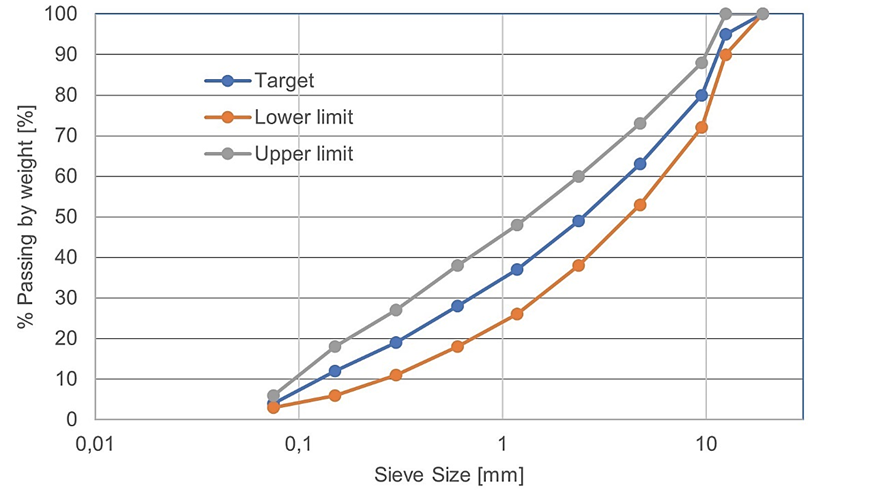
Fig. 1. Aggregate gradation used in this study
2.1.3 Specimen preparation
The asphalt mixture was prepared and designed according to the Marshall method. Each cylindrical specimen was compacted using a Marshall compactor with 75 blows per face (2 × 75 blows total), consistent with standard surface course preparation protocols. This detail ensures reproducibility of the experimental procedure. The prepared aggregate and asphalt were blended according to the determined composition at a mixing temperature of 170°C, based on a viscosity of 0.2 Pa·s for the asphalt binder. This mixture was then compacted at 140°C, based on the viscosity of the asphalt binder, which ranged from 2.0 to 20.0 Pa·s. The optimal asphalt content was selected at 6.65%. Table 4 shows the mix characteristics determined in this study.
Table 4. Mixture characteristics
|
Mixture characteristics |
Value |
|
Binder content [%] |
6.65 |
|
Air voids [%] |
4.5 |
|
Void in the mineral aggregate (VMA) [%] |
18.4 |
|
Void filled with binder (VFB) [%] |
76.8 |
|
Mix density [g/cm³] |
2.327 |
2.2 Testing procedures
ITSM and ITS tests were performed on specimens at 20, 30, 40, and 50°C.
2.2.1 ITSM test
The ITSM was determined from measurements made during repeated-load indirect tensile testing in accordance with EN 12697-26 Annex C and ASTM D4123. ITSM values were expressed in megapascals (MPa). According to the standard, the ITSM test is nondestructive.
The stiffness modulus is defined as the ratio between the maximum stress and the maximum strain under sinusoidal, uniaxial repeated loading. In viscoelastic materials such as bituminous composites, this is often referred to as the tile complex modulus. Because of the viscous component of the response of bituminous materials to loading, the strain always lags behind the stress. This lag is referred to as the phase angle. The ITSM [MPa] is calculated as shown in Equation 1.
In Equation 1, ITSM is the indirect stiffness modulus [MPa], L is the peak value of the applied vertical load [N], D is the mean amplitude of the horizontal deformation obtained from two or more applications of the load pulse [mm], t is the mean thickness of the test specimen [mm], and ʋ is Poisson's ratio (a value of 0.35 is normally used). A constant Poisson’s ratio of 0.35 was assumed across all test temperatures (20–50°C). It is acknowledged that μ tends to increase toward 0.50 as asphalt binders soften at elevated temperatures, which may slightly reduce the calculated stiffness values at 40°C and 50°C. Future studies should incorporate temperature-dependent μ values for improved accuracy.
Nondestructive ITSM testing was performed before ITS testing on the same specimens. At 50°C, SBS-modified asphalt mixtures are susceptible to creep and permanent deformation. However, the cyclic loads applied during ITSM were relatively small, and seating forces were limited to 10% of the peak load. No visible deformation or instability was observed, and any minor viscoelastic strain accumulation was negligible in influencing subsequent ITS results.
In this investigation, the ITSM test was conducted using a Dynapave UTM 30 machine. The testing parameters were as follows: a loading pulse width of 250 ms, a pulse repetition period of 3,000 ms, and a conditioning pulse count of 5. The peak loading force [N] varied depending on the target temperature and the tested temperature. The seating force was set to 10% of the peak loading force, in accordance with AASHTO TP31. The test is conventionally performed at 20℃; however, for this investigation, additional tests were also conducted at 30, 40, and 50℃. Three specimens were tested at each temperature to account for variability. Each sample was first subjected to nondestructive ITSM testing at a selected test temperature and then subjected to ITS testing at the same temperature.
2.2.2 ITS test
After the ITSM test was conducted on each specimen, the specimen was conditioned at the same temperature as for the ITSM test for approximately 2 h to ensure that the temperature was uniform throughout the specimen. ITS testing of each specimen was then conducted according to the following procedure.
ITS testing is conducted using a diametral loading setup at a constant deformation rate, in accordance with EN 12697-23. A cylindrical specimen is subjected to compressive loading along its vertical diameter using a Marshall loading machine. This configuration creates uniform tensile stresses perpendicular to the direction of the applied load, which ultimately causes the specimen to fail by splitting along the vertical diameter. The ITS is calculated from the maximum load at failure using Equation 2.
In Equation 2, ITS is the indirect tensile strength [kPa], Pmax is the maximum applied load [N], t is the average thickness of the specimen [mm], and D is the diameter of the specimen [mm].
2.2 Data analysis
The average ITS and ITSM values were calculated for each temperature group. Scatter plots were generated to visualize the relationship between ITS and ITSM. Pearson correlation coefficients were computed to quantify the strength of association between the two parameters. Regression analysis was also performed to model the temperature-dependent behavior of the asphalt mixtures and identify critical performance thresholds.
3 Results and discussion
Table 5 summarizes the results from the ITSM and ITS for all prepared specimens. To conduct further analysis, the average values of each testing temperature were calculated.
Table 5. Result of ITS and ITSM values at different temperatures
|
Temperature [℃] |
Specimen code |
ITSM [MPa] |
ITS [kPa] |
|
20 |
20.1 |
3,279 |
1,540 |
|
20.2 |
3,070 |
1,612 |
|
|
20.3 |
2,937 |
1,678 |
|
|
30 |
30.1 |
823 |
927 |
|
30.2 |
882 |
977 |
|
|
30.3 |
971 |
983 |
|
|
40 |
40.1 |
556 |
509 |
|
40.2 |
341 |
425 |
|
|
40.3 |
318 |
439 |
|
|
50 |
50.1 |
366 |
289 |
|
50.2 |
208 |
275 |
|
|
50.3 |
314 |
262 |
3.1 Temperature-dependent behavior
Table 6 and Fig. 2 present the average values obtained in this study. The experimental results demonstrate a clear inverse relationship between the test temperature and both the ITS and ITSM. As the temperature increased from 20°C to 50°C, the average ITS decreased from 1,610 kPa to 275 kPa, and the average ITSM decreased from 3,162 MPa to 296 MPa. These decreases in ITS and ITSM with increasing temperature highlight the thermal softening behavior of bituminous materials, i.e., reduced binder viscosity and weakened aggregate interlock with increasing temperature [17], [18], [21].
Table 6. Average ITS and ITSM values at different temperatures
|
Temperature [℃] |
ITS [kPa] |
ITSM [MPa] |
|
20 |
1,610 |
3,162 |
|
30 |
962 |
892 |
|
40 |
458 |
405 |
|
50 |
275 |
296 |
At lower temperatures, mixtures retained high tensile strength and stiffness, reflecting strong binder cohesion and aggregate interlock. The binder softening at higher temperatures, which results in decreased tensile strength and stiffness, increases the susceptibility to rutting and permanent deformation. These findings confirm the viscoelastic nature of asphalt binders, consistent with previous studies that have reported similar reductions in ITS and ITSM under thermal stress [17], [18].
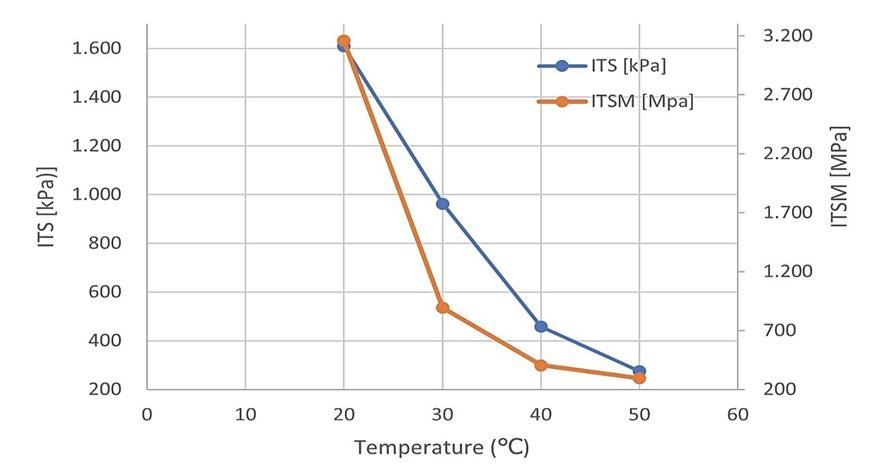
Fig. 2. Temperature-dependent trends of ITS and ITSM for SBS-modified asphalt mixtures
3.2 Correlation analysis
Pearson’s correlation analysis yielded a correlation coefficient of r = 0.914 (p < 0.001), confirming a strong and statistically significant positive correlation between ITS and ITSM. This relationship indicates that mixtures with higher tensile strength also exhibit greater stiffness modulus, reinforcing the mechanical interdependence of these parameters. Both properties are governed by binder cohesion, aggregate interlock, and viscoelastic response, which vary systematically with temperature. Similar coupled behavior has been reported in regression-based performance models [18], supporting the use of ITS as a surrogate predictor of ITSM in laboratory protocols.
The assumption of a constant Poisson’s ratio (μ = 0.35) across all temperatures introduces a simplification. Since μ increases toward 0.50 at elevated temperatures, the ITSM values reported at 40°C and 50°C may be slightly overestimated. This limitation highlights the need for temperature-dependent μ values in future studies to refine stiffness predictions.
3.3 Temperature-specific regression
The following linear regression model was developed for ITSM as a function of ITS:
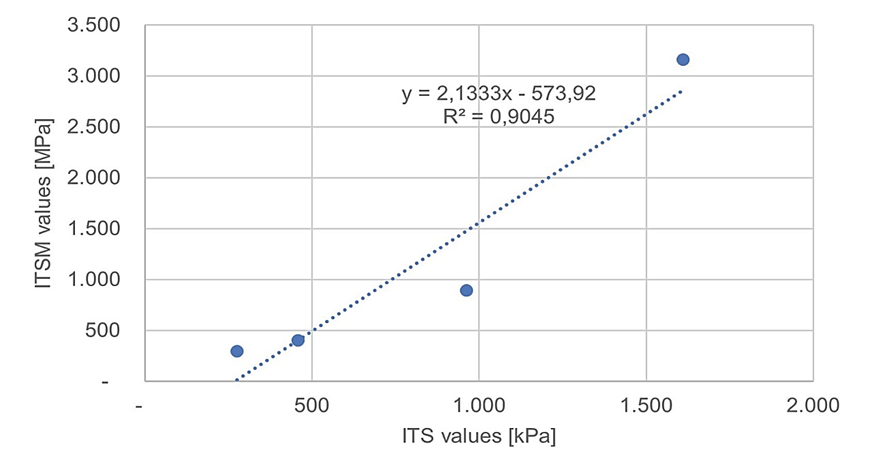
Fig. 3. Scatter plot of ITS vs. ITSM with regression line
3.4 ANOVA Results
A one-way analysis of variance (ANOVA) was performed to assess the influence of temperature based on the model specified in Equation 3. Table 7 shows the ANOVA summary for the regression model.
Table 7. ANOVA summary for the regression model
|
Source |
Sum of Squares |
df |
F |
p-value |
|
Regression |
2,889,618.6 |
1 |
18.95 |
0.0489 |
|
Residual |
152,652.0 |
2 |
|
|
The one-way ANOVA confirmed the statistical significance of the regression model at the 95% confidence level (F = 18.95, p = 0.0489). The relatively large regression sum of squares compared to the residual sum of squares indicates that ITS explains most of the variability in ITSM. Mechanistically, this reinforces the coupled influence of binder viscosity, aggregate structure, and viscoelastic response on mixture performance. Similar conclusions have been drawn in studies emphasizing stiffness modulus as a critical input for mechanistic pavement design [12], [13], [14].
3.5 Residual analysis
Residual analysis was conducted to assess the accuracy and consistency of the regression model (ITSM = 2.133 × ITS – 573.67), as mentioned in Equation (3). Conducting ITSM before ITS on the same specimens raises the possibility of deformation influencing subsequent strength measurements, particularly at 50°C. However, the nondestructive nature of ITSM, combined with controlled seating forces, minimized this effect. No measurable deformation was observed, and the influence on ITS results was negligible.
Figure 4 presents the scatter plot of residuals (actual–predicted ITSM) against predicted ITSM values across the tested temperature range. The scatter plot of residuals (actual – predicted ITSM) versus predicted ITSM values showed no discernible pattern, indicating homoscedasticity and a well-fitted model. The residuals were randomly distributed across the temperature range, confirming that the linear model does not suffer from systematic bias or heteroscedasticity. No systematic bias or clustering was observed, supporting the model's robustness in evaluating temperature-dependent performance.
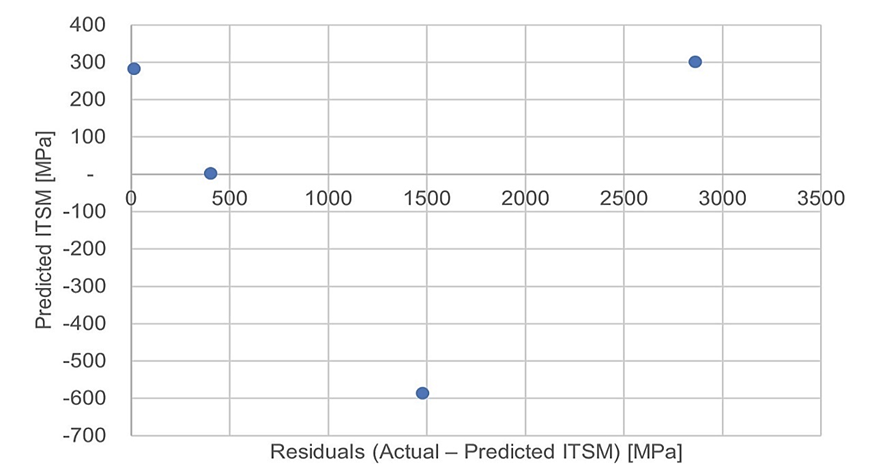
Fig. 4. Residuals vs. predicted ITSM.
This diagnostic outcome reinforces the robustness of the regression model and supports its use in predicting ITSM from ITS across varying thermal conditions. Similar approaches have been used in mechanistic pavement design to validate model assumptions and ensure reliable distress prediction [18], [19]. The absence of outliers or clustering in the residuals further confirms that temperature effects are adequately captured by the ITS–ITSM relationship, making the model suitable for performance-based mix evaluation.
Despite the promising correlation between ITS and ITSM, several limitations must be acknowledged. First, the regression model was developed using a single mixture design (PG 76-22 binder, one aggregate source, and one gradation), meaning the coefficients are material-specific and require recalibration for other mixtures. Second, the negative intercept in the regression equation restricts applicability at very low ITS values, particularly at high temperatures where strength is reduced. Third, the assumption of a constant Poisson's ratio (μ = 0.35) across all temperatures may slightly overestimate stiffness at elevated temperatures. Finally, while ITSM testing was conducted before ITS on the same specimens, minor viscoelastic strain accumulation at 50°C cannot be entirely ruled out, even though no measurable deformation was observed. These limitations highlight the need for future studies to incorporate multiple mixture designs, temperature-dependent Poisson's ratios, and independent specimen testing to enhance the generalizability of the model.
4 Conclusions
This study investigated the temperature‑dependent relationship between ITS and ITSM for SBS‑modified asphalt mixtures. The main findings are:
- Temperature sensitivity: Both ITS and ITSM decreased significantly with increasing temperature, confirming the thermal softening behavior of asphalt binders and reduced aggregate interlock.
- Strong correlation: A high positive correlation (r = 0.914, p < 0.001) was observed, demonstrating the mechanical interdependence of tensile strength and stiffness modulus.
- Predictive regression: The regression model (ITSM = 2.133 × ITS – 573.67, R² = 0.9045) established ITS as a reliable predictor of ITSM, enabling streamlined laboratory protocols.
- ANOVA validation: Statistical analysis confirmed the significance of the regression model for ITS as a predictor of ITSM over a range of temperatures.
- Design implications: The findings support the integration of ITS and ITSM into mechanistic-empirical pavement design and performance-based mix evaluation, particularly in climates with significant thermal variation. The regression model developed in this study provides a practical framework for predicting ITSM from ITS within the tested temperature range (20–50°C). However, the regression coefficients are specific to the tested mixture design and require recalibration for other materials. The negative intercept further restricts applicability at very low ITS values, underscoring the importance of applying the model only within the observed data range. The assumption of a constant Poisson’s ratio and the sequential ITSM–ITS testing introduce minor limitations, but these do not compromise the overall findings. Future work should incorporate temperature-dependent μ values and evaluate multiple mixture designs to enhance the generalizability of the model.
- Role of SBS modification: Use of PG 76‑22 binder enhanced elasticity, rutting resistance, and temperature stability, improving mixture resilience under demanding traffic and climate conditions.
This model, developed in this study for predicting the stiffness modulus of an SBS-modified asphalt mixture from its tensile strength, can be useful in reducing testing costs and obtaining accurate tensile property inputs for SBS-modified asphalt mixtures for use in mechanistic-empirical pavement design.
Acknowledgements
The authors would like to express their gratitude to the Faculty of Engineering Universitas Gadjah Mada for providing financial assistance through the Faculty Research Grant funds based on the Dean's Decree number 1610402/UN1.FTK/SK/HK/2025 dated 4 February 2025. Special thanks are extended to the Department of Civil and Environmental Engineering at Universitas Gadjah Mada for providing laboratory facilities and technical support for the experimental program. The authors also acknowledge the constructive feedback from colleagues and reviewers, which helped to improve the quality of this manuscript.
References
- Moghaddam, T. B., Karim, M. R., Abdelaziz, M. (2011). A review of fatigue and rutting performance of asphalt mixes. Scientific Research and Essays, 6(4), 670–682. https://doi.org/10.5897/SRE10.946.
- Saq, M. A., Alkuime, H., Kassem, E. (In Press, Corrected Proof). Intermediate-temperature cracking performance evaluation of asphalt mixtures. International Journal of Transportation Science and Technology, https://doi.org/10.1016/ j.ijtst.2025.03.008
- Boussabnia, M. B., Perraton, D., Lamothe, S., Di Benedetto, H., Proteau, M., Pouteau, B. (2023).Temperature effect on fatigue behavior of high-modulus asphalt concrete (HMAC), Construction and Building Materials, 409, 134006, https://doi.org/10.1016/ j.conbuildmat.2023.134006
- Ling, M., Cui, Y., Chen, H., Yang, M., Walubita, L. F., Komba, J. J., Fuentes, L., Xu, S. (2025). Establishing asphalt layer rutting–fatigue cracking performance thresholds for balanced mix design based on viscoelastic properties. International Journal of Pavement Engineering, 26(1), 2555993. https://doi.org/10.1080/10298436.2025.2555993
- Yardım, M. S., Şitilbay, B. D., Yılmaz, M. O. (2024). Experimental investigation of indirect tensile strength of hot mix asphalt with varying hydrated lime content at low temperatures and prediction with soft-computing models. Buildings, 14(11), 3569. https://doi.org/10.3390/buildings14113569
- Li, X., Lv, X., Liu, X., Ye, J. (2019). Discrete element analysis of indirect tensile fatigue test of asphalt mixture. Applied Sciences, 9(2), 327. https://doi.org/10.3390/app9020327
- Wu, S., Xu, G., Yang, J., Yang, R., Zhu, J. (2020). Investigation on indirect tensile test of asphalt mixture based on the discrete element method. Journal of Testing and Evaluation, 48(3), 2345–2361. https://doi.org/10.1520/JTE20190532
- Baskara, G. M. B., Ahyudanari, E., Thanaya, I. N. A. (2019). Analysis of stiffness modulus of asphalt concrete mixture by using artificial aggregates. Jurnal Teknik ITS, 8(2). https://doi.org/10.12962/j23373539.v8i2.49666
- Husni, M. A., Karyawan, I. D. M. A., Sideman, I. A. O. (2025). Indirect tensile stiffness modulus (ITSM) analysis of Asbuton mixture with used oil additives and HDPE. Indonesian Journal of Multidisciplinary Science, 4(11). https://doi.org/10.55324/ijoms.v4i11.1184
- Fahad, M., Nagy, R. Finite element modelling and indirect tensile strength of SBS and CR modified asphalt mixtures. (2025). Discover Applied Science 7(80). https://doi.org/10.1007/s42452-025-06463-x
- Rahman, T., Suhendro, B., Hardiyatmo, H. C., Sartono, W., Nawangalam, P. (2022). Airfield asphalt overlay design for non-conventional pavement structures: A case study of an airport in Indonesia. Journal of the Civil Engineering Forum, 8(2), 125–138. https://doi.org/10.22146/jcef.3771
- Thom, N. H. (2014). Principles of Pavement Engineering. ICE Publishing.
- Brown, S., F. (1987). An introduction to the analytical design of bituminous pavements. 3rd ed. University of Nottingham, Department of Civil Engineering.
- Huang, Y. H. (2004). Pavement Analysis and Design. Pearson Prentice Hall.
- Lee, J. S., Lee, S. Y., Le, T. H. M. (2023). Developing performance-based mix design framework using asphalt mixture performance tester and mechanistic models. Polymers 15(7), 1692. https://doi.org/10.3390/polym15071692.
- Khan, M. A., Khan, M. S., Nasir, B., Sabri, M. M. S., Ahmad, M., Qamar, W., Gonzalez-Lezcano, R. A. (2024). Performance optimization of asphalt pavements using binder film thickness as a criterion in innovative mix design compared to Marshall and Superpave methods. Frontiers in Materials, 11, 1488310. https://doi.org/10.3389/fmats.2024.1488310.
- Airey, G. D. (2003). Rheological properties of styrene butadiene styrene polymer modified bitumens. Fuel, 82(14), 1709–1719. https://doi.org/10.1016/S0016-2361(03)00146-7
- Cerni, G., Bocci, E., Camilli, S. (2017). Correlation between asphalt mixture stiffness determined through static and dynamic indirect tensile tests. Arabian Journal for Science and Engineering, 42(2), 703–713. https://doi.org/10.1007/s13369-016-2380-3.
- Wu, R., Harvey, J. T., Lea, J. (2022). A new approach to calibration and use of mechanistic-empirical design methods. In: Di Benedetto, H., Baaj, H., Chailleux, E., Tebaldi, G., Sauzéat, C., Mangiafico, S. (Eds.) Proceedings of the RILEM international symposium on bituminous materials. ISBM 2020. RILEM Bookseries, vol. 27. Springer, Cham. https://doi.org/10.1007/978-3-030-46455-4_13
- Airey, G. D. (2004). Styrene butadiene styrene polymer modification of road bitumens. Journal of Materials Science 39, 951–959. https://doi.org/10.1023/B:JMSC.0000012927.00747.83
- Lu, X., Isacsson, U. (1997). Influence of styrene-butadiene-styrene polymer modification on bitumen viscosity. Fuel, 76, 1353-1359. https://doi.org/10.1016/S0016-2361(97)00144-0
Conflict of Interest Statement
The authors declare that there is no conflict of interest regarding the publication of this manuscript. All experimental work, data analysis, and interpretations were conducted independently, without any financial or personal relationships that could inappropriately influence the outcomes of this study.
Author Contributions
Data Availability Statement
The data supporting the findings of this study are available from the corresponding author upon reasonable request. Due to institutional policies, raw laboratory datasets are not publicly archived but can be shared for academic and research purposes. Processed data used in statistical analysis and figure preparation are included within the manuscript.
Supplementary Materials
Supplementary materials associated with this article include additional figures, tables, and processed datasets that support the findings presented in the main text. These materials are available upon request from the corresponding author. All supplementary content has been prepared in accordance with JAES guidelines to ensure clarity, reproducibility, and transparency.